Khao Sam Roi Yot: Getting There, When to Go, Worth It?
On this page
- Quick Facts: Where Khao Sam Roi Yot Fits
- What Khao Sam Roi Yot Is Known For
- Who It Actually Suits
- Getting There from Hua Hin and Pranburi
- What It Costs (and What Wasn't Confirmed)
- Confirmed vs. Unconfirmed
- Before You Go
- Before You Go Checklist
- The Honest Verdict
- FAQ
- What is Khao Sam Roi Yot actually known for?
- How do I get to Khao Sam Roi Yot, and how long does it take from Hua Hin or Bangkok?
- How much does it cost to get in?
- Is Khao Sam Roi Yot worth a dedicated stop, or is it better as a day trip from Hua Hin?
- How many days should I plan for it?
- Sources
Khao Sam Roi Yot comes up often enough in upper Gulf itineraries to sound like an obvious addition.
The useful question is not whether it exists on the map, but whether a limestone-karst national park fits the trip you are actually planning.
The practical record here has gaps: I could confirm the park's identity and location, but not its current entry fee, opening hours, or best season.
Quick Facts: Where Khao Sam Roi Yot Fits
Khao Sam Roi Yot National Park is in Prachuap Khiri Khan province on Thailand's Gulf coast, near Pranburi and south of Hua Hin. It fits into the same broad regional itinerary, but it is not another resort town or a substitute beach base.
Think of it as a nature and national-park stop within a Hua Hin or upper Gulf route. That distinction matters when deciding whether the detour earns its place. I would not add it simply because it is nearby on a map.
Start with the park's different character, then back to all Thailand destinations if you are still comparing stops.
What Khao Sam Roi Yot Is Known For
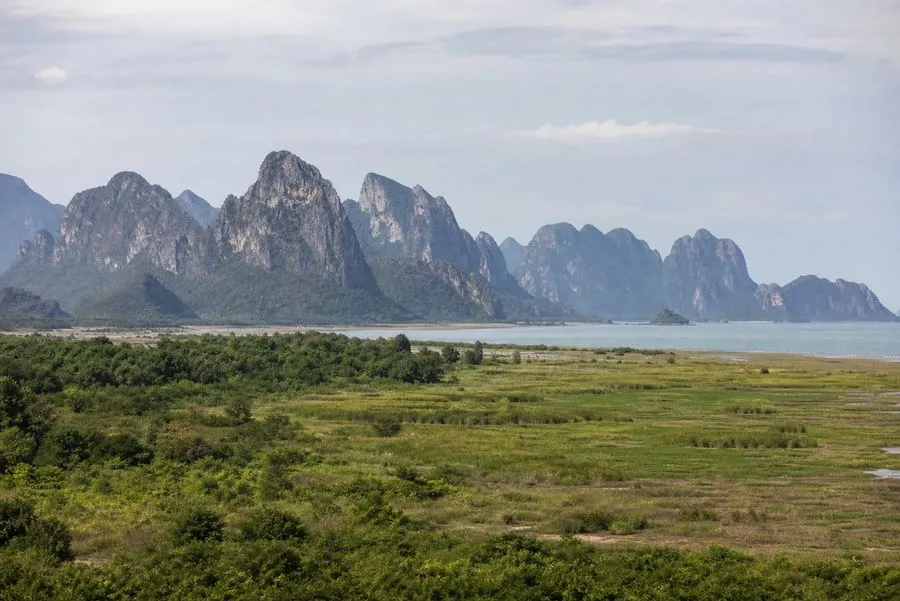
The confirmed draw is the limestone karst landscape rising from the upper Gulf coast. Those formations give Khao Sam Roi Yot an identity separate from the developed resort-town circuit around Hua Hin and Pranburi.
It is a national park first. That sounds obvious, but destination lists have a habit of flattening every coastal place into some version of a beach stop. Khao Sam Roi Yot belongs in an itinerary because you want a park landscape, not because you need another day beside the sea.
That is also the limit of what this research confirmed. I did not find sufficiently supported information here to recommend a named cave, viewpoint, wildlife encounter, or other specific attraction. Rather than pad the page with familiar claims copied from elsewhere, I would make the decision using the landscape and park identity that can be established.
Who It Actually Suits
Khao Sam Roi Yot suits a traveler who wants to interrupt a Hua Hin or Pranburi itinerary with a distinct nature stop. If the purpose of your route is to remain on the beach-town circuit, the park is not simply more of the same.
The research did not establish useful divisions by age, budget, fitness, family suitability, or travel style, so I would not use those labels to sell the stop. Ask a narrower question: do limestone karst scenery and a national-park setting justify arranging local transportation and checking access details?
If yes, keep investigating. If not, see also: Hua Hin or compare it with Prachuap Khiri Khan before adding another pin to the route.
Getting There from Hua Hin and Pranburi
The confirmed geographic sequence is straightforward: Khao Sam Roi Yot sits near Pranburi, south of Hua Hin, in Prachuap Khiri Khan province. The Hua Hin-Prachuap Khiri Khan rail corridor is the regional artery, while Bangkok's Suvarnabhumi and Don Mueang airports serve as country-level gateways for travelers approaching from farther away.
The uncertain part is the last mile. This research did not produce a dependable door-to-door travel time, fare, or park-specific transfer schedule from Hua Hin or Pranburi. Confirm a taxi or private transfer locally, including the return arrangement, rather than assuming transportation will be waiting at the park.
I have made that assumption elsewhere in Thailand and spent more time solving the return leg than seeing the place (not my finest transport plan). Ask the driver or operator which gate is currently accessible, what time pickup will be, and whether the quoted price includes waiting. For the wider regional transport picture, see the full getting-around guide.
What It Costs (and What Wasn't Confirmed)
Thailand's national parks generally use different foreign and Thai admission prices within a four-category structure.
Reported national category bands run from roughly 20 to 500 THB depending on category, nationality, and age, according to media reporting on the Department of National Parks, Wildlife and Plant Conservation system.
That is general policy, not Khao Sam Roi Yot's fee.
Two research passes found no park-specific entry price. This is not the first Thai park where fee information has been inconsistent, but here there was no supported figure to publish at all. Check at the gate or with a current tour operator, and do not borrow a price from another park.
Confirmed vs. Unconfirmed
| Fact | What research found |
|---|---|
| Khao Sam Roi Yot entry fee | No current park-specific figure was found in either research pass. Confirm it at the gate or with a current operator. |
| Foreign and Thai dual pricing | A four-category dual-pricing structure is reported as general national-park policy. Khao Sam Roi Yot's category and current prices were not confirmed. |
| Best season or closure status | No reliable best-season recommendation or park-specific seasonal-closure schedule was found. Check current access directly. |
| Overnight options nearby | Accommodation exists in the wider Hua Hin and Pranburi area, but this research did not establish lodging inside the park. Use the linked destination pages for regional planning. |
Before You Go
Because the missing details affect both cost and transport, use this check rather than treating an old itinerary as current.
Before You Go Checklist
- Confirm the current entry fee at the gate or with a current tour operator. No amount is published here because the research did not find one.
- Carry cash. Small national-park gates in Thailand typically may not accept cards, so do not make a card your only payment method.
- Verify the gate's current opening hours before leaving Hua Hin or Pranburi.
- Arrange outbound and return transportation in advance. Do not assume a taxi or private transfer will be available on site.
- Ask which entrance or gate your driver plans to use and confirm the pickup point.
- During wetter months, check current road and park access directly. No seasonal-closure data was found for this park, either open or closed.
The Honest Verdict
Khao Sam Roi Yot has a real reason to exist on an upper Gulf itinerary: it offers a limestone-karst national-park setting that is materially different from the resort-town character of Hua Hin and nearby coastal stops.
That makes it worth considering.
I cannot turn that into an unconditional recommendation. The research did not confirm the park's current admission cost, best season, closure status, opening hours, or a dependable last-mile transfer time. Those are not decorative details when you are deciding whether to commit a day.
My verdict is therefore conditional and deliberately unglamorous. Check current access, price, and return transportation before building the schedule around Khao Sam Roi Yot. If those details work, the park offers the clearest kind of contrast to a beach-town itinerary.
If they do not, keep it off the fixed plan rather than forcing a poorly supported detour.
FAQ
These are the practical answers the available research supports, without filling the gaps with guesses.
What is Khao Sam Roi Yot actually known for?
Khao Sam Roi Yot is known for its limestone karst landscape on Thailand's upper Gulf coast. Its identity is that of a national park and nature stop, distinct from surrounding resort towns. That is the extent of the attraction-level detail confirmed in this research.
How do I get to Khao Sam Roi Yot, and how long does it take from Hua Hin or Bangkok?
Approach through the Gulf-coast corridor near Pranburi, south of Hua Hin; from Bangkok, the broader route connects from Suvarnabhumi or Don Mueang through the Hua Hin-Prachuap Khiri Khan corridor. No reliable park-specific transfer time or cost was confirmed. Arrange and verify the last-mile trip from Hua Hin or Pranburi locally.
How much does it cost to get in?
No current entry fee specific to Khao Sam Roi Yot was found after two research passes. Thailand's national parks generally use foreign and Thai dual pricing, but that does not establish this park's category or amount. Check with the gate or a current operator instead of assuming another park's price applies.
Is Khao Sam Roi Yot worth a dedicated stop, or is it better as a day trip from Hua Hin?
It is worth considering as a day-visit-style nature stop if the karst park landscape is the contrast you want. Because current cost, access, and seasonal conditions were not confirmed, verify those practicalities before committing a full day. The evidence does not support an unqualified yes.
How many days should I plan for it?
Plan around Khao Sam Roi Yot as a day-visit-style stop within a Hua Hin or Gulf-coast itinerary, not as a confirmed overnight base. This research found no park accommodation data and does not support assigning multiple days. Arrange lodging and transportation through the surrounding regional destinations instead.
Before finalizing the itinerary, confirm Khao Sam Roi Yot's current access, admission cost, gate hours, and return transport. Then browse the other Gulf-coast options through all Thailand destinations and decide whether the park's karst landscape earns the detour.
Sources
- Department of National Parks, Wildlife and Plant Conservation: general foreign and Thai dual-pricing framework and four-category national-park fee structure, cited through media reporting.
- itc.travel: reported nationwide national-park category bands; the figures require reconfirmation before publication and do not establish Khao Sam Roi Yot's fee.
- Practical Thailand entity dossier and shared research: Gulf-coast location, Prachuap Khiri Khan province, proximity to Pranburi, and unresolved fee and seasonal-information gaps.
Last reviewed: August 12, 2026.
