Thailand Destinations: How to Reach Each One, and Whether It Earns a Stop
Compare 90 Thai destinations by gateway, seasonal limits and whether they justify an overnight stop. If the research points to a day trip or a skip, the page says so.
Start with the region-cluster checklist below, then open the Season Matrix for the months you can actually travel.
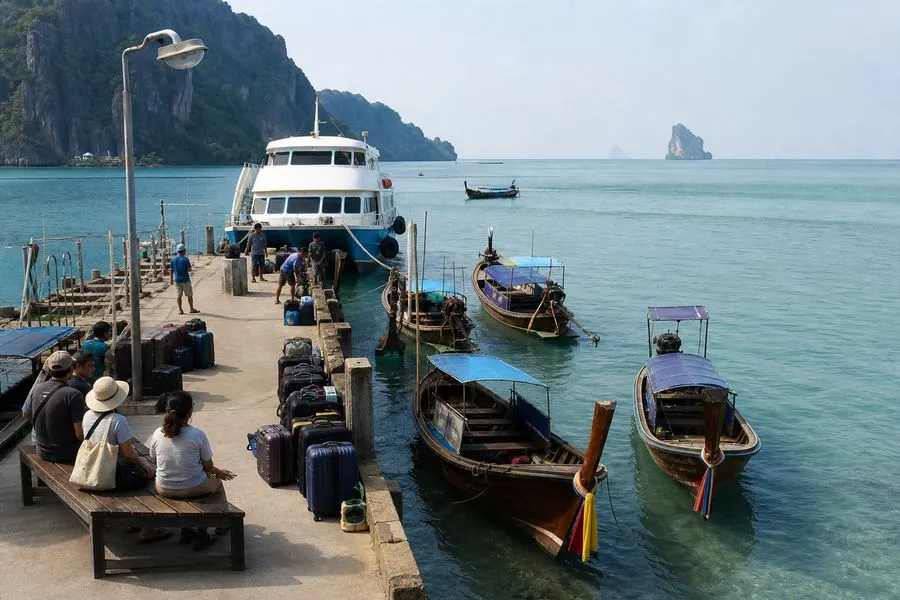
What a "destination" means here, and why the gateway comes first
Choose the gateway before the beach, island or mountain town. Bangkok is the main point of entry for most travelers, split between Suvarnabhumi (BKK, the main international airport) and Don Mueang (DMK, used largely by low-cost carriers). A same-day connection between them requires a road transfer across a congested city.
It is not a terminal change.
Regional hubs determine the rest of the route.
Chiang Mai Airport (CNX) is described by regional operators as the north's only international air gateway, so many trips to Pai, Mae Hong Son, Chiang Dao, Chiang Rai and the smaller heritage towns pass through Chiang Mai.
Isaan has four regional airports with scheduled Bangkok service: Nakhon Ratchasima, Khon Kaen, Udon Thani and Ubon Ratchathani. The region also has rail service from Bangkok.
On the Andaman coast, Phuket (HKT) and Krabi are the main air gateways. Flying into one and out of the other can avoid backtracking. For the Gulf islands, travelers either fly to Koh Samui Airport (USM) or use Chumphon or Surat Thani and continue by boat.
USM is privately operated by Bangkok Airways, and several accounts link its high fares to the absence of low-cost carriers on the route.
Some islands have no airport and depend entirely on a mainland pier: the Trat archipelago via Trat town, the Trang islands via Pak Meng or Hat Yao, Koh Lipe via Pakbara Pier in Satun, and Koh Phayam via Ranong.
These are the routes most likely to break a tightly packed itinerary. Boats follow fixed schedules, off-season service can thin out, and weather can stop a sailing.
Many transport details on this site carry a verification flag. Small-airport service and low-cost routes to secondary gateways such as Trat, Ranong, Nakhon Si Thammarat, Khon Kaen and Udon Thani have been suspended and reinstated before. Treat a listed route as the start of a booking search, not proof that the service still operates on your date.
Each destination page covers its own gateway. For connections between places, use the getting around Thailand guides. For arrival paperwork, see visas and entry.
The destination pages do not repeat entry rules.
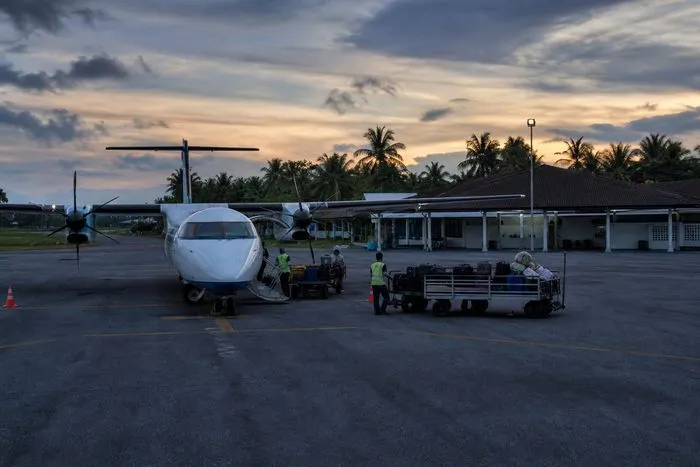
The clusters, and how they actually differ
A regional cluster is an itinerary unit. Places in the same cluster often share a gateway and weather pattern, so they compete for the same limited nights.
The Bangkok day-trip belt includes Ayutthaya, Kanchanaburi, the two floating markets and several provincial towns that can be visited without changing hotels. Northern routes involve mountain roads and one major seasonal constraint: burning season.
Isaan remains far less visited than the rest of the country.
Travel publishers repeatedly state that it receives about 2% of Thailand's tourism despite holding roughly a third of the population, but that figure is widely repeated rather than officially confirmed.
The Michelin Guide expanded its Thailand edition into four Isaan cities in 2022.
That gives a concrete visibility signal for Khon Kaen, Udon Thani, Nakhon Ratchasima and Ubon Ratchathani, Thailand: How to Get There and Whether It's Worth the Stop.
For beach trips, coast matters more than the broad label "southern Thailand." Gulf and Andaman high seasons do not coincide. Decide when to go before choosing between the two sides of the peninsula.
Island groups also work as units. Koh Chang is the hub for the Trat archipelago, with Koh Mak and Koh Kood farther along the route. Samui, Phangan and Tao connect through Koh Samui, Surat Thani or Chumphon.
Phuket and Krabi form a network of road-accessible bases and boat-only stops.
The Trang islands have less infrastructure and are linked by longtail routes. Koh Lipe sits at the far end of the southern Andaman coast, with more seasonal variation in access than any other island in this hub. On a map these places can look close.
In an itinerary, the pier and timetable decide whether they are close enough.
How to choose: a cluster-first checklist
First-time trips usually go wrong because they include too many stops, not because someone chose the wrong island. Traveler reports return to the same correction: visit fewer places and stay longer in each.
- Fix your travel window, then choose the coast that is in season. Doing this in reverse can put you on the wrong side of the peninsula in the wrong month.
- Count your nights and subtract two for arrival and departure friction. The remainder is your usable itinerary.
- Allow no more than one cluster per week. Two clusters in ten days can consume about a day and a half in transit.
- Choose the cluster's hub before its satellites. Hubs generally provide hospitals, ATMs, supplies and more frequent boats. Satellites provide the scenery. Koh Kood shows the cost of that trade: everything arrives by boat, and prices sit above Koh Chang and Koh Mak.
- Confirm that a satellite supports overnight stays before booking around it. Some places in this index are day-trip-only.
- Look for regulated access windows. Two entities in this hub close for roughly five months each year.
- Add one slack day per boat leg during shoulder season. Cancellations do not need to be common to cost you an onward connection and a hotel night.
- During the week before travel, reconfirm park fees, closure dates and your government's advisory. They update independently.
If accommodation is unconfirmed, staff leave at closing, or every reliable source sells the place as an excursion rather than a base, plan it as a day trip. Sleep at the nearest hub. Koh Hong and Ang Thong Marine Park fit that rule.
Koh Racha does not: several named resorts confirm that overnight stays are possible.
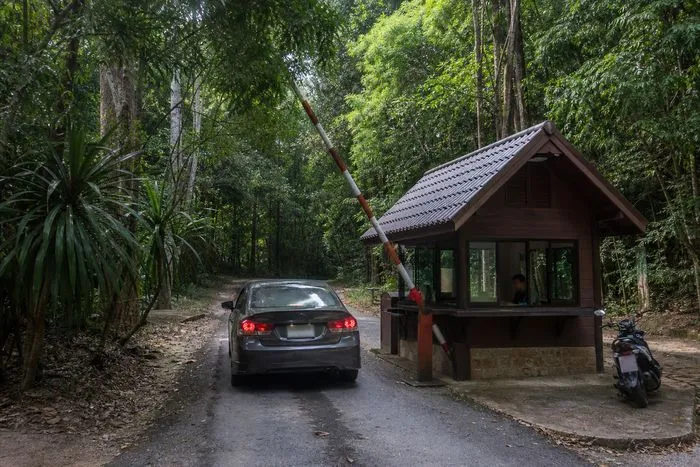
Fees, dual pricing and closures: the regulatory reality
Two agencies have different roles at the natural attractions in this index. The Tourism Authority of Thailand promotes destinations and publishes provincial information. The Department of National Parks, Wildlife and Plant Conservation (DNP) controls park entry rules, fees and closures.
Most national parks charge foreigners more than Thai nationals. The two-tier schedule is published policy, and convergent commercial and community sources report that the foreign rate applies regardless of residence status, visa type or work permit.
Travel media describe four fee categories.
Foreign adults pay about 100 THB at Category 1 parks, 200 THB at Category 2 parks such as Khao Yai and Khao Sok, 300 THB at Category 3 parks such as Doi Inthanon and Ao Phang Nga, and 500 THB at Category 4 parks.
Only Similan and Surin are in Category 4. Thai rates are roughly one-fifth of the foreign rates. Thai seniors over 60, children under 3, disabled people and monks receive free entry.
Vehicles cost extra, usually around 20 to 30 THB for a motorcycle or car.
Khao Yai shows why you should check the individual park rather than rely only on the category. Its official fee page displays two foreign-adult prices without clearly withdrawing either one. One notice lists 200 THB per adult from June 7, 2022, matching the Category 2 rate.
Another lists 400 THB per adult at the Pak Chong and Noen Hom entrances from September 19, 2022.
A first-hand account of calling the park supports the 400 THB figure and reports no discount for work-permit holders or Thai taxpayers. Both prices remained live on the same official page when this article was written. Budget 400 THB and check again before visiting.
The Khao Yai page preserves both figures rather than pretending the conflict has been resolved.
Other figures are more consistent. Similan charges 500 THB per foreign adult and 250 THB per foreign child. Its gates open from 8:00 a.m. to 4:00 p.m., with no admission before 8:00 a.m.
Khao Sok charges 200 THB for the headquarters area, while Cheow Lan Lake requires a separate 300 THB fee. One ticket does not cover both.
Tour-bundled figures for James Bond Island, Phi Phi, Koh Tao and Ang Thong run at roughly 250 to 400 THB per adult. Those figures come from one commercial booking FAQ and have not been matched to an official schedule.
Closures need the same scrutiny. For the 2026 season, a DNP order reported in Thai media closes Similan and Surin to tourism and overnight stays from May 15 to October 15. The commonly cited annual pattern is an open season from October 15 to May 15, but weather can shorten it.
Park-reference sources say the DNP may announce an earlier closure shortly before it takes effect. One Surin operator ends its advertised 2026 high season on May 10, five days before the order date used elsewhere. The available sources do not establish whether this is a commercial booking cutoff or a different park rule.
Similan also limits daily visitors, but the sources conflict. One 2026 article gives a cap of 3,850 people per day. A park reference says the cap began at 3,850 in 2018 and was later reduced to 3,325.
Ko Tachai, within the same park group, has reportedly remained closed to visitors since 2016. The destination pages for Similan Islands and Surin Islands explain the booking implications.
For park budgets and island-to-island cost comparisons, see money and costs.
Risk, seasons and the deep-south advisory disagreement
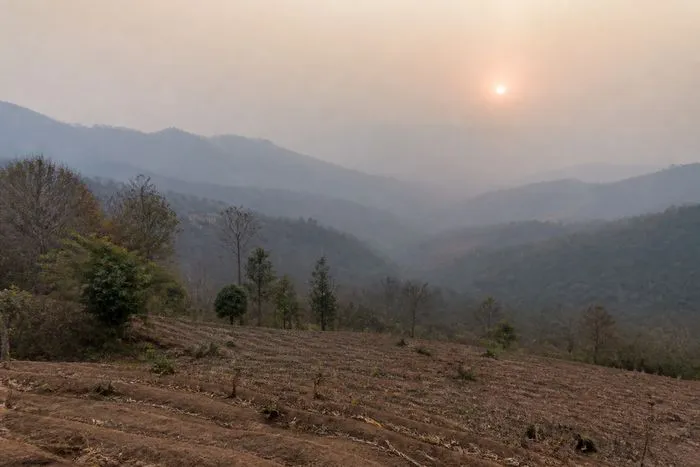
Northern air quality follows the annual agricultural and forest-fire season, with smoke from Myanmar and Laos adding to local pollution. Sources place the broad window between January and April, with a peak in March, but they disagree about when poor conditions begin. One professional source cites a 2023 haze review and starts the period in mid-January.
IQAir gives January through April. Other accounts do not describe the worst weeks as starting until late February.
Conditions usually improve by late April, although haze can continue into May. The affected destinations include Chiang Mai, Chiang Rai, Pai, Mae Hong Son, Chiang Dao, Nan and Phrae. A quoted AQI reading is only a snapshot, and some circulating AQI numbers do not match the PM2.5 figures shown beside them.
Check a live monitor when you travel. If you go during the season, bring N95 masks rather than surgical masks.
Boat disruption is less predictable. A government-linked broadcaster confirmed that service on the Surat Thani to Koh Tao route stopped from November 19 to 22, 2025, during northeast-monsoon winds and high seas. By contrast, an operator-side account from Koh Tao says the main ferry company has canceled only two or three times in all its operating years.
Both points matter. Rough crossings and delays are a documented Gulf pattern from October into December. A severe event can cause a multi-day suspension, but routine cancellation is not the norm.
Flexible bookings and seasickness precautions are sensible during that window.
For the deep south, official travel advice depends on which government you consult. Canada advises against all travel to Narathiwat, Pattani, Yala and southern Songkhla province, and specifically names Hat Yai. The UK's FCDO advises against all but essential travel to Pattani, Yala and Narathiwat, the Songkhla districts of Chana, Thepa, Na Thawi and Saba Yoi, and the Hat Yai to Padang Besar rail line.
It does not name Hat Yai city.
The US State Department tells travelers to exercise increased caution in Yala, Pattani and Narathiwat, without naming Songkhla or Hat Yai. Australia's Smartraveller says to reconsider your need to travel to those same three provinces within its broader advice to exercise a high degree of caution in Thailand.
All four governments name Yala, Pattani and Narathiwat. Only Canada names Hat Yai itself, while none of the four names Nakhon Si Thammarat. Check your own government's current page before booking because the advisories update separately.
This comparison reflects pages reviewed in mid-2026. Destination-specific context appears on Hat Yai, Songkhla and Nakhon Si Thammarat. Broader guidance is available under safety and health.
A flood is not the same as a standing security advisory. In 2026, flooding affected Hat Yai, Na Mom and Rattaphum and slowed road travel while the airport remained open. Reports explicitly said Phuket, Krabi, Koh Phi Phi, Koh Lanta, Khao Lak and Phang Nga were not affected.
That was a time-limited transport disruption, not a change to the geographic scope of the security advice.
One ordinary Bangkok fraud pattern also deserves a place in trip planning. Near a major temple, a tuk-tuk driver or taxi tout may say the attraction is closed and redirect you to a gem or jewelry "clearance sale" that pays commission. The Grand Palace is the classic setting.
Current prevalence needs reconfirmation, but the response is straightforward: go to the official entrance and check for yourself.
Browse the full index
90 destinations, grouped by cluster. Status markers summarize the research; they are not ratings.
Central Thailand and the Bangkok day-trip belt
| Destination | Why it's here | Status |
|---|---|---|
| Bangkok, Thailand: How to Get There and Whether It's Worth the Stop | The only true multi-day capital city in the hub; nearly every itinerary touches it for entry or exit | Gateway |
| Ayutthaya, Thailand: How to Get There and Whether It's Worth the Stop | The belt's most recognized ruins, close enough for a same-day round trip from Bangkok | Price unverified |
| Kanchanaburi: Getting There, When to Go, Worth It? | WWII heritage and river scenery rather than royal-era ruins; often paired with Ayutthaya | |
| Lopburi: Getting There, When to Go, Worth It? | A genuine single-hook town: the monkeys, shared with nowhere else in the index | |
| Damnoen Saduak: Getting There, When to Go, Worth It? | The daytime, more touristic floating market of the pair | |
| Amphawa, Thailand: How to Get There and Whether It's Worth the Stop | The weekend-evening market skewing to domestic Thai visitors; the day/evening split is the real difference | |
| Nakhon Pathom: Getting There, When to Go, Worth It? | One stupa is the whole reason it appears; no other local substance surfaced | Thin - probably skip |
| Samut Prakan: Getting There, When to Go, Worth It? | Replica-heritage park plus a wildlife attraction; works as a Bangkok add-on, not a stop | Thin - probably skip |
| Ratchaburi, Thailand: Is It Worth a Dedicated Stop? (Honest Take) | No hook found beyond proximity to Bangkok | Thin - probably skip |
| Suphanburi, Thailand: Is It Worth a Dedicated Stop? (Honest Take) | No distinct identity surfaced in research | Thin - probably skip |
The North
| Destination | Why it's here | Status |
|---|---|---|
| Chiang Mai, Thailand: How to Get There and Whether It's Worth the Stop | The north's hub, with more food, nightlife and activity depth than Chiang Rai | Gateway; burning season |
| Chiang Rai: Getting There, When to Go, Worth It? | Fewer crowds and more distinctive single sights, less depth day to day | Burning season |
| Pai: Getting There, When to Go, Worth It? | The road itself (762 curves) and the Mae Hong Son Loop start point | Price unverified; burning season |
| Mae Hong Son: Getting There, When to Go, Worth It? | The most remote of the northern hub towns, with a genuinely different pace | Burning season |
| Chiang Dao: Getting There, When to Go, Worth It? | A dedicated trekking and nature base rather than a temple town | Burning season |
| Doi Inthanon, Thailand: How to Get There and Whether It's Worth the Stop | Thailand's highest point, and a Category 3 park fee | Price unverified |
| Sukhothai, Thailand: How to Get There and Whether It's Worth the Stop | The older of the two great historical-park capitals; a real either/or with Ayutthaya | |
| Si Satchanalai, Thailand: How to Get There and Whether It's Worth the Stop | The lesser-visited half of the Sukhothai UNESCO pairing | |
| Chiang Khong, Thailand: How to Get There and Whether It's Worth the Stop | A Laos border crossing point more than a leisure stop | Border town |
| Lampang, Thailand: Is It Worth a Dedicated Stop? (Honest Take) | No local hook found; functions as a bus node | Thin - probably skip |
| Lamphun: Getting There, When to Go, Worth It? | No local hook found | Thin - probably skip |
| Nan: Getting There, When to Go, Worth It? | Teak-heritage identity, unsubstantiated beyond prior knowledge | Thin - probably skip |
| Phrae, Thailand: Is It Worth a Dedicated Stop? (Honest Take) | Same teak-heritage profile as Nan; research could not separate them | Thin - probably skip |
| Phitsanulok, Thailand: Is It Worth a Dedicated Stop? (Honest Take) | A transit city with no hook found | Thin - probably skip |
| Mae Sariang, Thailand: Is It Worth a Dedicated Stop? (Honest Take) | Part of the trekking cluster, no specific differentiator confirmed | Thin - probably skip |
| Phu Chi Fa, Thailand: Is It Worth a Dedicated Stop? (Honest Take) | A viewpoint with no supporting logistics facts found | Thin - probably skip |
Isaan (Northeast)
| Destination | Why it's here | Status |
|---|---|---|
| Ubon Ratchathani, Thailand: How to Get There and Whether It's Worth the Stop | The richest Isaan dossier: named museum, historic temple, and Sam Phan Bok with a real seasonal window | |
| Khon Kaen, Thailand: How to Get There and Whether It's Worth the Stop | One of four Isaan cities with real dining infrastructure signal since 2022 | |
| Udon Thani, Thailand: How to Get There and Whether It's Worth the Stop | Ban Chiang archaeology plus the Red Lotus Sea; the region's northern gateway | Gateway |
| Nakhon Ratchasima: Getting There, When to Go, Worth It? | Mainly the access point for Khao Yai rather than a destination itself | Gateway |
| Khao Yai, Thailand: How to Get There and Whether It's Worth the Stop | UNESCO nature within weekend range of Bangkok, and the most fee-conflicted entity here | Price conflict (200 vs 400 THB) |
| Nong Khai, Thailand: How to Get There and Whether It's Worth the Stop | Mekong border identity with a specific named attraction, Buddha Park | Border town |
| Chiang Khan, Thailand: How to Get There and Whether It's Worth the Stop | A named daily ritual (the 06:00-08:00 alms ceremony) and a Luang Prabang comparison | |
| Nakhon Phanom, Thailand: How to Get There and Whether It's Worth the Stop | The only one of the three Mekong border towns confirmed with its own scheduled flights | Border town |
| Mukdahan: Getting There, When to Go, Worth It? | Mekong border town, but no attraction as specific as Nong Khai's | Border town |
| Buriram, Thailand: How to Get There and Whether It's Worth the Stop | The only motorsport-and-football visitor profile in Isaan | |
| Surin: Getting There, When to Go, Worth It? | Khmer heritage shared with the region rather than a specific hook | Thin - probably skip |
| Loei, Thailand: Is It Worth a Dedicated Stop? (Honest Take) | Nothing distinct from Chiang Khan, which sits inside the province | Thin - probably skip |
| Roi Et, Thailand: Worth a Dedicated Stop? (Honest Take) | No hook found | Thin - probably skip |
| Sakon Nakhon, Thailand: Is It Worth a Dedicated Stop? (Honest Take) | No tourism hook found beyond a population-mix note | Thin - probably skip |
Eastern Seaboard and the Trat archipelago
| Destination | Why it's here | Status |
|---|---|---|
| Pattaya: Getting There, When to Go, Worth It? | The nightlife and long-stay resort city closest to Bangkok; a distinctly different crowd from every other beach here | |
| Jomtien: Getting There, When to Go, Worth It? | Exists as the quieter version of Pattaya, which is the whole point of it | |
| Rayong: Getting There, When to Go, Worth It? | The road to Koh Samet more than a stop of its own | Gateway |
| Koh Samet, Thailand: How to Get There and Whether It's Worth the Stop | The eastern seaboard's weekend island; a shorter trip norm than the Trat group | |
| Koh Chang: Getting There, When to Go, Worth It? | The Trat archipelago's hub island, widest accommodation range, base for the smaller islands | Price unverified; name collision |
| Koh Kood: Getting There, When to Go, Worth It? | Least developed and most expensive of the three; supplies arrive by boat | Price unverified |
| Koh Mak, Thailand: How to Get There and Whether It's Worth the Stop | Flat enough to explore by bicycle, unlike its hillier neighbors | Limited ATMs |
| Trat, Thailand: How to Get There and Whether It's Worth the Stop | The archipelago's mainland access point, little more | Gateway |
| Chanthaburi: Getting There, When to Go, Worth It? | No hook found in research | Thin - probably skip |
| Si Racha, Thailand: Is It Worth a Dedicated Stop? (Honest Take) | An industrial and expat-adjacent town, on prior knowledge only | Thin - probably skip |
| Bang Saen: Getting There, When to Go, Worth It? | A domestic weekend beach rather than an international one | Thin - probably skip |
Upper Gulf (Hua Hin to Chumphon)
| Destination | Why it's here | Status |
|---|---|---|
| Hua Hin, Thailand: How to Get There and Whether It's Worth the Stop | The upper Gulf's flagship resort town and its main long-stay hub | Price unverified |
| Cha Am: Getting There, When to Go, Worth It? | The quieter, more local Hua Hin alternative next door | |
| Pranburi: Getting There, When to Go, Worth It? | A quiet base next to Khao Sam Roi Yot's karst park | |
| Prachuap Khiri Khan, Thailand: How to Get There and Whether It's Worth the Stop | A provincial capital with a downtown beach, plus Kui Buri wildlife viewing | |
| Ban Krut: Getting There, When to Go, Worth It? | Quiet beach reachable on the hop-on-hop-off rail pattern | |
| Khao Sam Roi Yot: Getting There, When to Go, Worth It? | The upper Gulf's limestone-karst national park | Fee data gap |
| Chumphon: Getting There, When to Go, Worth It? | A cheaper way into the Samui archipelago than flying to Samui | Price unverified; gateway |
Samui archipelago
| Destination | Why it's here | Status |
|---|---|---|
| Koh Samui: Getting There, When to Go, Worth It? | The most developed island here, with hospitals and malls; its own airport keeps fares high | Price unverified |
| Koh Phangan: Getting There, When to Go, Worth It? | A split identity between party scene and wellness/nomad scene, with better connectivity than Koh Tao | Price unverified |
| Koh Tao: Getting There, When to Go, Worth It? | The cheapest dive-certification base, with a documented Nov-Dec sea-crossing risk | Price unverified; Nov-Dec weather |
| Ang Thong Marine Park: Day Trip or Overnight Stay? (Honest Answer) | Every source frames it as a tour product, not a base | Day-trip only |
| Surat Thani, Thailand: How to Get There and Whether It's Worth the Stop | Pure transit hub: airport, rail and ferry piers, not attractions | Gateway |
Phuket, Krabi and the Andaman islands
| Destination | Why it's here | Status |
|---|---|---|
| Phuket, Thailand: How to Get There and Whether It's Worth the Stop | The region's own international airport and deepest infrastructure | Gateway |
| Krabi: Getting There, When to Go, Worth It? | The second Andaman air gateway, serving the limestone-cliff coast specifically | Gateway |
| Ao Nang, Thailand: How to Get There and Whether It's Worth the Stop | The road-accessible base paired with boat-only Railay | Price unverified |
| Railay, Thailand: How to Get There and Whether It's Worth the Stop | Confirmed zero road access: boat schedules govern everything | Boat access only |
| Koh Phi Phi: Getting There, When to Go, Worth It? | Maya Bay and its visitor-management rules, unlike anywhere else here | Price unverified; Maya Bay rules unverified |
| Koh Lanta: Getting There, When to Go, Worth It? | Established second-tier island; Krabi is the nearest airport | |
| Koh Yao Noi: Getting There, When to Go, Worth It? | Smaller but far more developed, with a wider resort range | |
| Koh Yao Yai: Getting There, When to Go, Worth It? | Larger, much less accommodation, concentrated west-side, construction underway | Price unverified |
| Koh Racha: Getting There, When to Go, Worth It? | Overnight stays confirmed by four sources naming specific resorts | Overnight confirmed |
| Koh Hong: Day Trip or Overnight Stay? (Honest Answer) | Four independent sources agree: nobody sleeps here, rangers included | Day-trip only |
| Khao Lak: Getting There, When to Go, Worth It? | The mainland base for Similan and Surin liveaboards | |
| Phang Nga, Thailand: How to Get There and Whether It's Worth the Stop | The province and bay name under which the day-tour islands sit | Price unverified |
| Similan Islands: When It's Open (Seasonal Closure) | The closure and the cap, not the scenery, are what you have to plan around | Seasonal closure; Price unverified |
| Surin Islands: When It's Open, When It's Closed, What It Costs | Same closure mechanism as Similan, separately sourced tour pricing | Seasonal closure; Price unverified |
| Khao Sok: Getting There, When to Go, Worth It? | Floating accommodation on Cheow Lan Lake, with a separate lake fee on top of park entry | Price unverified |
Trang islands and the deep Andaman
| Destination | Why it's here | Status |
|---|---|---|
| Trang: Getting There, When to Go, Worth It? | The mainland access town for the Trang island chain | Gateway |
| Koh Mook: Getting There, When to Go, Worth It? | The only island in the chain with a real permanent village alongside tourism | Price unverified |
| Koh Kradan, Thailand: How to Get There and Whether It's Worth the Stop | Snorkeling straight off the beach, no boat needed to reach the reef | |
| Koh Ngai: Getting There, When to Go, Worth It? | A pure resort enclave: no roads, no local life, and administratively in Krabi despite sitting off Trang | Admin quirk |
| Koh Libong: Getting There, When to Go, Worth It? | The most rustic overnight-capable island here, near dugong habitat | Price unverified |
| Koh Lipe: Getting There, When to Go, Worth It? | No airport, and the most season-dependent set of access routes in the hub | Boat access only |
Ranong cluster
| Destination | Why it's here | Status |
|---|---|---|
| Ranong, Thailand: How to Get There and Whether It's Worth the Stop | The thinnest-infrastructure mainland gateway here: no direct rail, hot springs, Myanmar border | Price unverified; border town |
| Koh Phayam, Thailand: How to Get There and Whether It's Worth the Stop | Car-free, frequent boats, the developed one of the pair | Price unverified |
| Koh Chang Ranong: Getting There, When to Go, Worth It? | Not the famous Koh Chang; quieter and less developed than both its namesake and Koh Phayam | Name collision |
Deep South
| Destination | Why it's here | Status |
|---|---|---|
| Hat Yai: Getting There, When to Go, Worth It? | Southern Thailand's largest city and Malaysia-border hub; governments disagree on whether the city itself carries an advisory | Advisory contested |
| Songkhla, Thailand: How to Get There and Whether It's Worth the Stop | The provincial capital, not the largest city, and the subject of district-specific UK restrictions | Advisory contested |
| Nakhon Si Thammarat, Thailand: How to Get There and Whether It's Worth the Stop | Real cultural heritage: a major relic temple, shadow-puppet tradition, a historic quarter; named in none of the four advisories reviewed | Advisory context |
Coverage in progress, not yet published: Koh Jum, Koh Naka, Satun town. Two research rounds produced too little to write an honest verdict on any of the three, so they get no page rather than a padded one.
Frequently asked
What should I cut when my itinerary has too many stops?
Cut satellites that require a separate boat leg, places without a distinct reason to stay, and any second cluster that pushes a one-week trip across the country. Keep the gateway you already need and the destinations that work from it. The cluster checklist gives the full order of decisions.
Which destinations require the closest recheck before booking?
Start with places marked for seasonal closure, disputed fees, boat-only access or advisory context. Similan and Surin have regulated seasons, Khao Yai has two live official fee figures, and small-airport routes can be suspended and restored. Recheck these details during the week before travel.
Does a deep-south advisory apply to all of southern Thailand?
No. All four governments reviewed name Yala, Pattani and Narathiwat. Their treatment of Hat Yai and Songkhla differs, while none names Nakhon Si Thammarat in the passages reviewed. Phuket, Krabi and the Andaman islands are elsewhere in the country.
Use your own government's live advisory for the final decision.
Which islands in this index are day-trip-only?
Koh Hong is day-trip-only, with four sources reporting that visitors, rangers and restaurant staff leave at closing. Ang Thong Marine Park is consistently presented as an excursion rather than an accommodation base. Koh Racha supports overnight stays, with several sources naming resorts on the island.
When is advance booking specifically necessary?
Book ahead for high-season Pai minivans, Similan's capped e-tickets and Koh Lipe accommodation. Similan's daily cap is a fixed limit rather than a queue. For other destinations, the need depends on the month and the seasonal notes on the individual page.
What should I budget for national park entry?
Published foreign-adult rates run from about 100 to 500 THB by park category, with separate vehicle charges at many parks. Cheow Lan Lake also charges 300 THB on top of Khao Sok's 200 THB headquarters fee. Carry cash and verify the current amount, especially at Khao Yai.