Thailand Visa Requirements: Every Entry Route, Long-Stay Visa, and Compliance Rule
What each Thailand entry route permits, what it costs, and where the rules are still moving. Written for US travelers who have decided to go and now need their paperwork to hold up at the counter.
Start with the visa selector below, or jump straight to How to choose your route if you already know whether you are staying for weeks or years.
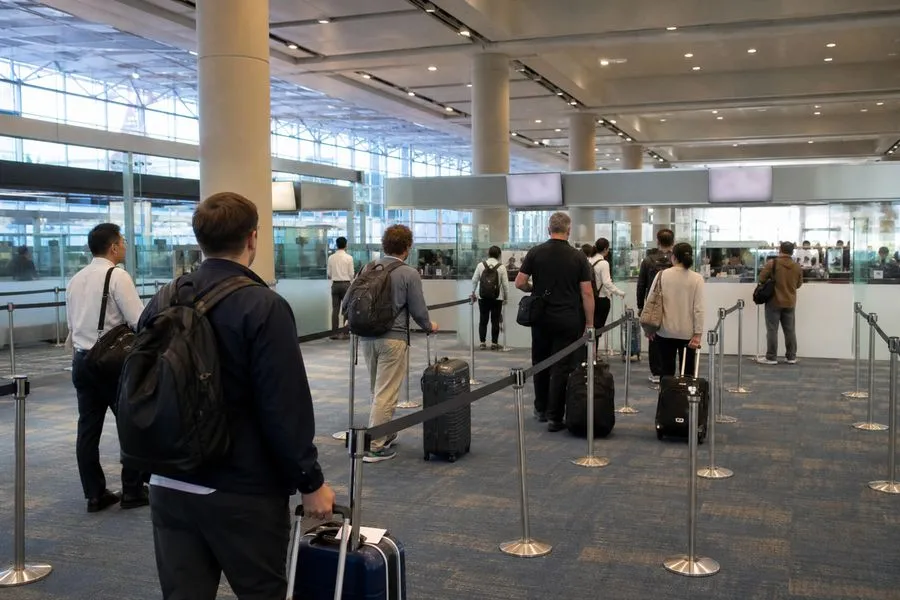
What "Thailand visa requirements" actually means in practice
Thailand does not have one visa requirement. Depending on your passport, purpose, and length of stay, you may need to deal with four separate layers:
- Permission to enter through a visa issued abroad, visa on arrival, or visa exemption.
- The Thailand Digital Arrival Card, which has been mandatory for every non-Thai national arriving by air, land, or sea since 1 May 2025.
- In-country filings such as TM30 notifications, 90-day reports, and extensions.
- Standing border and conduct rules covering cash, customs allowances, prohibited substances, and restricted devices.
Different authorities control those layers, which explains many of the contradictory answers travelers receive. The Ministry of Foreign Affairs issues overseas visas through thaievisa.go.th; as of 1 January 2025, the e-Visa system covered all 94 Thai missions worldwide. After arrival, the Immigration Bureau handles extensions, 90-day reports, TM30 notifications, and overstay enforcement.
The Board of Investment administers the Long-Term Resident visa. The Bank of Thailand sets currency rules, while the Customs Department controls customs allowances.
A work permit is separate again. It comes from the Ministry of Labour's Department of Employment and does not form part of your visa, even though you generally need both approvals to work legally.
Keep three distinctions in mind. Visa exemption does not authorize remote work, and paid work under a status that does not permit employment may fall anywhere from a grey area to a violation. A 90-day report records your address; it does not renew your visa.
Finally, leaving Thailand cancels an extension of stay unless you obtained a re-entry permit first.
US passport holders should also read how long US citizens can stay in Thailand visa-free, which covers the current entry methods in detail.

The short-stay entry routes, and how they differ
Short-stay visitors use visa exemption, visa on arrival, or a tourist visa. These are separate programs with different nationality lists, fees, and permitted stays.
Visa exemption is automatic and free for eligible passports. During the research window, it gave travelers from 93 eligible countries and territories 60 days on entry, up from 30 days before July 2024. One 30-day extension is available at a local Immigration Office for 1,900 THB, bringing the maximum stay to 90 days.
Entry under this scheme at a land border is limited to twice per calendar year.
Visa on arrival covers a narrower list: 31 countries and territories as of the research date. It is for tourism only, costs 2,000 THB in cash, permits 15 days, allows one entry, and cannot be extended. Processing at an airport typically takes 15 to 90 minutes.
Applicants need a 4 x 6 cm photo taken within the previous six months, proof of accommodation, and a confirmed onward ticket within 15 days. The ticket cannot be open or lead to a country bordering Thailand.
Sources disagree on two requirements: passport validity is listed as either 30 days or six months, while proof of funds is listed as either 10,000 THB per person and 20,000 THB per family or 20,000 THB per person and 40,000 THB per family.
Carry the higher amount and use a passport with at least six months' validity.
A tourist visa, or TR, is arranged before travel. It is the usual option when your nationality is not eligible for exemption or when you want multiple-entry flexibility. A single-entry visa must be used within three months of issue, permits up to 60 days, and can be extended once for 30 days.
The estimated cost is USD 30 to USD 50.
The multiple-entry tourist visa, or METV, allows unlimited entries for six months from issue. Each entry permits up to 60 days and can be extended by 30 days. Its estimated cost is USD 150 to USD 250, with financial proof of roughly 40,000 THB.
These estimates come from commercial sources rather than a mission-by-mission fee schedule, so confirm the amount with the mission processing your application.
A pending change may shorten these stays. On 19 May 2026, the Thai Cabinet approved replacing the 60-day exemption for all 93 countries and territories with a 30-day scheme for 54 and a 15-day scheme for 3. It also approved cutting the visa-on-arrival list from 31 countries to 4.
On 14 July 2026, the Cabinet added six nationalities to the proposed 30-day tier.
Those changes were not yet law during the research window. They take effect 15 days after publication in the Royal Gazette, and no publication date had been announced as of late June and July 2026. The 60-day exemption and 31-country visa-on-arrival list therefore remained in force.
We found no source identifying the future tier for US passports. Check the rule for your passport before booking rather than assuming the current stay will remain available. The proposed revision does not affect long-stay categories.
Repeat visa-exempt entries are less clear. On 12 November 2025, the Immigration Bureau announced measures effective the next day, including possible denial after more than two visa-exempt entries without a justifiable reason. The announcement also said extensions would be limited to twice per calendar year, with the second extension granting only 7 days.
In January 2026, Thai authorities clarified that no rule actually limits visa-free entry to twice a year. Both statements remain in the public record.
Read the detailed guides to visa exemption, visa on arrival, and the tourist visa before choosing a route.
Choosing a long-stay route: the criteria that actually decide it
Long-stay routes are not better or worse in a universal sense. Each has a qualifying gate: age, income, relationship, employment, enrollment, an approved activity, or the ability to pay a substantial fee. Once you identify the gates you can pass, the field usually narrows to one or two routes.
| Route | Gate | Validity | Financial test | Government fee | Work allowed |
|---|---|---|---|---|---|
| DTV | Remote work for a foreign employer, or a qualifying activity (Muay Thai, Thai language, cooking, meditation); age 20+ | 5 years, multiple entry, 180 days per entry + one 180-day extension | 500,000 THB in a personal account, generally seasoned 3 months | Varies by mission: USD 400 (Washington, DC, page updated 19 Mar 2026), USD 340 (Ho Chi Minh City); baht baseline commonly cited as 10,000 THB | Remote work for foreign employers only. No Thai work permit and no Thai employment |
| Retirement (O-A / O-X) | Age 50+ | O-A 1 year renewable annually; O-X 5 years renewable once, 14 eligible nationalities | O-A: 800,000 THB in a Thai bank seasoned 3 months, or 65,000 THB/month income, or a combination. O-X: 3,000,000 THB, or 1.8M + 1.2M/year | Non-O at embassy about 2,000 THB; one-year extension 1,900 THB | No work of any kind, including remote work and unpaid volunteering |
| LTR | Category-specific; Wealthy Pensioner needs age 50+ and USD 80,000/year passive income, or USD 40,000-80,000 plus a USD 250,000 Thai investment | 10 years (5+5) | Insurance of USD 50,000+, or Thai social security, or a maintained USD 100,000 deposit for 12+ months | 50,000 THB one-time | Not by default; a BOI work-permit exemption certificate may be applied for |
| Privilege Card | Money only. No age, income, or investment test | 5 to 15 years by tier | None | Bronze 650,000 THB / 5 yr; Gold 900,000 / 5 yr; Platinum 1,500,000 / 10 yr; Diamond 2,500,000 / 15 yr | No |
| Marriage (Non-O) | Marriage to a Thai national | 1 year, renewable | Bank deposit, qualifying income, or a combination | Not confirmed from a primary source | Not without a separate work permit |
| Education (ED) | Enrollment at a Ministry of Education-approved institution | Tied to course duration | Not confirmed from a primary source | Not confirmed from a primary source | No |
| Work (Non-B) | A sponsoring Thai employer | Typically 1 year, renewable | Employer-side capital and staff-ratio requirements | Varies by mission | Yes, but only with a separate work permit from the Department of Employment |
The table marks several figures as unconfirmed because our research did not find a supporting primary source. That applies to marriage-visa financial thresholds and education-visa costs and attendance minimums. Verify them with the Thai mission or Immigration Office handling your case.
DTV fees genuinely vary by mission. A commercial aggregator showed a range of roughly 8,300 to 37,900 THB as of mid-June 2026, but that spread is not an official fee schedule. Ask the mission where you will apply.
The DTV financial test also has practical limits. Cryptocurrency, brokerage or securities accounts, and business accounts do not qualify. Salary deposits are not enough unless the account maintains the required liquid balance.
Retirement-visa insurance has two stages. Since 31 October 2019, the O-A requirement has been 40,000 THB in outpatient coverage plus 400,000 THB in inpatient coverage from a qualifying insurer. Multiple 2026 sources report that many overseas embassies now require about USD 100,000 or 3,000,000 THB in coverage for O-A applications.
In-country Immigration Offices may still accept the original minimums for annual extensions. The applicable figure therefore depends on where and how you apply.
For a closer look at the remote-work route, see whether you qualify for the DTV and what it costs.
How to choose: a working checklist
Work through the questions in order. Stop when a condition rules a route in or out.
- Count your nights. If the trip is under 60 days and your nationality remains on the exemption list, you need no visa as of the research date. You still need a TDAC.
- Decide whether you will work. Foreign-employer remote work points to the DTV. If a Thai company pays you, you need both Non-B status and a work permit from a separate authority.
- If you are 50 or older, check whether you can maintain 800,000 THB in a Thai bank or document 65,000 THB a month in income. If so, retirement status may be the least expensive long-stay route, with annual extensions costing 1,900 THB.
- If passive income exceeds USD 80,000 a year, compare LTR with retirement status before paying. LTR replaces quarterly 90-day reports with one annual report and does not require re-entry permits.
- If you cannot meet an income, age, or savings test but can pay a lump sum, consider the Privilege Card. Compare its price with the cost and administration of repeated retirement renewals over the same period.
- Marriage to a Thai national and enrollment in an approved program open separate routes. Verify the current thresholds directly because primary sourcing for both was incomplete.
- Before leaving Thailand, check whether departure would cancel your status. If it would, obtain a re-entry permit first.
Watch for these red flags:
- A website charging for the TDAC. The official portal is
tdac.immigration.go.th, and filing is free. The Immigration Bureau warns about scam sites. At least one official-looking domain,tdac.in.th, is a private commercial service charging about USD 8 for early submission. - Anyone claiming visa exemption permits remote work. It does not.
- A DTV or tourist-visa fee presented as one universal amount. Fees vary by mission.
- Advice that border runs will reset your stay indefinitely. If Immigration grants a 7-day extension, treat it as time to leave and move to a suitable visa category.
- An agent offering to file your first 90-day report online. Online filing becomes available only after at least one report has been filed in person or by mail.
- A guarantee that a bank will open an account without identifying your visa category. Major banks classify the DTV as a tourist visa for know-your-customer purposes and reject DTV holders. The LTR is the category that genuinely makes account opening easier.
- Exact cannabis, vaping, or currency-export limits presented without a source or warning about conflicting official information.
The compliance chain once you are in the country
For a long stay, one missing filing can block the next.
TM30 comes first. Section 38 of the Immigration Act B.E. 2522 requires the property owner, landlord, house master, or hotel manager to report a non-Thai national's overnight stay to local immigration or police within 24 hours of arrival.
The legal duty belongs to the owner, but you will usually need to provide copies of your passport, visa, arrival card, and lease.
A fresh TM30 is required after every re-entry into Thailand, even if you return to the same address. The 24-hour clock restarts when you enter the country. If you stay continuously without leaving, another filing is not required.
None of the sources reviewed stated the landlord's fine for failing to file.
The 90-day report relies on the TM30 record. Form TM.47, formally called the Notification of Staying in the Kingdom over 90 Days, confirms your current address. It neither renews nor extends your immigration status.
You may file from 15 days before the deadline through 7 days after it. On-time filing is free.
Late filing costs 2,000 THB when you report voluntarily, 5,000 THB if officials discover the failure during another encounter, and 5,000 THB on your next return if you left Thailand with a report outstanding.
One professional source included an AI-generated summary claiming an additional penalty of up to 200 THB per day. That statement contradicted the flat penalties in the same article and had no support from the other sources reviewed, so we do not treat it as an alternative fine structure.
An address mismatch between TM.47 and the latest TM30 is reportedly the most common reason for online rejection. Travelers also report cases in which an online submission appeared successful but later proved to have failed. Keep the confirmation rather than assuming the screen completed the filing.
Extensions cost 1,900 THB in cash at the counter. The fee is non-refundable regardless of the outcome and applies across visa types. You must file before the permitted stay expires because Immigration cannot extend an expired stamp retroactively.
Bring form TM.7, your passport, a 4 x 6 cm photo, proof of accommodation, and the TM30 receipt. Major offices include Chaeng Watthana in Bangkok, Chiang Mai, Phuket, Jomtien, and Ko Samui, with additional offices in Hua Hin, Krabi, Hat Yai, and Udon Thani. An online e-Extension service covers Bangkok-area applicants under twelve defined reason categories.
The Thailand visa extension and 90-day report guide covers due-date tracking and both procedures. Separate instructions are available for TM30, the 90-day report, and a visa extension.
The checkpoint moment: what you file and declare on arrival
Visa permission is only part of arrival. You may also need to file a TDAC, comply with customs allowances, register a SIM, or declare currency.
Submit the TDAC online within 3 days, or 72 hours, before your scheduled arrival. Filing too early can cause rejection. Each card is tied to one declared arrival date, so you need a new one for every entry.
Enter all information in English. After submission, you cannot edit your name, nationality, or date of birth. Transit passengers who never pass immigration control and Border Pass entrants are exempt.
The TDAC does not replace a visa or grant permission to enter; it is a separate tracking requirement. See the TDAC filing window and the scams around it.
The Tourism Authority of Thailand lists duty-free allowances of 200 cigarettes, 250 grams of cigars or smoking tobacco, and 1 liter of alcohol regardless of proof. Every source reviewed agreed on the alcohol limit.
Tobacco sources conflict. A 2009 embassy notice citing the Tobacco Act B.E. 2509 gives an allowance of 200 cigarettes or 500 grams.
The TAT's 250-gram figure is newer and better corroborated, so use the lower amount. Reports describe fines for excess cigarettes as 10 to 15 times the duty value plus tax, payable immediately in cash. A few extra packs can therefore cost more than 10,000 THB.
Currency rules contain an unresolved official conflict.
What the reviewed sources agree on:
- You may bring unlimited foreign currency and unlimited Thai baht into Thailand.
- You may take out foreign banknotes only up to the amount bought from an authorized bank or money changer.
- Taking more than 50,000 THB to a non-bordering country is prohibited.
- Failing to declare currency above the applicable threshold, or making a false declaration, is a criminal offense.
The remaining thresholds do not match. The Bank of Thailand's Exchange Control Regulation page gives a 2,000,000 THB limit for travel to bordering countries, Vietnam, and China's Yunnan province. It says declarations begin above 450,000 THB or USD 15,000.
Thai embassy pages for London, Bern, and Singapore, updated between November 2022 and February 2023, instead state 500,000 THB for bordering countries and a USD 20,000 foreign-currency threshold. The Bank of Thailand is the regulator, but its page showed no visible update date during our research. We therefore cannot confirm which set of figures was current in 2026.
Before carrying a large amount of cash out of Thailand, check bot.or.th and customs.go.th for a dated notification. The Customs Department hotline is 1164.
SIM cards must be registered against a passport. Effective 16 May 2026, each person is limited to three SIMs per provider and must complete registration in person with biometric verification.
Departing visitors may claim a refund of Thailand's 7% VAT on qualifying purchases from participating shops. Minimum single-receipt and cumulative-spend thresholds apply, and you must present the goods for inspection at the airport.
The proposed 300-baht arrival fee was not being collected during the research window. The Kha Yeap Pan Din fee was still awaiting formal Cabinet approval and a collection system as of late May 2026, with the target pushed toward early 2027. Do not budget for it or pay it through a website.
See customs limits, currency declaration, SIM registration, VAT refund, and departure tax status.
Legal risk: where the real consequences live
Overstay carries a fine of 500 THB per day, capped at 20,000 THB after 40 days. The more serious consequence is a re-entry ban, and surrendering voluntarily produces a better outcome than being caught.
| How the overstay ends | Duration | Reported consequence |
|---|---|---|
| Voluntary surrender | Under 90 days | No re-entry ban and no blacklist entry |
| Voluntary surrender | 90 days to 1 year | Up to a 1-year ban |
| Voluntary surrender | 1 to 3 years | Up to a 3-year ban |
| Voluntary surrender | 3 to 5 years | Up to a 5-year ban |
| Voluntary surrender | More than 5 years | Up to a 10-year ban |
| Apprehension | Up to 1 year | Up to a 5-year ban |
| Apprehension | More than 1 year | Up to a 10-year ban |
The ban starts from your departure date, not the date the overstay began. People arrested for overstay are typically detained pending deportation, commonly at the Bangkok Immigration Detention Center on Suan Phlu Road, and usually pay their own deportation costs. An embassy may be notified but cannot intervene in the Thai legal process.
Overstays of several hours or a few days are generally resolved by paying at the airport. Officers may waive the fine for an unintentional case such as a canceled flight, but this is discretionary. A March 2026 directive waived fines for travelers stranded by Middle East airspace closures.
That was a dated emergency exception, not standing policy.
Our research did not locate an official immigration.go.th page stating the statutory basis for the penalty tiers. The figures came from professional and commercial sources describing the rule. See Thailand overstay fines and ban tiers and the overstay page.
Border-run policy remains unsettled. The November 2025 announcement suggested tighter controls on repeated visa-exempt entries, while the January 2026 clarification said there was no twice-yearly cap. The public record supports neither a promise that repeated border runs are safe nor a firm statement that they are universally capped.
A re-entry permit is different. If you hold an extension or another status that requires one, leaving Thailand without the permit cancels that status. See border runs and re-entry permits.
Vaping is banned despite the visibility of vaping products in some tourist areas. The prohibition has applied since 2014 and covers import, sale, possession, and use by Thai nationals and visitors. Customs law applies to import and export, while consumer-protection law applies to possession, use, and sale.
Heat-not-burn products such as IQOS, glo, and Ploom are treated the same way. Nicotine-free devices are not exempt from import, possession, or sale offenses. Nicotine pouches are not explicitly named as banned in the sources reviewed, but reports describe confiscation in practice.
Thai police established an E-Cigarette Control Center on 29 June 2026 and conducted a nationwide operation with a public reporting hotline from 1 to 15 July 2026. Reported tourist enforcement includes confiscation, fines of 5,000 to 30,000 THB, and possible detention at a police station for questioning.
Sources disagree sharply on the statutory maximum penalties. Import is described as carrying up to 10 years in prison and either five times the value of the goods or a flat 500,000 THB fine. Possession is described as either up to 3 years and 30,000 THB or up to 5 years and four times the value.
Sale is described as either 5 years plus 500,000 THB or 3 years plus 600,000 THB. We did not capture the primary statutory text behind those figures. The ban itself is not disputed.
Leave the device at home. See the real penalties for vaping.
Cannabis law is less settled, and the reviewed sources do not support a simple answer. Cannabis was removed from the narcotics schedule in 2022 under emergency powers. No primary law reviewed had re-listed it.
Flower was reclassified in June 2025 as a controlled herbal substance under the Protection and Promotion of Thai Traditional Medicine Knowledge Act B.E. 2542, administered by DTAM.
The operative rules during the research window included Ministerial Regulation No. 2 B.E. 2569 on flower sales and commercial licensing, published in the Royal Gazette on 30 April 2026, and a separate Category-5 extract regulation effective 26 April 2026.
A draft Cannabis and Hemp (Control) Act intended to restrict cannabis to medical use completed public consultation in early June 2026 but had not reached parliamentary deliberation as of 7 July 2026.
Sources disagree about casual recreational use. A Bangkok law firm characterizes cannabis as fundamentally legal because no overriding law has replaced the 2022 position. It points to restrictions on sales to people under 20 and to pregnant or breastfeeding women, as well as nuisance penalties for public smoking.
A commercial tourism source says recreational use without a prescription is illegal and may lead to confiscation, fines, or criminal charges. A licensed dispensary says flower is legal to buy with a PT33 prescription on file, legal to possess, and legal to consume privately, with public consumption carrying a fine of up to 25,000 THB.
An aggregator says only medical use is lawful but recreational use is widely tolerated.
Those positions cannot be reconciled from the available material. What the sources consistently state is that import and export are illegal even with a prescription, the minimum purchase age is 20 with identification, and public consumption can draw a fine. If cannabis affects your travel plans, seek current advice from a Thai attorney rather than relying on a dispensary or tourism website.
The detailed source comparison is available at cannabis status.
Thailand also restricts alcohol sales. National retail hours include a midday period when off-premises sales are prohibited, plus separate evening windows. Election days and certain Buddhist holidays bring additional restrictions, while restaurants and other on-premises venues follow different rules from shops.
We did not find web-sourced confirmation of the exact current hours, so the alcohol sale hours page explains what is known and what still needs confirmation from the Excise Department.
Living logistics, and when to bring in a professional
Foreigners may legally drive with a valid Thai license, a valid International Driving Permit, or a license from an ASEAN member country, according to a Ministry of Transport release dated 19 November 2024.
An IDP must be issued under the 1949 Geneva or 1968 Vienna Convention and carried with your home license. It does not replace that license. For motorcycle riding, the IDP must include a motorcycle endorsement that matches your home-license entitlement.
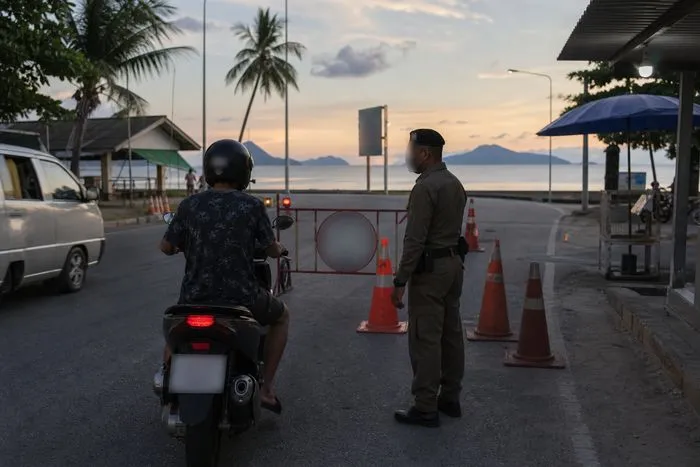
Checkpoints in Phuket, Chiang Mai, and the islands frequently stop foreign riders. The largest risk is not necessarily the traffic fine: driving without a recognized license can invalidate a motor or travel-insurance claim after an accident. Helmets are legally required for both the rider and passenger.
Sources disagree about whether a foreigner can obtain a Thai license while holding a tourist visa.
Our research did not capture a supporting dlt.go.th page, so the process and fees described in driving in Thailand rely on professional and community sources rather than the regulator.
Opening a bank account depends on the visa category and the branch. A non-immigrant status plus proof of address generally gives the best chance, but one branch's refusal does not prove that every branch will refuse. The DTV does not improve eligibility in the way some agents claim.
The LTR does.
Thailand has no universal travel-insurance requirement at entry. A general mandate has been considered but not adopted. Individual visa categories may impose their own coverage requirements, most notably O-A retirement status.
Emergency numbers are 191 for police, 1669 for medical emergencies, 199 for fire, and 1155 for the Tourist Police. These numbers rested on model knowledge in the underlying research and should be confirmed. A written police report is normally required for an insurance claim or replacement of a lost passport.
Pet imports require a Department of Livestock Development permit. Drone operators must comply with two regulators, NBTC and CAAT.
See bank accounts, travel insurance, emergency numbers and police reports, pet import, and drone registration.
Bring in a Thai attorney or licensed agent if your case involves a controlled substance, possible arrest or prosecution, a previous overstay or ban, uncertain family status, adverse action by an authority, or a financial threshold you may not meet.
Professional help is also sensible before paying a non-refundable fee when you cannot independently verify the portal, agent, or claimed route.
Browse the full index
Long-stay decision cluster
Compare these by eligibility gate, not by price.
- DTV Visa Requirements: Fees, Documents, and How to Apply - 5-year remote-work visa, no employer sponsorship, 500,000 THB liquid proof; fee varies by mission
- Thailand Retirement Visa (O-A/O-X): Requirements and Insurance Rules - age 50+; the insurance requirement genuinely differs between embassy application and in-country extension
- Thailand Long-Term Resident (LTR) Visa: Categories and Requirements - 10-year track with annual instead of 90-day reporting and no re-entry permit needed
- Thailand Privilege Card: Cost & How to Apply (2026) - the only route with no income, age, or savings test; tier prices are periodically revised
- Thailand Marriage Visa: Requirements and Evidence You'll Need - gated by relationship, not money; financial thresholds not confirmed from a primary source
- Thailand Education Visa (ED): Requirements and Enrollment Rules - tied to genuine ongoing attendance at an approved institution; documented enforcement history around visa-mill schools
- Thailand Work Visa and Work Permit: What You Actually Need - two separate approvals from two authorities; the visa alone does not let you work
Short-stay entry cluster
Use the route that matches your passport and planned stay.
- Thailand Visa Exemption: Is It Still 60 Days? (2026) - 60 days currently in force; the tiered 30/15-day replacement is Cabinet-approved but not yet gazetted
- Visa on Arrival Thailand: Is Your Country Still Eligible? - 31 countries, 2,000 THB cash, 15 days, single entry, not extendable; approved reduction to 4 countries not yet in effect
- Thailand Tourist Visa (TR): Cost, Documents & How to Apply - the pre-arranged option, including the six-month multiple-entry METV
Compliance-chain cluster
Check these in the order their deadlines arise.
- TM30 in Thailand: Who Files It, Documents & Deadlines - the landlord's legal obligation that blocks your filings if it is missing
- 90-Day Report: Cost, Documents & How to Apply (2026) - an address report, not a visa renewal; first filing cannot be done online
- Thailand Visa Extension: Cost, Documents & How to Apply - 1,900 THB, filed before your stamp expires, never retroactively
- Thailand Overstay Fines and Entry Bans: The Full Penalty Table - the fine is capped; the ban is not, and surrendering beats being caught
- Thailand Border Runs and Re-Entry Permits: What's Actually Allowed - status contested: a November 2025 tightening was publicly clarified away in January 2026
Standing-rule and customs cluster
These rules apply at the checkpoint regardless of visa type.
- Thailand Digital Arrival Card (TDAC): How to File It Correctly - mandatory since 1 May 2025, free, 72-hour window, highest scam-site risk in this hub
- Thailand Duty-Free Limits: Alcohol & Tobacco Allowance - 1 liter of alcohol is consistent across sources; the tobacco weight figure is not
- Thailand Currency Declaration: How Much Cash Is Allowed? - Bank of Thailand and embassy pages give materially different limits; both are shown
- Thailand VAT Refund: Minimum Spend & How to Claim (2026) - the only entry in this hub that puts money back in your pocket
- Thailand's 300 Baht Tourist Fee: Has It Started? (2026) - not being charged; target has moved to early 2027
In-country legal-risk cluster
Start here when the possible consequence goes beyond an ordinary administrative fine.
- Is Vaping Illegal in Thailand? The Real Penalties, Explained - banned since 2014 despite visible availability; statutory maxima disagree between sources
- Is Cannabis Legal in Thailand Right Now? (2026 Status) - status unresolved; professional legal sources disagree on recreational use
- Thailand Alcohol Sale Hours: When You Can and Can't Buy - the midday gap most visitors meet at the register; exact current windows need verification
Life-logistics cluster
These are the common setup tasks for a first month in Thailand.
- Thai Bank Account for Foreigners: What Actually Works - branch discretion is the key fact; the DTV does not help, the LTR does
- SIM Card Registration in Thailand: Documents & How to Apply - passport registration required, capped at 3 SIMs per provider since 16 May 2026
- Driving in Thailand: IDP Rules and Getting a Thai License - the wrong permit can void your insurance, which usually costs more than the fine
- Bringing a Pet to Thailand: Permit, Cost & How to Apply - government import rules and airline cargo policy are separate hurdles
- Drone Registration: Cost, Documents & How to Apply (2026) - two regulators, NBTC and CAAT, plus no-fly zones around airports and national parks
- Is Travel Insurance Required for Thailand? (2026) - no universal entry mandate; specific visa categories carry their own requirement
- Emergency Numbers in Thailand and How to Get a Police Report - which number to call, and the report you will need afterward for a claim
Frequently asked
When should I check the entry rules again?
Check before paying for a non-refundable booking and again shortly before departure. The approved exemption and visa-on-arrival changes do not take effect until 15 days after Royal Gazette publication. Because no publication date had been announced as of July 2026, an older answer may become wrong quickly once the notice appears.
Does leaving Thailand cancel my visa or extension?
It can. A re-entry permit is a separate document that preserves an existing status when you leave. If your status requires one and you depart without it, the extension is canceled.
A re-entry permit does not extend your permitted stay or replace a 90-day report.
Why might an online 90-day report be rejected?
A mismatch between the address on form TM.47 and the latest TM30 is reported as the most common cause. The first 90-day report must also be filed in person or by mail before online filing becomes available. Keep proof of submission because anecdotal reports describe apparently successful online filings that later showed as failed.
Which route is designed for remote work?
The DTV is the route designed for people working remotely for foreign employers. It does not authorize Thai employment or remove the need for the correct status if a Thai company pays you. Visa exemption and tourist status do not authorize remote work.
What should I do if I realize I have overstayed?
Do not assume the daily fine is the only consequence. Voluntary surrender produces a less severe ban schedule than apprehension, and surrender under 90 days is reported to carry no re-entry ban or blacklist entry. For anything beyond a very short accidental overstay, speak to a Thai attorney or licensed immigration professional promptly.
Which figures on this page require direct verification?
Recheck the pending visa-exemption and visa-on-arrival day counts, outbound-currency limits, cannabis rules, vaping penalty maxima, marriage-visa thresholds, education-visa requirements, and mission-specific DTV fees.
The page identifies why each figure remains uncertain and which authority should confirm it.