Koh Phayam, Thailand: How to Get There and Whether It's Worth the Stop
On this page
- Koh Phayam at a Glance
- What Koh Phayam Is Actually Known For
- Getting There: Ranong to Koh Phayam
- When to Go: The High-Season Boat Window
- What It Costs to Get There
- Koh Phayam vs. Its Look-Alike Neighbors - Honest Verdict
- Koh Phayam vs. its look-alike neighbors
- Is Koh Phayam right for you?
- Frequently Asked Questions
- What is Koh Phayam actually known for?
- How do I get to Koh Phayam from Ranong?
- Is Koh Phayam the same island as Koh Chang?
- Is there a best time to visit Koh Phayam, or does the boat stop running?
- Are there cars on Koh Phayam?
- What does it cost to get to Koh Phayam, and is it more expensive than nearby islands?
- How many days should I spend on Koh Phayam?
- Sources
Koh Phayam is worth considering if you want a quiet island and understand what quiet means here: no cars, modest accommodations, motorcycle lanes, and boat service that requires more planning outside high season.
It is not a smaller version of Phuket or Samui. The practical question is whether that limited infrastructure is the reason you want to go or a compromise you will resent.
Koh Phayam at a Glance
| Quick fact | What to know |
|---|---|
| Region | Ranong island cluster on Thailand's southern Andaman coast |
| Mainland gateway | Nawa Andaman Pier in Ranong |
| Island transport | No cars; paved lanes are used mainly by motorcycles |
| Accommodation style | Generally budget and rustic rather than resort-style |
| Best-served period | Usually November through April |
| Honest framing | A real, car-free island destination, not merely a stop between better-known places |
For the wider regional context, go back to all Thailand destinations. If you need to organize the mainland part first, the mainland gateway is Ranong.
What Koh Phayam Is Actually Known For
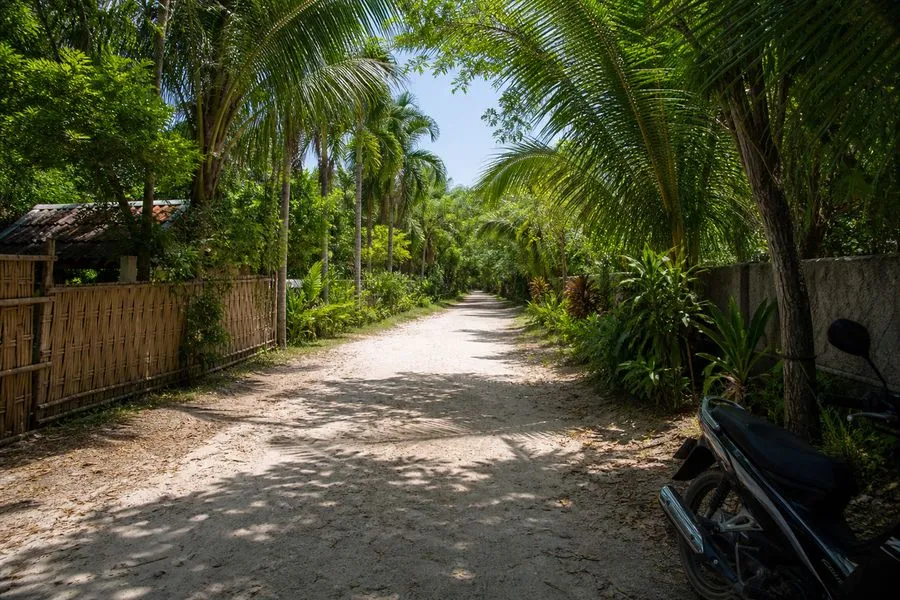
Koh Phayam's defining feature is not a particular beach or resort. Available destination research describes it as a genuinely car-free island with paved lanes used mainly by motorcycles. Motorbike taxis with sidecars are generally available at the pier, which matters if you arrive carrying more than a small backpack.
That arrangement gives the island a slow, low-infrastructure rhythm, but "car-free" does not mean traffic-free. Motorcycles still use the lanes. It also does not mean that every bungalow, beach, or service sits within an easy walk of the arrival pier.
Accommodation tends to run budget and rustic rather than resort-style. I would take that description literally instead of reading it as marketing shorthand for hidden luxury. The research for this page did not produce dependable room prices or named lodging recommendations, so I would not plan around an assumed bargain rate.
Koh Phayam suits travelers who want less infrastructure and do not need nightlife, upscale lodging, or a polished resort compound. It is a poor match for anyone hoping for a Samui- or Phuket-style stay on a quieter beach. There is nothing wrong with wanting that kind of trip; this is simply not the island I would choose for it.
The island has enough practical substance to justify the detour: a working mainland connection, frequent high-season boats, and a distinct car-free lane system. Its appeal is specific. That is more useful than calling it an "unspoiled paradise," a phrase that tells you almost nothing about how the place works.
Getting There: Ranong to Koh Phayam
Boats leave from Nawa Andaman Pier in Ranong. The two commonly reported options are a slow ferry and a speedboat, but fares and departure times can change with the operator, season, and weather.
| Boat option | Approximate fare | Approximate crossing | Reported service pattern |
|---|---|---|---|
| Slow ferry | About 200 THB | Roughly 2-3 hours | Departures commonly listed around 9:30 a.m. and 2:00 p.m. |
| Speedboat | About 350 THB | Roughly 30-45 minutes | Service commonly runs during an approximate 7:00 a.m.-5:00 p.m. window |
Speedboats are generally more reliable and frequent during the November-April high season. Some service may continue in low season when weather allows, but I would not treat the operating window as a guaranteed daily timetable.
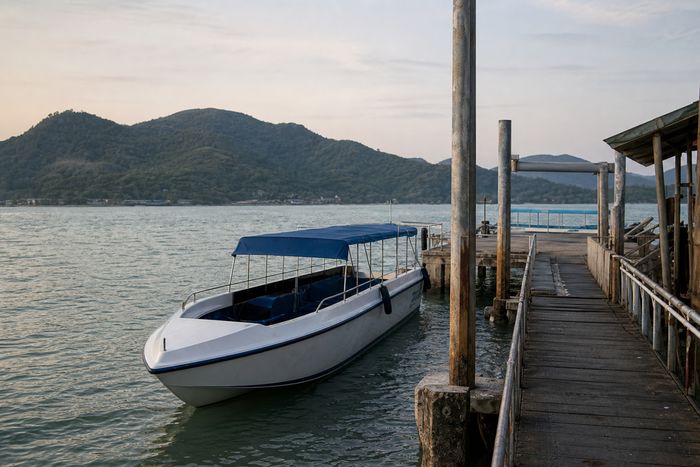
Confirm the current departure point, fare, and sailing time before booking the rest of the day. I have learned to build slack into small-pier transfers along the Andaman coast (usually after first trying to make the timetable behave like a train schedule). A crossing advertised as 30-45 minutes does not protect a same-day onward connection if the boat leaves later or weather disrupts service.
For booking channels and the mainland side of the trip, use the site's getting-around guide.
When to Go: The High-Season Boat Window
Boat service is generally frequent and dependable from November through April. Low-season boats may still operate, but the schedule tends to become thinner and more dependent on weather.
That is an informal service pattern, not a fixed closure calendar. Check the current schedule before committing to accommodation or an onward connection, especially outside the usual high-season window.
You can see the full year for Koh Phayam in the Season Matrix. For the weather pattern behind the seasonal difference, see the site's when-to-go guide rather than trying to infer conditions from one month's boat listing.
What It Costs to Get There
For the Ranong-to-Koh Phayam crossing alone, plan on about 200 THB for the slow ferry or about 350 THB for a speedboat. Those are planning figures, not fixed current fares.
The slower option takes roughly 2-3 hours, while the speedboat commonly takes about 30-45 minutes. Before comparing only the ticket prices, account for the departure time and the risk of a thin schedule leaving you with an extra night on either side.
No dependable accommodation-price range emerged from the research used here. The island's lodging is generally characterized as budget and rustic, but that is a description of style, not a quoted nightly rate. Use the site's money-and-costs guide for broader trip budgeting.
Koh Phayam vs. Its Look-Alike Neighbors - Honest Verdict
The names cause avoidable planning mistakes. Koh Phayam, nearby Koh Chang Ranong, and Koh Chang in Trat province are three different islands. The last two share the name Koh Chang but sit in different parts of Thailand.
Koh Phayam vs. its look-alike neighbors
| Island | Character | Access from Ranong | One-line honest take |
|---|---|---|---|
| Koh Phayam | More developed and better served; car-free, with lanes used mainly by motorcycles | Regular ferry and speedboat connections are generally available in high season | The best fit of the three for a quiet Ranong island with workable transport and modest infrastructure |
| Koh Chang Ranong | Smaller, quieter, less developed, and less served | Part of the Ranong island cluster, with thinner access than Koh Phayam | A more remote alternative; compare it with the quieter Koh Chang Ranong nearby |
| Koh Chang, Trat province | A much larger, well-known island on the opposite coast | Reached from Trat, not Ranong | An entirely different destination, not to be confused with Koh Chang in Trat province, on the opposite coast |
My verdict is yes, Koh Phayam is worth the stop for travelers who specifically want its car-free, infrastructure-light pace.
It clears the practical threshold that some remote-island ideas do not: there is a usable high-season boat pattern, the crossing can take as little as about 30-45 minutes by speedboat, and the island has a clear identity beyond being quiet.
It is not worth the detour if you need resort infrastructure or a tightly guaranteed low-season transfer. In that case, choosing Koh Phayam because it sounds peaceful is likely to produce the wrong trip.
Is Koh Phayam right for you?
Koh Phayam is a good fit if:
- You want a genuinely car-free island whose paved lanes are used mainly by motorcycles.
- A slow pace and limited infrastructure are part of the appeal.
- You are comfortable with budget or rustic lodging rather than resort-style accommodations.
- You are traveling during the usual November-April high-season service window.
- You can leave some slack around weather-sensitive boat transfers.
Reconsider or look elsewhere if:
- You want upscale resort facilities or nightlife.
- You are traveling in low season and require a frequent, guaranteed crossing.
- Motorcycle traffic on narrow lanes is not what you picture when you hear "car-free."
- The smaller and even quieter Koh Chang Ranong is closer to the remote-island experience you want.
Frequently Asked Questions
What is Koh Phayam actually known for?
Koh Phayam is known for being car-free, with paved lanes used mainly by motorcycles. Motorbike-taxi sidecars are generally available at the pier, and the overall experience is slow-paced and infrastructure-light rather than resort-oriented.
How do I get to Koh Phayam from Ranong?
Travel from Nawa Andaman Pier by slow ferry or speedboat.
Planning figures are about 200 THB and 2-3 hours for the ferry, or about 350 THB and 30-45 minutes for the speedboat; confirm the current fare and schedule before booking, and consult the site's getting-around guide for transport planning.
Is Koh Phayam the same island as Koh Chang?
No. Koh Phayam is its own island; Koh Chang Ranong is a smaller, quieter island nearby, while Koh Chang in Trat province is the famous, much larger island on the opposite coast.
Is there a best time to visit Koh Phayam, or does the boat stop running?
November through April generally brings more frequent and reliable boat service. Low-season service may continue, but it is usually thinner and weather-dependent rather than governed by a guaranteed closure date.
Are there cars on Koh Phayam?
No, Koh Phayam is characterized as a car-free island. Its lanes are used mainly by motorcycles, and arrivals can generally find motorbike taxis with sidecars at the pier.
What does it cost to get to Koh Phayam, and is it more expensive than nearby islands?
Expect planning figures of about 200 THB for the slow ferry or about 350 THB for the speedboat, subject to operator and seasonal changes. The available research does not support a precise price comparison with every nearby island or a specific accommodation rate.
How many days should I spend on Koh Phayam?
The research does not specify a typical stay length for Koh Phayam. Plan around the boat schedule and your tolerance for a low-infrastructure pace rather than inventing a fixed number of days, particularly when crossings are less predictable outside high season.
Before paying for accommodation or arranging a tight onward connection, confirm the current ferry or speedboat schedule and fare directly at Nawa Andaman Pier or with an operator. This matters most outside the usual November-April high season.
Sources
Last reviewed: August 12, 2026.
- PracticalThailand.com Koh Phayam destination dossier, covering crossing estimates, island transport character, seasonal service, and name disambiguation.
- PracticalThailand.com Ranong-cluster research, covering the budget and rustic accommodation pattern and cross-checking transport estimates against multiple independent listings.
