Ubon Ratchathani, Thailand: How to Get There, Is It Worth It?
On this page
- Ubon Ratchathani in Thailand's Isaan Region
- Quick Facts
- What Ubon Ratchathani Is Known For
- Who Ubon Ratchathani Actually Suits
- Getting There
- When to Go: Sam Phan Bok and the Mun River Sandbar
- Price Tier: What to Expect
- Honest Verdict: Is Ubon Ratchathani Worth the Stop?
- Should You Add Ubon Ratchathani to Your Route?
- FAQ
- Is Ubon Ratchathani actually worth visiting, or is it just another provincial capital?
- What is Ubon Ratchathani known for?
- How do I get to Ubon Ratchathani from Bangkok, and how long does it take?
- When is the best time to visit Ubon Ratchathani for Sam Phan Bok and the river sandbar?
- How many days should I spend in Ubon Ratchathani?
- Sources
Ubon Ratchathani presents a useful itinerary problem.
It has enough cultural and natural substance to justify a deliberate stop, but reaching it from Bangkok can consume roughly 8-9 hours by road, based on an estimate that still needs cross-checking.
The answer depends less on collecting another provincial capital and more on whether your dates expose the landscape that makes Ubon distinctive.
Ubon Ratchathani in Thailand's Isaan Region
Ubon Ratchathani sits in Isaan, the northeastern region that contains roughly a third of Thailand's population but, according to commonly cited estimates, receives only about 2% of national tourism. Those figures are not from a confirmed Tourism Authority of Thailand or National Statistical Office dataset, so treat them as context rather than a current official count.
For the wider regional picture, go back to all Thailand destinations.
Quick Facts
These are the practical details I would check first when deciding whether to add Ubon Ratchathani to a route.
| Attribute | Detail |
|---|---|
| Region | Isaan / Northeast Thailand |
| Nearest air gateway | Regional airport with scheduled Bangkok service reported, but the current carrier and schedule need direct confirmation |
| Road time from Bangkok | Roughly 8-9 hours, based on a single estimate that has not been independently cross-checked |
| Best season for Sam Phan Bok | Dry summer months, with exact conditions varying |
| Sandbar season, Ko Hat Wat Tai | Reportedly exposed only during March-April |
| Michelin Guide coverage | Included in the Michelin Guide Thailand expansion into Isaan announced in 2022 |
What Ubon Ratchathani Is Known For
The city's story begins with its founding by Lao immigrants. That matters because it provides a more useful frame than calling Ubon another Thai "temple town," a description broad enough to tell you almost nothing.
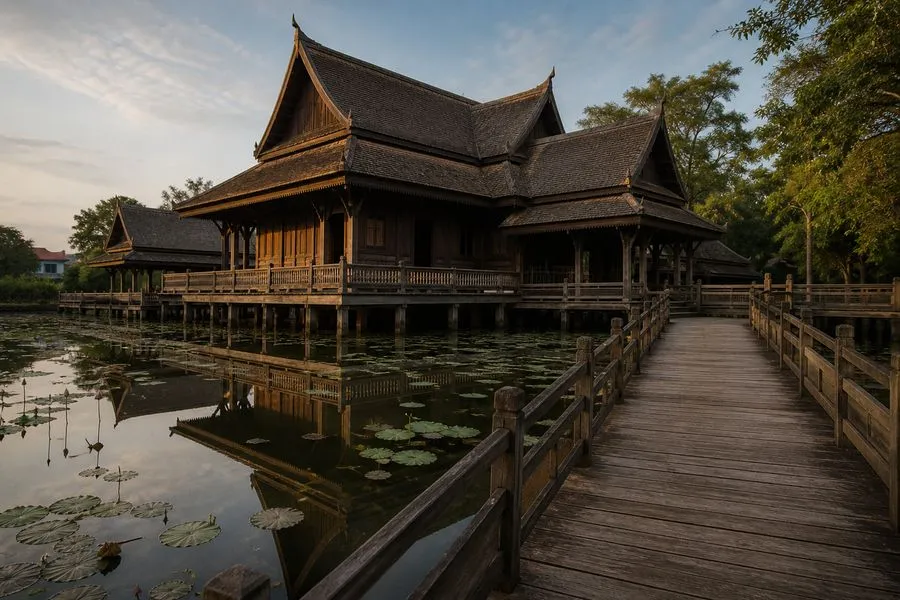
Wat Thung Si Muang is the first concrete reason to stop. Its standout feature is a Rama III-era teak scripture library built on stilts over a lotus pond. The building, water and raised structure form a specific heritage sight rather than a generic temple-compound visit.
If I were cutting an Isaan itinerary down to places with a clearly identifiable draw, this would survive the edit.
The second reason is the Ubon Ratchathani National Museum, housed in a former royal residence. Its collection spans Thai, Lao, Khmer, Vietnamese and Indian artifacts. Some sources characterize it as Isaan's finest museum, but the research available for this article did not identify a named primary source supporting that ranking.
I would treat "finest" as an enthusiastic assessment, not an objective title. The underlying collection and setting are substantial enough without leaning on it.
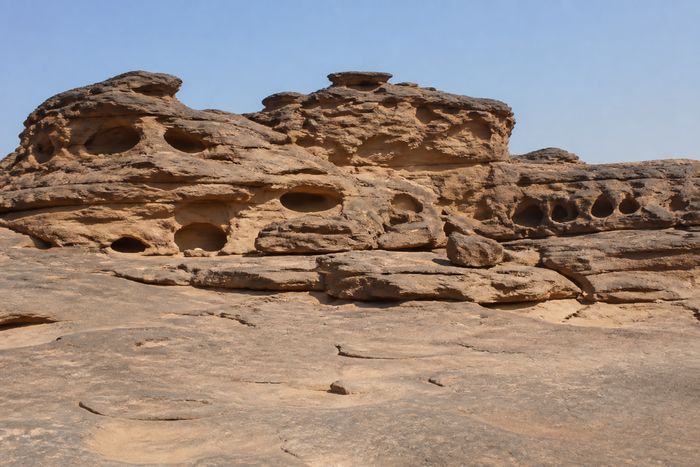
Then there is Sam Phan Bok, a natural rock formation sometimes marketed as the "Grand Canyon of Thailand."
The comparison is a tourism tagline, not a geological equivalence, but the exposed, eroded rock landscape gives Ubon something many provincial-city stops lack: a natural sight with a strong visual identity.
Michelin Guide Thailand added Ubon Ratchathani, Nakhon Ratchasima, Udon Thani and Khon Kaen when it announced its sixth-edition expansion into Isaan on April 26, 2022. I read that as a market-visibility signal. It shows that a major international guide considered the region worth covering; it does not, by itself, establish a particular Ubon restaurant recommendation.
That distinction is worth keeping. Ubon's case rests on a named temple, a serious museum and a seasonal rock formation, not on borrowed prestige from a guidebook badge.
Who Ubon Ratchathani Actually Suits
Ubon suits travelers prepared to trade time for substance.
You get a heritage building with a distinctive setting, a museum that connects several regional cultures and one natural-landscape payoff that does not look interchangeable with every other Isaan city.
It does not suit someone primarily looking for a beach or nightlife.
It is also a poor addition for a traveler unwilling to spend roughly 8-9 hours overland, or pay the flight-cost equivalent, for a stop whose wider multi-day resort infrastructure was not confirmed in this research pass.
Traveler-profile evidence is thin here, so I am not going to manufacture categories such as "best for couples" or "ideal for backpackers." The useful split is simpler: you either value the named cultural sights and seasonal landscape enough to route through deliberately, or you do not.
For regional alternatives, compare it with Khao Yai, see also: Khon Kaen and see also: Udon Thani.
Getting There
The practical choice is between flying into Ubon Ratchathani's regional airport and traveling overland from Bangkok. The available research indicates that scheduled Bangkok flights serve the airport, but it does not confirm the current carrier, route details or frequency. Small-airport schedules are volatile, so verify the flight directly with the airline before paying for lodging or building a connection around it.
I would check that myself rather than take a single blog's timetable as current. A flight that existed when an article was researched can move days, change frequency or disappear from the schedule.
By road, use roughly 8-9 hours as a planning estimate, not a promised journey time. That range comes from one source that was not independently cross-checked for this article. Your actual trip can depend on the current service, departure point and road conditions, none of which the available dossier documents closely enough to turn the estimate into a guarantee.
Check current bus schedules before departure. Check train schedules too if you are considering rail, but this research does not confirm a specific train service, travel time, fare or operator, so I cannot responsibly recommend one here.
The route decision is fairly blunt. Flying preserves more of a short itinerary but requires schedule and cost verification. Going overland uses a substantial part of a day, which makes Ubon a weak drive-through stop and a stronger 1-2 night commitment.
For transport planning beyond this destination-specific comparison, use the site's general logistics for getting around Thailand.
When to Go: Sam Phan Bok and the Mun River Sandbar
Timing changes the value of Ubon more than a generic city description suggests. Sam Phan Bok is best approached during the dry summer months, when lower water reportedly exposes the eroded rock formations that support the "Grand Canyon of Thailand" nickname. Exact exposure conditions should be checked close to your trip rather than assumed from the calendar alone.
Ko Hat Wat Tai is narrower still. The Mun River sandbar is reported to emerge only in March-April. Outside that short window, you may still have the temple and museum, but you should not build the trip around seeing the sandbar.
These are two distinct seasonal constraints: a broader dry-period payoff at Sam Phan Bok and a specifically reported March-April window at Ko Hat Wat Tai. "Anytime is fine" is not good planning here (particularly if the exposed river landscape is your main reason for going).
Before fixing dates, see the full year for Ubon Ratchathani in the Season Matrix.
Price Tier: What to Expect
No reliable Ubon-specific price tier survived this research pass. That means I cannot tell you, with evidence, that lodging or food runs a certain percentage below Bangkok, nor can I give a defensible nightly hotel range.
Use live quotes instead. Compare lodging and meal prices for your dates against a reference city you already understand, such as Khon Kaen or Udon Thani, and check what is included before drawing conclusions. A cheap-looking room far from the sights can create a transport problem; a higher quote during your preferred seasonal window may simply reflect the dates.
I have made expensive planning mistakes by treating an old regional average as if it were a current bookable price. Here, the honest answer is that the baseline remains unconfirmed.
Honest Verdict: Is Ubon Ratchathani Worth the Stop?
Yes, for the right route.
Ubon Ratchathani has genuine substance across culture, history and nature, making it one of the clearest cases in Isaan for a dedicated destination page rather than a padded writeup about an ordinary provincial capital.
Should You Add Ubon Ratchathani to Your Route?
Check the statements that apply to your trip:
- I can dedicate 1-2 nights rather than pass through in a few hours.
- My dates fall in the dry season or, ideally for the Ko Hat Wat Tai sandbar, in March-April.
- I want museum and temple substance rather than beach or nightlife.
- I accept roughly 8-9 hours overland, or I am willing to find and verify a current regional flight myself.
- I am already traveling in Isaan or deliberately seeking its under-visited profile, without expecting Bangkok-level tourist infrastructure.
If you check four or five boxes, Ubon is a rational addition. With two or fewer, the detour probably costs more itinerary time than it returns.
The region's commonly cited share of only about 2% of Thailand's tourism helps explain why Ubon may not already be on your shortlist, although that figure is not backed here by a confirmed official dataset.
Low visibility is not the same as thin substance.
I would allow 1-2 nights. That is enough commitment to avoid reducing the visit to a drive-through, while staying within what the documented attraction list supports. The case becomes strongest when your dates align with the dry-season conditions at Sam Phan Bok, especially March-April if Ko Hat Wat Tai is part of the plan.
FAQ
Here are the short answers to the questions that usually decide the itinerary.
Is Ubon Ratchathani actually worth visiting, or is it just another provincial capital?
Yes, Ubon Ratchathani is worth visiting if its named cultural and natural sights match your interests.
Wat Thung Si Muang, the National Museum and Sam Phan Bok give it more substance than a filler stop, but the trade-off is roughly 8-9 hours by road from Bangkok or the cost and uncertainty of a regional flight.
What is Ubon Ratchathani known for?
Ubon Ratchathani is known for Wat Thung Si Muang's stilted teak scripture library, the Ubon Ratchathani National Museum and Sam Phan Bok. Its identity also reflects its founding by Lao immigrants, which provides context for the city's cultural position in Isaan.
How do I get to Ubon Ratchathani from Bangkok, and how long does it take?
You can investigate a regional flight or plan on roughly 8-9 hours by road. The current airline schedule and road estimate were not independently confirmed for this article, so verify the flight directly with the airline and check current overland schedules before booking.
When is the best time to visit Ubon Ratchathani for Sam Phan Bok and the river sandbar?
Visit during the dry summer months for the best reported chance of seeing Sam Phan Bok's exposed formations. The Ko Hat Wat Tai sandbar has a tighter reported window of March-April; use the Season Matrix for Ubon Ratchathani to check the wider seasonal picture.
How many days should I spend in Ubon Ratchathani?
Plan on 1-2 nights. That gives the stop enough time to justify the journey, while the available research does not support inventing a longer multi-day itinerary.
Check your travel month in the Season Matrix for Ubon Ratchathani before booking transport or lodging, especially if Sam Phan Bok or the Ko Hat Wat Tai sandbar is the deciding reason for your trip.
Sources
- Michelin Guide Thailand, announcement dated April 26, 2022: sixth-edition expansion covering Ubon Ratchathani, Nakhon Ratchasima, Udon Thani and Khon Kaen.
- Insight Guides and InThailand.Travel: the commonly cited estimate that Isaan receives about 2% of national tourism despite containing roughly one-third of Thailand's population. This is contextual, not a confirmed official statistic.
- Entity dossier and cluster research: attraction descriptions, seasonal windows and transport estimates. No primary source was identified for the roughly 8-9 hour road time, current airport schedule, local price tier, "Isaan's finest museum" characterization or "Grand Canyon of Thailand" tagline.
Last reviewed: August 12, 2026.
