Old City: Where to Stay Guide (Chiang Mai)
On this page
- Old City at a Glance
- Who the Old City Suits
- Old City vs. Nimman: What Actually Differs
- Getting Around: The Walkable Core and Day Trips
- Price and Lodging Tier
- Safety, Noise and Practical Friction
- Honest Verdict: Should You Stay in the Old City?
- Nearby: Nimman, Santitham, Chang Klan and Getting Around Chiang Mai
- Frequently Asked Questions
- Is the Old City too noisy on weekends?
- How is the Old City different from Nimman?
- Is the Old City walkable to the Sunday Walking Street?
- Is the Old City good for a first Chiang Mai visit?
- Sources
Old City at a Glance
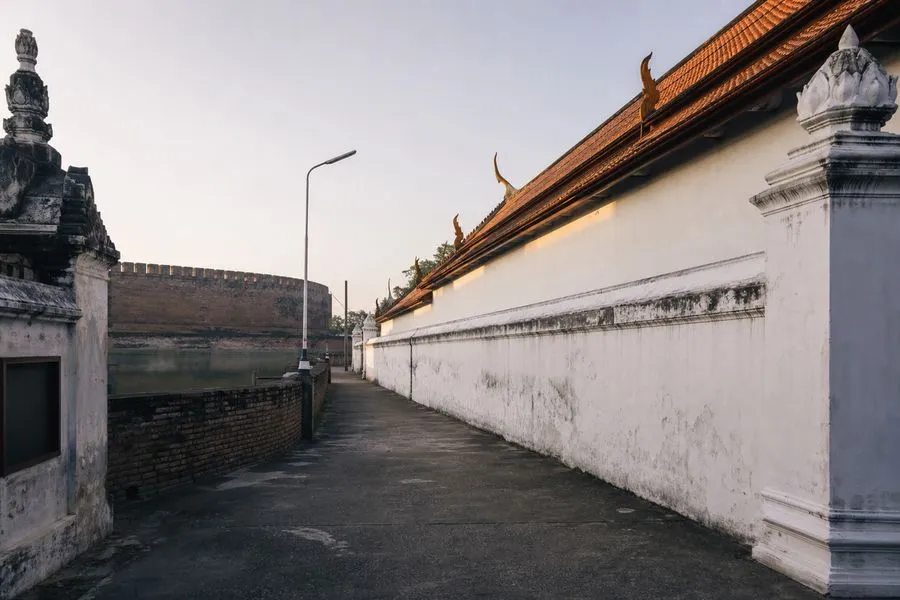
The Old City is Chiang Mai's moat-and-wall-bounded historic core, founded as the Lanna capital in the late 13th century, around 1296. It belongs to Chiang Mai and remains the city's most concentrated area for temples, guesthouses, and walking between sights.
For a first visit, its advantage is simple: you can stay inside the historic center rather than commute into it. The cost is weekend noise around Tha Phae Gate and increasingly tourist-level prices. Start with the Chiang Mai travel guide, or see all Chiang Mai areas if you are still comparing districts.
Who the Old City Suits
- Nightlife and noise: Moderate. The district is not one continuous party strip, but Sunday Walking Street and weekend activity near Tha Phae Gate can be clearly audible.
- Family fit: High. The walkable layout and concentration of temples and cultural sights reduce the need for repeated vehicle trips.
- Budget tier: Budget-to-mid, with prices tending upward as tourism grows. Treat that as a general tier rather than a fixed nightly rate.
- Walkability and transit: Excellent for the historic core. No rail line serves the district; songthaews or Grab become useful for trips beyond it.
- Long-stay and digital-nomad fit: Low-to-moderate. You can stay longer, but the district is historic and visitor-oriented rather than built around the café and coworking identity associated with Nimman.
Old City vs. Nimman: What Actually Differs
The Old City and Nimman solve different trip-planning problems. The Old City puts temples, old walls, guesthouses, and the Sunday Walking Street within the same compact core. Nimman, just west of the moat, is the modern café, coworking, and digital-nomad district.
A 2026 comparison from the commercial site chiangmaigotours.com reports that Nimman costs 15-25% more for mid-range hotels and 20-30% more for cafés and Western restaurants, while street-food prices are similar.
Those figures come from one commercial source, so I would use them as a directional comparison, not a current district-wide price rule.
| Area | Character | Price vs. the other | Best suited to |
|---|---|---|---|
| Old City | Walled historic core; temple-dense, guesthouse-heavy, and highly walkable | Generally budget-to-mid and rising with tourism | First-time visitors prioritizing walkability, temples, and culture |
| Nimman | Modern café, coworking, and nomad district just west of the moat | Reportedly 15-25% more for mid-range hotels, based on one 2026 commercial comparison | Digital nomads and remote workers wanting a café and coworking base |
The practical trade-off is not subtle.
Choose the Old City for central walkability and temple density; choose Old City vs. Nimman if café and coworking access matters more than sleeping inside the historic center.
Getting Around: The Walkable Core and Day Trips
No rail line serves the Old City. Inside the moat, however, the street grid gives you Chiang Mai's strongest walking base for temples, guesthouses, and Ratchadamnoen Road, where the Sunday Walking Street takes place.
That convenience changes once you leave the center. For Doi Suthep, allow roughly 30 minutes by road as an orientation rather than a guaranteed journey time, and plan on using a songthaew or Grab. The same principle applies to other day trips: walk inside the core, then arrange road transport when the destination sits beyond it.
I will spare you a condensed explanation of fares, pickup points, and app bookings here. The getting-around guide covers those mechanics without turning an area decision into a transport manual.
Price and Lodging Tier
The most defensible description of Old City lodging is budget-to-mid, with prices rising as tourism increases. There is no confirmed district-wide THB range in the research for this page, and rates vary too much to manufacture one.
Nimman's reported hotel premium gives that description some context, but it does not make every Old City room inexpensive. Check the money-and-costs guide for broader Thailand budget planning, then compare actual lodging for your dates.
Safety, Noise and Practical Friction
The documented drawback is noise, not a manufactured safety scare. Sunday Walking Street runs along Ratchadamnoen Road through the Old City, while the Tha Phae Gate approach attracts weekend activity. Light sleepers should treat rooms near that route differently from rooms on quieter interior lanes.
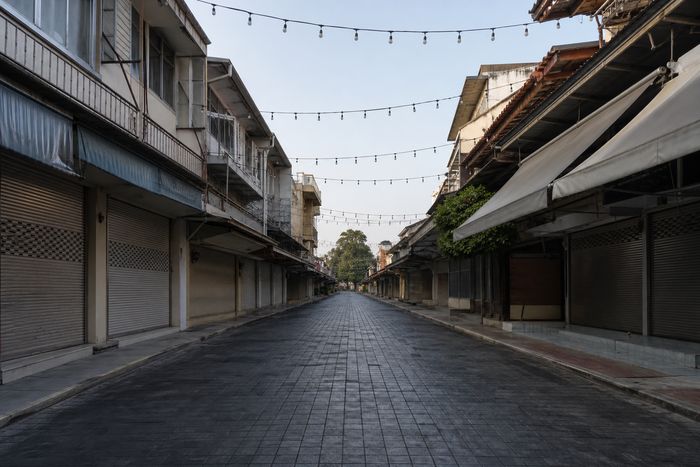
Living in Chiang Mai, I have found the distinction fairly consistent: the noise is tied to Sunday night, weekend crowds, and specific streets, not a nightly condition across the entire district. That does not help much if your room faces the route on Sunday (a detail worth checking before payment).
Vehicle access is the second friction point. Narrow streets within the moat-and-wall layout can slow trips into and out of the district. The third is pricing: businesses serving visitors can feel increasingly tourist-priced even though the overall lodging tier remains budget-to-mid.
Honest Verdict: Should You Stay in the Old City?
For a first Chiang Mai visit, I would start with the Old City. Its temple density and walkability are real, and no other district gives you the same ability to step outside and already be inside the historic core.
I would not choose it automatically. If quiet weekend nights are your first priority, avoid the Tha Phae Gate approach and the Sunday Walking Street route, or consider another district. If your daily routine revolves around modern cafés and coworking spaces, Nimman is the more logical base.
The mistake is booking on the strength of the walls alone. The Old City works best when you actively want culture and walking, and accept that the most convenient streets can also be the loudest and most visitor-priced.
Nearby: Nimman, Santitham, Chang Klan and Getting Around Chiang Mai
For a modern café and coworking base west of the moat, read the full Old City vs. Nimman comparison.
You can also compare with Santitham or consider Chang Klan vs Old City when choosing a central hotel base near the Night Bazaar.
Use the getting-around guide to compare the transport implications, or open all Chiang Mai areas to use the district comparison tool.
Frequently Asked Questions
Is the Old City too noisy on weekends?
Yes, parts of it are noticeably noisy on weekends, especially near Tha Phae Gate and along the Sunday Walking Street route. It is a real concern for light sleepers, though the noise is associated with particular streets and times rather than every lane throughout the week.
How is the Old City different from Nimman?
The Old City is the walkable, temple-dense historic core, while Nimman is the modern café, coworking, and nomad district west of the moat. Nimman is also reportedly more expensive in some lodging and dining categories, based on the single commercial comparison discussed in the table.
Is the Old City walkable to the Sunday Walking Street?
Yes. Ratchadamnoen Road, the Sunday Walking Street route, runs through the Old City itself, so lodging inside the walls is typically within walking distance without requiring a vehicle transfer.
Is the Old City good for a first Chiang Mai visit?
Yes, it is the strongest fit for a first-time visitor who wants a walkable, temple-dense base. The qualification is that weekend noise near Tha Phae Gate and rising tourist-level prices are part of the deal, not minor details to discover after booking.
Compare the Old City with Nimman and the rest of Chiang Mai's areas before choosing your base.
Sources
- chiangmaigotours.com, “Nimman vs Old City” (2026), commercial comparison used only for the reported price differences.
District price tiers, percentage comparisons, and road travel times are indicative rather than guaranteed; check current lodging rates and trip conditions for your dates.
