Railay: Where to Stay Guide (Krabi)

On this page
- Railay in Brief
- Who Railay Suits
- Railay vs. Ao Nang and Ao Nam Mao
- Getting To and Around Railay
- Boat-Crossing Planning Checklist
- Price and Lodging Tier
- Safety and Noise Notes
- The Honest Verdict
- FAQ: Staying in Railay
- What's the difference between West Railay, East Railay and Tonsai?
- What happens if bad weather disrupts the boat crossing to Railay?
- Can I day-trip to Railay from Ao Nang without staying overnight?
- Is Railay actually good for rock climbing?
- Is Railay worth staying in, or is Ao Nang a better base?
- Sources
Railay makes you accept the inconvenient part before you get the payoff. There is no road into the peninsula, so you and your luggage arrive by boat.
In return, you stay beneath limestone cliffs, within walking distance of several distinct beach areas and a climbing scene that feels like more than a resort brochure invention.
If you need wider Krabi planning first, use the Krabi travel guide.
Railay in Brief
Railay favors scenery and seclusion over transport convenience, with modest nightlife, mixed family appeal, poor long-stay practicality, and lodging from basic bungalows to 5-star resorts. Use the Krabi district guide to compare those five criteria across the wider area.
Who Railay Suits
Railay works best for:
- Climbers who want to stay near the peninsula's established climbing scene rather than commute from the mainland.
- Scenery-focused travelers prepared to organize every arrival and departure around a boat crossing.
- Couples and families comfortable carrying luggage through boat landings and accepting weather-dependent access.
- Travelers choosing between fan-cooled bungalows, mid-tier resorts, and high-end beachfront lodging.
It is less convincing for digital nomads or anyone who needs effortless road access. Nightlife is low to moderate, split between small resort venues and a more social backpacker atmosphere around Tonsai. I would not choose Railay for a work-heavy month; I would choose it for a short stay where the location itself is the point.
Railay vs. Ao Nang and Ao Nam Mao
The practical decision is usually Ao Nang vs Railay. Ao Nang is connected by road, sits roughly 30-40 minutes from Krabi Airport under typical estimates, and has the province's widest lodging and nightlife selection. Railay gives up that convenience for cliffs, beaches, seclusion, and direct access to the climbing scene.
Ao Nam Mao is a different comparison. It is a quieter mainland boat-departure point with sparse lodging, including only three confirmed named properties in the underlying research. Read more about the quieter Ao Nam Mao crossing point if you want mainland access without basing yourself in Ao Nang.
| Area | Access | Best for | Nightlife | Budget tier |
|---|---|---|---|---|
| Railay | Boat-only; no road connection | Scenery, climbing, seclusion | Low to moderate; resort and backpacker mix | Basic fan-cooled bungalows through 5-star resorts |
| Ao Nang | Road-connected; roughly 30-40 minutes from Krabi Airport | Maximum lodging choice and easy day trips | More active than Railay | Widest range in the province |
| Ao Nam Mao | Road-connected pier with boats to Railay and islands | A quieter mainland departure point | Limited | Sparse lodging; three confirmed named properties |
Railay is not simply Ao Nang minus a road. Staying there changes the rhythm of the trip because leaving the peninsula requires another boat movement.
Getting To and Around Railay
Longtail boats and speedboats provide access to Railay; there is no road network into the peninsula. The crossing from the Ao Nang-area mainland is often described as taking about 15 minutes, but that is a rough planning figure, not a guaranteed journey time. Boats also operate from Ao Nam Mao pier.
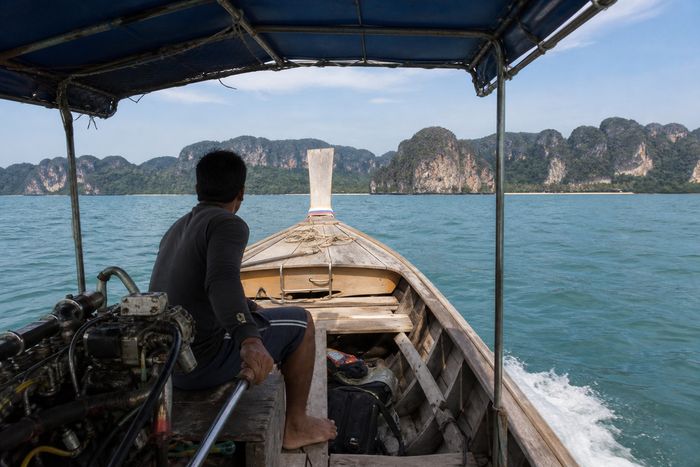
Weather can slow or disrupt a crossing. That matters little if you have an open afternoon and much more if a flight, bus, or train leaves later the same day. I once treated that 15-minute estimate like a timetable and left myself too little room for an onward connection when the boats slowed down.
The arithmetic looked tidy. The actual transfer was not.
Within the peninsula, West Railay is commonly treated as "tourist central," with the main resort-beach atmosphere. East Railay is primarily the boat-landing side, with a mangrove and mudflat shoreline rather than the classic swimming-beach view. Tonsai has the clearest climber and backpacker identity.
These are real places with different rhythms, not interchangeable labels in a hotel filter.
For broader context, see how seasonal boat and ferry disruptions work in Thailand and planning around Krabi's Andaman-coast season.
Boat-Crossing Planning Checklist
- Confirm the last realistic boat time back to the mainland before booking an evening activity elsewhere.
- Build a weather buffer into any same-day flight, bus, or train connection instead of relying on the last possible boat.
- Remember that boats use both the Ao Nang-area mainland and Ao Nam Mao pier, so one departure point may not be your only practical option.
- Choose West Railay, East Railay, or Tonsai for its character, not price alone; an extra water-taxi movement can add time and cost.
- Carry cash because small boat operators are not guaranteed to accept cards.
No fixed departure, cancellation, or refund arrangement should be assumed without confirming it for your specific crossing.
Price and Lodging Tier
Railay's lodging range is broad, though the available research supports tiers rather than reliable current prices in Thai baht. Tonsai is associated with basic fan-cooled bungalows. East Railay generally covers roughly 2-4 star resort territory, while West Railay leans toward 4-5 star properties.
Rayavadee marks the 5-star end of the range. I use that name only to show the upper tier, not as a personal recommendation. Check current room terms, taxes, and transfer arrangements before booking, particularly when comparing a low headline rate with a mainland stay.
The area you choose matters as much as the star category. Tonsai's climber-backpacker pace and West Railay's resort pace felt like different trips to me, not the same beach with different hotel signs.
Safety and Noise Notes
Nightlife is generally described as low to moderate. Tonsai tends to be more backpacker-social, while West Railay tends toward a quieter resort atmosphere, though neither description should be treated as permanently fixed.
I found no current, dated safety index or crime dataset specifically for Railay in the research used for this guide. Nightlife and safety reputations can shift with time and enforcement. This is general orientation for choosing a lodging area, not official safety, legal, or medical guidance, and it does not provide a live assessment of present conditions.
The Honest Verdict
Railay is the only option in this immediate comparison that is genuinely boat-only. That is not a charming detail to bury after the room photos. It affects luggage, evening plans, bad-weather margins, and every onward connection.
The payoff is also genuine.
Railay combines limestone scenery with an internationally known climbing reputation that dates approximately to the 1990s, while West Railay, East Railay, and Tonsai offer meaningfully different bases.
Pick Railay for climbing, scenery, or a few days of seclusion. Pick Ao Nang when road access, more nightlife, and maximum lodging choice matter more.
My own rule is simple: I stay on Railay when I want Railay to be the trip. I base in Ao Nang and visit when the rest of Krabi still controls the schedule.
FAQ: Staying in Railay
What's the difference between West Railay, East Railay and Tonsai?
West Railay is the central resort and tourist strip, East Railay is mainly the boat-landing side with a mangrove and mudflat shoreline, and Tonsai has the strongest climber-backpacker character with basic fan-cooled bungalows.
The comparison table shows how that peninsula fits against mainland bases.
What happens if bad weather disrupts the boat crossing to Railay?
Boat-only access carries a real weather-dependent risk of slower or disrupted crossings, especially when you have an onward connection that day. Use the boat-crossing planning checklist to create a buffer rather than assuming a fixed schedule or cancellation policy.
Can I day-trip to Railay from Ao Nang without staying overnight?
Yes, a day trip is practical in principle because the crossing is often estimated at about 15 minutes. You give up Railay's quieter early-morning and evening atmosphere, so compare that loss against Ao Nang's road access in the Ao Nang and Railay table.
Is Railay actually good for rock climbing?
Yes, Railay is internationally known as a climbing destination, with that reputation generally traced to roughly the 1990s rather than a precise founding date. Tonsai most clearly reflects the peninsula's climber and backpacker character.
Is Railay worth staying in, or is Ao Nang a better base?
Railay is the clearer choice for scenery, climbing, and seclusion if you accept boat-only logistics. Ao Nang is the better base when you want road access, more nightlife, and the widest choice of lodging; use the comparison table before booking.
Ready to trade road access for cliffs and a boat-only stay? Browse Railay stays and compare the location, transfer arrangements, and cancellation terms before choosing a sub-beach.
Sources
- Thailand Travel Bag, "Best Beach Locations in Krabi Province, Thailand" - directional source for the approximate crossing time and lodging tiers.
- Visit Thailand Today, "Where to Stay in Krabi" - directional source for Railay's roadless, boat-only access.
- Thailand Beaches, "Guide to Krabi Beaches" - directional source for the character split among West Railay, East Railay, and Tonsai.
No official government or tourism-authority source for these Railay-specific details was identified in the research corpus. The sources above are travel guides, so crossing times, lodging tiers, and area character should be checked against current conditions.
This article provides general orientation for choosing where to stay. Boat operations, area character, lodging standards, and local conditions can change; confirm current transfer details directly before travel.
