Tipping, Bargaining and Money Scams in Thailand
On this page
- The short version, before your next transaction
- Tipping: what is actually known, and what nobody can tell you
- Bargaining: where it belongs, and why every discount percentage you read conflicts
- Overcharged or scammed? The distinction that decides what you do next
- The gem shop and the closed attraction: one scam wearing two costumes
- The rental damage claim: jet-skis, scooters and your passport
- The red flags that fire before the money moves
- If it is happening right now
- Questions travelers actually ask
- Before your next transaction
- Sources
Four habits cover almost every cash decision you will make on a two-week trip here, and not one of them requires you to memorize a number.
The short version, before your next transaction
Tipping in Thailand is not the obligation it is back home, and no authoritative percentage exists: I could not find one published by the Tourism Authority of Thailand or by the Bank of Thailand, and every figure circulating online traces back to somebody's blog.
So look at the bill for an added service-charge line before you add anything to it. Bargaining belongs at market stalls and is out of place anywhere there is a price tag. A soft overcharge and a documented scam are different problems with different responses, and treating the second one like the first is how people lose real money.
The habit that has protected the most money for me in nine years is the dullest: photograph anything you rent, from every angle, before you touch it.
Most of what this article covers happens in cash in practice, at markets, from street vendors and in shared local transport, so how much cash to carry and where to get it is the piece that goes with this one.
Status: checked as of 11 August 2026. This page describes risk mechanics and what I do, not legal rights or enforceable protections.
Tipping: what is actually known, and what nobody can tell you
Start with the mechanic, because it is where the money actually leaks. A service charge is a percentage the venue adds to your bill automatically. A tip is a voluntary amount you leave directly, on top.
Travelers from tipping-heavy cultures pay both, routinely, without noticing that they have. I did it for my first couple of months in Chiang Mai, reading the total, adding my usual home-country arithmetic on top of a line I had not looked at.
This article will not give you a percentage. Not a range, not an "expected" baht amount, not a per-venue norm. The figures you have already read somewhere are unsourced, and the honest position is that the norm question has no authoritative answer I can stand behind.
What is left is a habit, and the habit works: read the bill first, look at what the people around you are doing at that venue type, and decide before the bill arrives rather than under pressure with a server standing there.
If you want to know what any of this adds up to over two weeks, that belongs with how tipping and extras factor into your daily budget, not here.
The table below is behavior, not norms. The "what to do" column is a decision procedure. The third column is empty of numbers on purpose.
| Venue type | Can a service charge appear on the bill? | Is a sourced Thailand tipping norm available? | What to actually do |
|---|---|---|---|
| Table-service restaurant | Yes, an itemized bill can carry an added service-charge line | No authoritative figure in our sources | Read the bill line by line before adding anything; decide while you are still waiting for it |
| Street food stall or market vendor | No, there is no itemized bill to add it to | No authoritative figure in our sources | Pay the stated price; watch what regulars do before inventing a custom |
| Hotel (housekeeping and porters) | Yes on the folio, for services billed by the property | No authoritative figure in our sources | Check the folio for an added service line; anything direct to staff is your own call, not a rule |
| Spa or massage | Yes, where the venue issues a bill | No authoritative figure in our sources | Look for the added line before you reach for extra cash |
| Metered taxi or ride-hail | No, the fare comes from the meter or the app | No authoritative figure in our sources | Pay the metered or in-app fare; observe local practice rather than importing yours |
| Tuk-tuk or songthaew (fare agreed in advance) | No, the price was settled before you got in | No authoritative figure in our sources | Agree the fare first, then pay it; the negotiation happens before the ride, not after |
| Private driver or guide for a day | Yes, where the operator issues a bill or invoice | No authoritative figure in our sources | Ask at booking what the quoted price includes, so nothing gets decided at the end of a long day |
| Bar | Yes, where a tab is itemized | No authoritative figure in our sources | Check the tab before adding; decide once, not per round |
One more thing almost no competing page will tell you: whether a service charge actually reaches the staff is contested. One source says only a fraction of it does at some venues. Another claims full pass-through at "good" hotels.
I cannot resolve that, and I am not going to pretend otherwise by picking the answer that sounds better.
Bargaining: where it belongs, and why every discount percentage you read conflicts
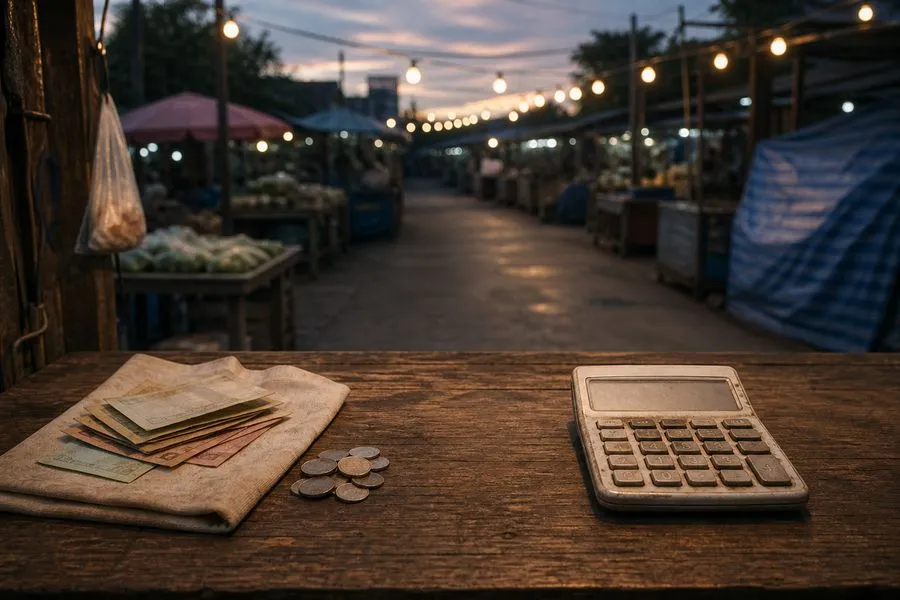
Market stalls, yes. Non-tourist local markets, yes. Anything with a price tag on it, no. Food, fruit and drinks are generally treated as fixed price, and haggling over a bag of mangosteens marks you out as someone who has misread the room.
Travelfish, in its Bangkok orientation, documents one guide's own practice: counter at about half the asking price, with harder haggling reported specifically around Khao San Road, Nana and Chatuchak.
That is one guide's reported approach, not a formula, and I present it as such because the numbers past that point fall apart.
Here is the disagreement, in full. At local markets, roughly 10-20% off the initial ask is the commonly cited normal outcome.
At tourist and night markets, the sources split three ways: one caps realistic results at 10-30% and states flatly that 50% does not work, a second cites 30-50%, and a third offers anecdotal outcomes around 60% on a walk-away.
All of it is informal sourcing, including social-media posts. No authoritative source resolves it, so a page that hands you one confident percentage has simply averaged the noise.
Take a manner away from this section instead of a number: ask pleasantly, name one price, be willing to leave. Vendors at Chiang Mai's Saturday walking street have laughed at me and then sold me the thing anyway.
On the sensitivity worry, which is real and which I had too: at a market stall, bargaining is a normal part of the transaction, so refusing to bargain is not generosity and bargaining is not exploitation.
Where it does become rude is when you do it at price-tagged retail, or when you do it aggressively over an amount that is small to you.
Overcharged or scammed? The distinction that decides what you do next
Most pages mush these together, and the mush is expensive, because the correct response to one is the wrong response to the other.
A soft overcharge is a price. It is annoying and bounded, you can counter it, and you can decline it and walk. Nothing is being taken from you; you are being asked for more than the local rate and you get to say no.
A scam is a structure. It has a hook, an intermediary with a financial interest in where you end up, and a payoff. Negotiating inside a structure like that does not reduce your exposure.
It moves you further along the sequence, because the sequence was designed around your willingness to keep engaging.
Two questions sort almost every case in about five seconds. Is this a price, or is this a story? And is the person steering me paid by the place they are steering me toward?
Scenario card 3: the market price that feels high
- What you are seeing: a vendor quotes a number that sounds like double what you expected, and does not budge much on the first push.
- What is actually happening: this is a price, not a pattern. There is no hook and nobody is being paid to deliver you here.
- What you do in the next minute: counter once, stay pleasant, and be ready to walk. If you walk, you have lost nothing but the item.
The gem shop and the closed attraction: one scam wearing two costumes
I have heard the "the temple is closed today" line more times than I can count. My response is now automatic: keep walking to the official entrance and look for myself.
That line is the documented opening of a pattern the US Mission Thailand describes on its "Common Scams to Avoid" page, and which the Siam Legal library corroborates. The sequence runs like this. A stranger, not staff, tells you a well-known site is unexpectedly closed today.
A driver who happens to be right there offers a cheap alternative tour. The tour ends at a shop running a "government-sponsored" or otherwise authority-endorsed limited-time sale. The stones are glass or synthetic.
The money-back guarantee is structured so that it cannot practically be used once you have left the country.
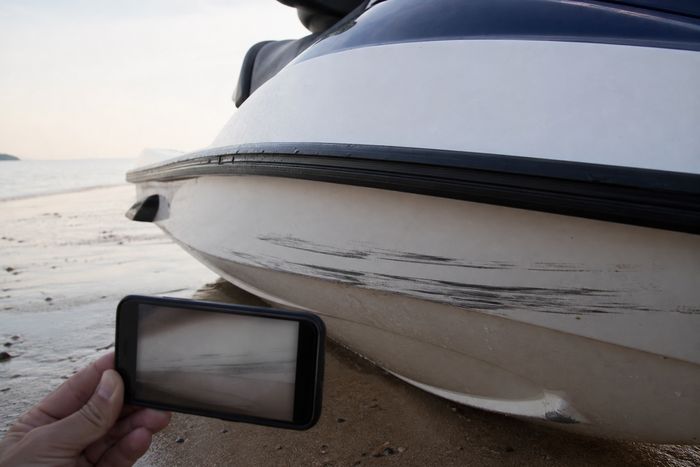
The driver is the engine of it. He is not doing you a favor at a low fare; he is paid a commission, a referral fee or an in-kind benefit such as fuel credit for each visitor he delivers. Reported around Bangkok's major tourist sites, with the Grand Palace, Wat Pho and the Khao San Road area named across sources.
If you want a sense of where costs and scam risk change between cities, that is its own article.
On freshness, I will be straight with you. This pattern is officially documented and is reported to have run for decades, but our research could not date its current activity beyond the fact that the official warning page is live. That is weaker evidence than what backs the rental scam below.
It is also not evidence that the pattern has died out.
| Pattern | Where it is reported | How it starts | How the money is taken | How current the evidence is |
|---|---|---|---|---|
| The closed-attraction redirect | Bangkok tourist sites; the Grand Palace, Wat Pho and the Khao San Road area named across sources | A stranger, not site staff, says the venue is closed today; a driver nearby offers a cheap alternative tour | No money moves yet; the ride is the delivery mechanism to a commission-paying shop | Officially documented by US Mission Thailand; no fresh date located, and no evidence it has stopped |
| The gem-shop sale it leads to | Same Bangkok concentration, per the official source and the Siam Legal library | A "government-sponsored" or authority-endorsed limited-time sale, presented as luck | Glass or synthetic stones sold as valuable, with a guarantee that cannot be used once you leave the country | Officially documented; corroborated by a professional source; reported to have run for decades, current-year activity not freshly dated |
| The jet-ski or scooter damage claim | Phuket and Pattaya, per the official source | A cheap, casual rental where an original passport is taken as security | A damage claim on return that you cannot disprove, with your own document as the leverage | Officially documented, and confirmed still active by a commercial Phuket source last updated 16 February 2026 |
| What all of them share | Wherever tourists arrive with money and no local reference points | An intermediary with a financial interest in your next step, plus a reason it has to be now | Pressure to decide before you can check anything independently | These mechanics are general and stable; the individual costumes change |
Scenario card 1: the closed attraction
- What you are seeing: a friendly stranger at the gate says today is a closed day, and a driver a few steps away has a suggestion.
- What is actually happening: the closure claim is the hook. The driver is paid by the shop the tour ends at.
- What you do in the next minute: walk to the official entrance and verify the closure yourself, and decline the ride. Five minutes of walking settles it.
The rental damage claim: jet-skis, scooters and your passport
This is the one to actually worry about, and it is the one with current evidence behind it. US Mission Thailand documents the pattern and places it in Phuket and Pattaya. A commercial Phuket guide, last updated 16 February 2026, reports it as still running.
That dated confirmation is the difference between this section and the one above it.
The mechanic is simple and it works because it is simple. The rental is cheap and casual, paperwork is thin, and an original passport is taken as security. When you bring the machine back, a damage claim appears.
You cannot disprove it, because nobody documented the condition of the hull or the fairing before you took it. Your own document is sitting in a drawer behind the counter, which is what makes paying feel like the only way out.
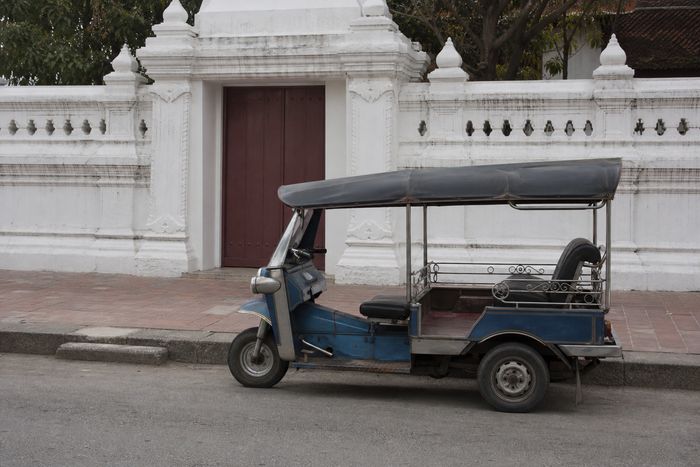
So: before you take possession, photograph and video the machine from every angle with a visible timestamp. Panels, both sides, the underside if you can reach it, every existing scratch, close and then wide. It takes two minutes.
And avoid handing over an original identity document where any other form of security is accepted.
I rent scooters constantly, between Chiang Mai, Krabi and Ko Lanta, and I now do the walk-around with my phone without thinking about it. I did not do it for my first few years here. I was lucky, and I know it, which is the only reason I am comfortable telling you to do the boring version.
Be clear about what this buys you. Timestamped documentation is risk reduction, not legal protection. A bad-faith counterparty can still escalate a dispute, and photographs do not stop someone from trying.
They change what you can put on the counter when they do.
Scenario card 2: the rental return
- What you are seeing: a damage claim on the hull, presented as obvious, and your passport still behind the counter.
- What is actually happening: the claim relies on the absence of evidence, and the document is the leverage.
- What you do in the next minute: produce the timestamped photographs, refuse to negotiate a figure, and ask for the Tourist Police.
The red flags that fire before the money moves
You will run into variants nobody has written up. The costumes are cheap to change and the mechanics are not, so learn the signals rather than the scripts. Everything below can be checked in about five seconds, and each one has its counter-move attached.
- A stranger, not staff, tells you the place is closed today. Walk to the official entrance and check for yourself.
- The person telling you where to go is also the person driving you there. Assume they are paid per delivery, and pick your own destination.
- The sale is described as government-backed, royal, official or available only today. State bodies and royal institutions do not typically own or endorse specific retail shops; treat the claim as a warning, not a reassurance.
- You are asked to leave an original passport as security. Ask what else the operator accepts, and go elsewhere if the answer is nothing.
- Nobody asked you to photograph the item before you took it. Do it anyway, timestamped, before you touch it.
- A damage claim appears with no prior documentation of the item's condition. Do not agree to a figure; produce your own evidence first.
- The guarantee only works in person, in a country you are leaving. Price the item as if the guarantee does not exist, which is to say, do not buy it.
- You are being pressed to decide before you can check anything. The pressure is the product. Slow down or leave.
Self-check: how many flags are firing right now?
Answer yes or no, count your yes answers, then read the band. This scores your own answers only. It cannot verify anything about the person standing in front of you.
- Did a stranger rather than venue staff tell you the place is closed today?
- Is the person advising you also the person transporting you?
- Is the sale described as government-backed, royal or today-only?
- Are you being asked to leave an original passport?
- Did you take possession of a rented item without photographing it?
- Did a damage claim arrive with no prior documentation of the item's condition?
- Are you being pressed to decide now?
- Two or more yes: this matches a documented pattern. Disengage, do not negotiate, and involve a neutral third party.
- One yes, and it is about price rather than a claim or a document: this looks like a price dispute, not a pattern. Counter once and be willing to walk away.
- No yes answers: not enough signal either way. Check the two questions from the overcharge section: is this a price or a story, and who pays the person steering you?
If it is happening right now
Stop paying and stop negotiating. Inside a documented pattern, negotiation is participation, and every counter-offer you make is you agreeing that there is something to settle.
Walking away is cheap.
Weigh it honestly: the cost of abandoning a market stall, a tour or a rental deposit dispute is small next to the cost of proceeding through a structure built to extract more from you the longer you stay in it.
Get a neutral third party involved. The Tourist Police are the body for this in Thailand.
I am not printing a number, because I could not verify a current one, and a wrong emergency number is worse than none: get it from your accommodation's front desk, from your embassy, or from the official Tourist Police channel.
I am also not going to tell you what they will or will not do about your case.
If this is a rental dispute, put the timestamped photographs on the counter before you discuss any figure at all. Order matters. Once you have named a number, you are inside the negotiation.
For US travelers, the US Mission Thailand "Common Scams to Avoid" page is reachable from your own phone in the moment, and it describes both of the patterns on this page.
Questions travelers actually ask
Do I actually have to tip in Thailand? No, not the way you have to at home.
And no authoritative percentage exists in any source I would stand behind, so the useful answer is a habit rather than a figure: read the bill for an added service-charge line first, then decide, then round up or leave a small note if the service warranted it.
There is a service charge on my bill. Do I still tip on top? The service charge has already been added by the venue and a tip is a separate, voluntary amount, so no, nothing obliges you to do both. People from tipping-heavy cultures pay both all the time without meaning to. Whether the service charge reaches staff is contested across sources, and I cannot settle it for you.
Is it disrespectful to bargain hard with a vendor who clearly needs the sale? At a market stall, bargaining is a normal and expected part of the transaction, so declining to bargain is not generosity and bargaining is not exploitation. Where it does not belong is price-tagged retail, and on food, fruit and drinks. The manner matters more than the number: pleasant, one counter-price, willing to leave.
I think I am being overcharged at a market right now. What do I do? Sort it in one breath: a high price is negotiable, so counter once and be ready to walk away. A documented scam pattern is not negotiable, so disengage rather than haggle your way deeper into it. The test is whether you are being quoted a price or told a story.
A rental shop says I damaged their jet-ski. What happens now? Produce the timestamped before-and-after photographs, do not agree to any figure under pressure, and ask for the Tourist Police as a neutral third party. I could not verify a current Tourist Police number, so get it from your accommodation, your embassy or the official channel. Next time, do not hand over an original passport as security.
Someone told me the temple is closed today and offered me a ride. Is that always a scam? Treat the closure claim from a stranger as the hook rather than as information, because the documented pattern begins exactly there and ends at a shop that pays the driver. Walk to the official entrance and check for yourself. It costs you five minutes and settles the question.
Before your next transaction
Run the quick scam red-flags check above if something feels off right now. If nothing is firing, you are probably in a price negotiation, and you know what to do with one of those: back to money and costs.
Sources
Official
- US Mission Thailand, "Common Scams to Avoid": both documented patterns, the commissioned drivers, the unusable guarantee, and the Phuket and Pattaya concentration of the rental damage claim. Live page, no publication date located; checked August 2026. https://th.usembassy.gov/common-scams-to-avoid
Professional, commercial and informal
- Siam Legal library, gem scams in Thailand: corroboration of the gem-shop mechanics and the Bangkok concentration. Undated; checked August 2026. https://library.siam-legal.com/gem-scams-in-thailand
- Phuket jet-ski scam guide, a commercial source, last updated 16 February 2026: the only dated confirmation that the rental damage-claim pattern remains active. https://www.lovephukettours.com/jet-ski-scam-phuket-how-to-avoid.html
- Travelfish, Bangkok orientation: one guide's reported bargaining practice, including the half-the-asking-price counter and the Khao San Road, Nana and Chatuchak note. Undated. https://www.travelfish.org/orientation_detail/thailand/bangkok_and_surrounds/bangkok/bangkok/118
- Informal social-media sources (an Instagram reel and a Facebook post), unverified, cited only as evidence that the tourist and night-market discount question has no authoritative answer.
No official Thai source publishes tipping norms, and that absence is a finding this page reports rather than a gap it fills.
This article describes reported practice, money mechanics and my own behavior. It is not legal, financial or safety advice, and it does not describe enforceable rights. Correct documentation and a correct refusal reduce your exposure; they do not prevent a bad-faith counterparty from escalating a dispute. Tipping and bargaining customs drift, the two documented scam patterns are not backed by evidence of equal freshness, and figures circulating online are not sourced to any official body.
