How Long Can US Citizens Stay in Thailand Visa-Free?

On this page
- The short answer, and the date it was true
- How long you can stay, by entry method
- Table: visa-exempt stay by entry method
- Decision tree: which rule applies to you
- Arriving by air
- Crossing by land
- Arriving by sea
- The exemption change that has been approved but has not taken legal effect
- Visa exemption is not visa on arrival
- The land-border limit, and the rule that turned out not to exist
- Myth vs fact
- What has to be true before you board
- If 60 days is not enough
- Frequently asked questions
- Before you close this tab
- Sources
Sixty days. That is what a US tourist passport currently gets you at a Thai immigration counter, with no visa and no application.
The figure is correct today, and it is also sitting on a countdown: Thailand's Cabinet approved a replacement structure in May 2026 that has not yet taken legal effect.
So the useful thing I can hand you is not the number by itself.
It is the number, the date I last checked it, how it splits by entry method, and the one official page you open yourself in the week before you fly.
I have entered this country on more than one day-count since 2017. Plan on this one moving as well.
Immigration rules change. Verify current terms with the nearest Royal Thai Embassy or Consulate, or the official Thai Immigration Bureau site, before you travel. This page is not immigration legal advice.
The short answer, and the date it was true
Current as of 11 August 2026 - verify before you travel.
If you hold a US tourist passport, you do not need a visa for a short trip to Thailand. You are admitted visa-free for up to 60 days. That duration has been in force since 15 July 2024, when it replaced the 30-day baseline that applied before, according to the US Embassy and Consulate in Thailand's "Thai Visas for Americans" page.
The US Department of State's Thailand country information page carries the same no-visa short-stay position, which is the closest thing you get to two independent official confirmations of one figure.
I remember the switchover because it broke my arithmetic. In 2017 I was doing 30-day stamps and building border runs into every plan, and I had a Ko Lanta stretch that year mapped around one. When the 60-day rule arrived in July 2024, half of a trip I had already booked became unnecessary work.
What you receive at the counter is permission to enter, not a visa. The date the officer writes or stamps into your passport is the date that governs your stay, and it outranks every website, this one included.
How long you can stay, by entry method
Air and land give you the same documented number. Sea is where my sources stop, and I am not going to paper over that with an estimate.
The two columns most people skip in the table below are the ones that answer the complaint I hear constantly about Thai visa content: everything you find feels outdated. "Effective since" tells you when the rule started. "Last verified" tells you when a human last opened the official page and read it.
If a page you are reading gives you a day-count with neither, you have no way to know whether it describes 2026 or 2019.
Table: visa-exempt stay by entry method
| Entry method | Documented stay length | Effective since | Source | Last verified |
|---|---|---|---|---|
| By air | Up to 60 days | 15 July 2024 | US Embassy Thailand; US Department of State | 11 August 2026 |
| By land | Up to 60 days, subject to the twice-per-calendar-year land-border cap | 15 July 2024 | US Embassy Thailand; Royal Thai Embassy Bern for the cap | 11 August 2026 |
| By sea | Not confirmed in this research | n/a | No confirming source found | 11 August 2026 |
Decision tree: which rule applies to you
Start: are you entering on a US tourist passport?
- No → this article does not cover you. Diplomatic and official passports need a visa obtained in advance for Mission business. Consult a Royal Thai Embassy or Consulate.
- Yes → next question.
How are you arriving?
- By air → 60 days documented. The per-calendar-year land cap does not apply to you. Go to the pre-boarding checks below.
- By land → 60 days documented. Is this your first or second visa-exempt land entry this calendar year? If it would be your third, the documented cap says no: plan a different entry route or get a visa.
- By sea → the duration is not confirmed in this research. Contact the Immigration Bureau or a Royal Thai Embassy before you sail.
Final node, every path: has the Royal Gazette published the exemption revision since this page's "current as of" date? Check the Government Public Relations Department page. If publication has happened, your day-count can change 15 days later, and no source yet states which tier applies to a US passport.
Arriving by air
The clean case. You land, you queue, you get up to 60 days, and no current sourced rule caps how many times a year you may do it by air.
Where things actually go wrong is earlier, at the airline counter in the United States. Check-in staff, not Thai immigration officers, are the people who deny most travelers a boarding pass, because the carrier is the one exposed if you are turned around on arrival. They are checking your passport and your onward booking against a script.
That is why the pre-boarding section on this page matters more than the day-count does.
Crossing by land
Same 60 days if you walk or drive in, per the same US Embassy page. The difference is not the duration, it is frequency: visa-exempt entries at land borders are documented as limited to twice per calendar year, and air arrivals are not subject to that specific cap.
I have kept that explanation in one place rather than splitting it across the page, because this is the rule people get wrong most often and the one that has been publicly muddled. It is in its own section further down, along with the version of it that turned out not to exist.
Arriving by sea
Here is the gap. No source in the research behind this article confirms the visa-exempt day-count for arrivals by sea to the standard I have for air and land.
The exemption itself is framed as applying to arrivals generally, but "generally applies" is not a number, and I am not going to reason my way from the air figure to a figure for your cruise or ferry.
If you are arriving by ship, get that number from the Thai Immigration Bureau or from a Royal Thai Embassy or Consulate before you sail, and get it in writing if you can.
The exemption change that has been approved but has not taken legal effect
On 19 May 2026, the Thai Cabinet approved a resolution revoking the 60-day visa exemption scheme for 93 countries and territories, the United States among them, and replacing it with a tiered structure.
That is documented by the Royal Thai Embassy in Bandar Seri Begawan, on a page updated 21 May 2026, which also records that the Visa on Arrival list is being cut from 31 countries and territories to 4.
The finalized framework appeared through Thailand's Government Public Relations Department on 15 July 2026.
It covers 65 countries and territories in total: 59 at 30 days, including all 27 EU member states; Mauritius and Seychelles at 15 days; and three countries (Azerbaijan, Belarus and Serbia) moved into Visa on Arrival instead.
Now the part that decides whether any of this touches your trip. The change takes legal effect 15 days after the Ministry of Interior announcements are published in the Royal Gazette. As of 16 July 2026, that publication had not occurred.
Until it does, the 60-day rule is the rule.
And the honest limit of what I know: no official source I have reviewed names which tier applies to a US passport. The 30-day tier is where people assume the US lands, because the published 30-day list is broad and EU-inclusive, but that is an inference drawn by readers, not a statement made by any government.
I will not write it as expected, likely or probable, because if it is wrong you find out at a counter with a stamp already in your passport.
What you get out of this is a timetable, not a number. Publication triggers roughly a fortnight of notice, so a trip booked today is not going to be ambushed mid-flight. Check two things: the Government Public Relations Department page linked in the sources below, and the Royal Thai Embassy nearest you.
Visa exemption is not visa on arrival
Two different schemes, and the confusion between them costs people money.
Visa exemption is automatic. There is no form, no fee, no application; you present an eligible passport at the border and an officer admits you. Visa on Arrival is a separate scheme with its own, much shorter list of nationalities, and it involves an application and a fee at the airport.
Under the approved revision, that list drops from 31 countries and territories to 4.
US passports are not on the Visa on Arrival list under the current framework, and they are not on it under the approved-but-unpublished one either.
Why bother distinguishing them?
Because "visa on arrival Thailand" is what a lot of Americans type into a search box, and the results are thick with intermediary sites happy to charge a service fee for handling a process you are not using and cannot use.
If a site offers to prepare your Thai visa on arrival for a US passport, you are on the wrong page.
The land-border limit, and the rule that turned out not to exist
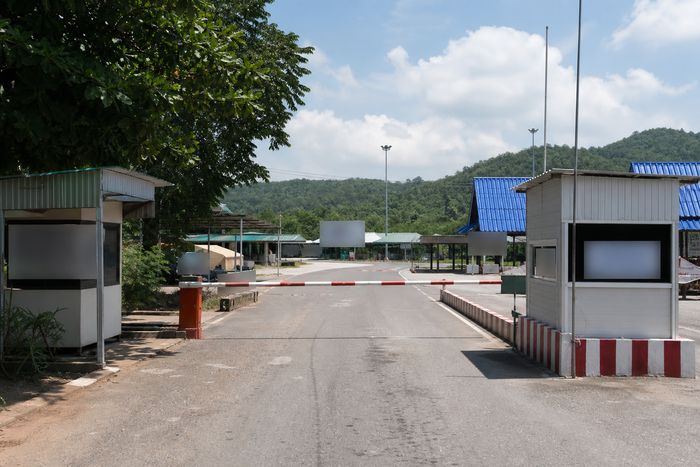
Visa-exempt entries at land borders are limited to twice per calendar year, as documented by the Royal Thai Embassy in Bern; air arrivals are not subject to that cap. I say "as documented by" rather than "as of" on purpose, because that embassy page carries no date, so I can tell you it is an official mission source but not when it was last touched.
Then there is the version of the rule that isn't one. In November 2025, an Immigration Bureau enforcement announcement was widely read as imposing a twice-per-year limit on visa-exempt entries across all entry modes, air included. Thai authorities clarified in January 2026 that no such general rule exists.
I passed that one along at the time as though it were settled. Two people rearranged flights on the strength of what I told them. That episode is the reason this page carries a verification date instead of a confident sentence, and it is why I keep the land cap and the phantom all-modes cap in separate paragraphs.
Conflating them is the single most common error I see in English-language write-ups of Thai entry rules.
One more piece of honesty on the same topic: repeated visa-exempt entries have historically attracted informal questioning at land crossings, particularly for people who look like they are living here on tourist stamps.
No source I found states that as a fixed numeric rule, and I am not going to invent a threshold for it.
Myth vs fact
| What people say | What the sources say |
|---|---|
| "The 60-day exemption is permanent." | It is the current rule, in force since 15 July 2024. A Cabinet-approved replacement, resolved on 19 May 2026, is pending Royal Gazette publication. |
| "You can only enter Thailand visa-free twice a year." | That cap is documented for land borders specifically (Royal Thai Embassy Bern). The all-modes version came from a November 2025 enforcement narrative that Thai authorities clarified in January 2026. |
| "Visa exemption and visa on arrival are two names for the same thing." | Different schemes with different country lists. US passports use the exemption and are not on the Visa on Arrival list. |
| "The new 30-day rule already applies to Americans." | No source names the US tier, and the framework had not taken legal effect as of 16 July 2026. |
| "The arrival card costs money." | The Thailand Digital Arrival Card is free on the official Immigration Bureau portal. |
What has to be true before you board
Four things, and they carry different levels of certainty.
Passport validity. Travel on a passport with at least six months of validity left beyond your entry date. That is the widely used international convention and the safe standard to hold yourself to.
What I cannot give you is the specific Thai enforcement standard: it is not confirmed by an official Thai source in the research behind this page. If your passport is inside that six-month window and you would rather not renew, confirm the requirement directly with a Royal Thai Embassy or Consulate before you book, not at the airport.
Proof of onward or return travel. Required for visa-exemption entry, per the US Embassy's "Thai Visas for Americans" page, and it must fall inside your permitted stay. A flight out on day 64 of a 60-day admission is not proof of anything useful.
This is the document airline staff ask for most.
Proof of funds. Figures of 10,000 THB per person and 20,000 THB per family are historically cited and trace back to a pre-2024 Ministry of Foreign Affairs page. I have not found a post-2024 official source confirming them for the current 60-day scheme, and I have not found one withdrawing them either.
Treat them as a plausible baseline to be able to show, not as a live published requirement.
The Thailand Digital Arrival Card. The TDAC has been mandatory for all foreign entrants by air, land and sea since 1 May 2025, it is free, and you file it online within 72 hours before arrival. Filing is a short job with a few traps, and you'll still need to file the arrival card before you fly whichever way you are coming in.
If 60 days is not enough
An in-country extension exists.
The US Embassy page describes up to 30 additional days on Form TM.7 for 1,900 THB, granted at an immigration officer's discretion, which means nobody can promise you the outcome before you are standing at the desk.
For anything beyond that, the tool is a purpose-built long-stay visa rather than a stretched tourist stay.
If you are already looking at three months or more, do the reading before you leave home: I have watched people arrive on an exemption, decide to stay, and discover that the paperwork they needed was easier to get from outside Thailand.
Start with planning to stay longer than the exemption allows.
Frequently asked questions
Is visa exemption the same as visa on arrival?
No. They are two separate schemes with different country lists. Visa exemption is automatic at the border for eligible passports, with no application or fee. US passports are not on the Visa on Arrival list under the current framework or under the approved-but-unpublished revision, which cuts that list from 31 to 4.
Is the day-count different if I cross by land instead of flying?
The documented duration is the same, up to 60 days either way. The difference is frequency: land borders carry a twice-per-calendar-year cap on visa-exempt entries, as documented by the Royal Thai Embassy in Bern, and that cap does not apply to air arrivals.
Has the new 30-day rule already replaced the 60-day one for Americans?
Not as of 11 August 2026.
The Cabinet approved the change on 19 May 2026, the tier framework was published on 15 July 2026, and it takes effect 15 days after Royal Gazette publication, which had not happened as of 16 July 2026.
No source names the US tier.
Does my passport really need six months of validity left?
Six months is the widely used international convention and the safe standard to travel on.
The specific Thai enforcement standard is not confirmed by an official source in this research, so if you are close to that line, confirm with the Royal Thai Embassy or Consulate nearest you, or the US Embassy Thailand page, before you book.
How do I know the stay I was actually granted matches what I planned for?
Read the admission stamp at the counter, before you walk away. The date printed there governs your stay, not the number on any website, including this one. Count your days from that date.
If it does not match what you expected, that conversation is far easier to have at the desk than on day 58.
Before you close this tab
If 60 days does not cover the trip you have in mind, that is a different piece of paperwork and a different article: start with planning to stay longer than the exemption allows.
For everyone else, one action. Bookmark the Thailand Government Public Relations Department page in the sources below and open it again in the week before you fly. You are checking a single thing: whether the Royal Gazette has published the exemption revision.
If it has, your day-count can change 15 days after that date, and no source yet states which tier a US passport falls into. If it has not, you travel on 60 days.
The rest of the entry paperwork, from the arrival card to what happens if you miscount, is mapped out here: see every Thailand entry and visa topic.
Current as of 11 August 2026 - verify before you travel.
Sources
All six sources below are official government sources. No commercial or secondary source is used for any figure on this page. Note that thaiembassy.com is a commercial lookalike and not a Royal Thai Embassy domain; official mission sites end in .thaiembassy.org or a national domain such as .thaiembassy.ch.
- US Embassy and Consulate in Thailand, "Thai Visas for Americans" (th.usembassy.gov) - the 60-day duration, the 15 July 2024 effective date, the onward-travel requirement, and the discretionary 30-day extension on Form TM.7. Source updates through 7 August 2026.
- US Department of State, Thailand international travel information (travel.state.gov) - independent official corroboration of the no-visa short-stay rule and the pre-arrival registration requirement. Checked August 2026.
- Thailand Government Public Relations Department (thailand.prd.go.th) - the finalized tier framework of 15 July 2026 and the still-pending Royal Gazette status. Article dated 15 July 2026; still pending per confirmation of 16 July 2026.
- Royal Thai Embassy, Bandar Seri Begawan, "The revision of Thailand's visa exemption and VOA" (bsb.thaiembassy.org) - the 19 May 2026 Cabinet resolution, the 93 affected countries and territories, the Visa on Arrival list reduction, and the 15-days-after-publication trigger. Page updated 21 May 2026.
- Royal Thai Embassy, Bern (thaiembassy.ch) - the twice-per-calendar-year land-border visa-exempt entry cap. The page carries no date.
- Thai Immigration Bureau, TDAC manual and FAQ (tdac.immigration.go.th) - the mandatory, free arrival card filed within 72 hours before arrival, in effect since 1 May 2025.
Figures on this page reflect published rules as of 11 August 2026, and a Cabinet-approved change to Thailand's visa exemption structure was pending Royal Gazette publication at the time of writing and may since have taken effect. Immigration rules change: verify current terms with the nearest Royal Thai Embassy or Consulate, or the official Thai Immigration Bureau site, before travel. This is not immigration legal advice; consult a licensed immigration attorney for an individual case, particularly near a pending rule-change date.
