Is Vaping Illegal in Thailand? The Real Penalties, Explained
On this page
- Quick Answer: Yes, Vaping Is Illegal in Thailand
- Where This Fits in Thailand's Legal-Risk Rules
- What Exactly the Ban Covers
- Are Nicotine Pouches Like Zyn Legal Instead?
- Why You Still See Vapes Sold Everywhere
- Penalties: What the Law Allows vs. What Actually Happens
- Vaping Penalties by Offense: Disclosed Range, Not One Number
- 2026 Crackdown: The E-Cigarette Control Center
- If You're Caught: What Actually Happens and What to Do
- Related Legal-Risk Topics in This Hub
- FAQ
- Are vapes illegal in Thailand even though I see them sold everywhere?
- Why is vaping banned in Thailand when it's legal in so many other countries?
- Do heat-not-burn devices like IQOS count as vapes under this ban?
- Are nicotine pouches like Zyn a legal way around the vape ban?
- What actually happens if I'm caught vaping in Thailand?
- Has enforcement gotten stricter recently?
- Sources
Quick Answer: Yes, Vaping Is Illegal in Thailand
E-cigarettes and vapes have been banned in Thailand since 2014. The prohibition covers import, sale, possession, and use, and it applies equally to Thai citizens and foreign visitors. There is no tourist exemption. The confusing part is not the legal status; it is the gap between the devices being openly available in tourist areas and a formal penalty system that is genuinely enforced. In 2026, enforcement reportedly intensified again. My practical answer is simple: do not bring or use a vape in Thailand.
Where This Fits in Thailand's Legal-Risk Rules
This is a standing prohibition, not an application process. There is no permit, fee, eligibility test, or visitor allowance that makes a vape legal. It belongs with Thailand's other in-country legal-risk rules, rather than its visa paperwork.
You can see the full visas-and-entry category for the wider framework.
What Exactly the Ban Covers
The Royal Thai Embassy in Stockholm states that Thailand's ban has covered the import, sale, possession, and use of electronic cigarettes since 2014. It applies to visitors as well as Thai citizens and was introduced for public-health reasons. Nothing in that official guidance creates an exception for tourists or for a device carried only for personal use.
The reported enforcement framework separates import and export issues, generally associated with the Customs Act, from possession, use, and sale issues associated with the Consumer Protection Act. That is useful as a broad map, but the research available for this article did not include official primary text from either law confirming the exact penalty figures.
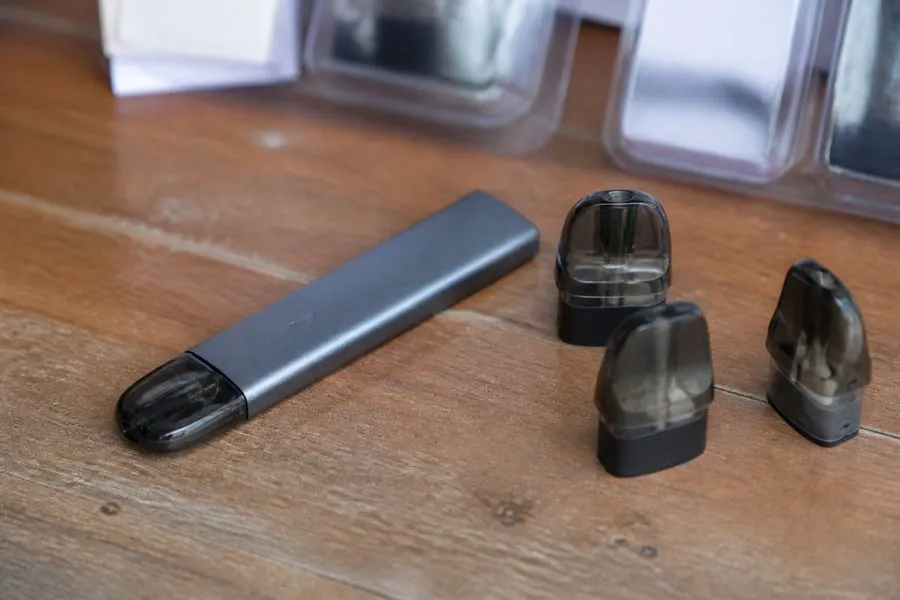
The scope is wider than the word "vape" sometimes suggests. Commercial legal summaries report that it includes:
- Refillable devices and disposable vapes
- Pods, cartridges, e-liquid, and coils
- Devices with or without nicotine for import, possession, and selling offenses
- Heat-not-burn devices, including IQOS, glo, and Ploom
Those sources treat heat-not-burn products and other e-cigarette forms identically for import, possession, and selling offenses. The separately reported public-use offense specifically concerns nicotine-containing devices. Because that distinction comes from a single commercial source rather than official statutory text captured for this review, I would not use it as a reason to bring a nicotine-free device.
I once made the same lazy inference many visitors make. Vapes were being sold openly near a Chiang Mai night market, so I assumed enforcement was mostly nominal. It took the 2026 crackdown coverage to make me stop reading the retail scene as if it were a legal notice (it is not).
Are Nicotine Pouches Like Zyn Legal Instead?
There is no confirmed answer either way in the sources reviewed. Nicotine pouches are not explicitly named as banned, but secondary reporting says they may still be confiscated in practice.
That makes pouches a genuine grey area, not a dependable legal workaround. I would not tell a visiting friend that a Zyn-type product is safe to carry merely because it contains no electronic component. If your decision depends on a definitive answer, check the current rules with a qualified Thai attorney before traveling.
Why You Still See Vapes Sold Everywhere
Informal availability is real. Stalls and sellers operate visibly in tourist districts, which naturally gives visitors the impression that the rule has lapsed or is selectively ignored. I understand that conclusion because I reached it myself.
Open sale does not repeal the ban. It only shows that illegal retail can remain visible while enforcement is uneven. The risk falls on individual buyers too, not only on importers or vendors.
Myth: "Vape shops and stalls are everywhere in tourist areas, so the ban obviously isn't really enforced."
Fact: Visible informal retail does not establish legality or protection from enforcement. The ban has existed since 2014, covers Thai citizens and foreign visitors, and reportedly received renewed nationwide enforcement attention in 2026 through a dedicated E-Cigarette Control Center. A seller completing a transaction is not evidence that you can possess or use the product without consequences.
Penalties: What the Law Allows vs. What Actually Happens
The penalty picture is messy. Importing, receiving or possessing, selling, and using a vape in public are reported as different offenses, with very different possible outcomes.
More troublingly, sources disagree about the statutory maximums. For importing, one version reports up to 10 years in prison plus a fine of as much as five times the confiscated items' value, sometimes described instead as a flat maximum of 500,000 THB. Another reports up to 10 years plus a flat 500,000 THB fine.
Possession or receiving goods produces another conflict.
Sources variously cite up to 3 years in prison and a fine of up to 30,000 THB under the Consumer Protection Act, or up to 5 years and a fine equal to four or five times the goods' value under the Customs Act.
Selling is described as either up to 5 years plus 500,000 THB, or up to 3 years plus as much as 600,000 THB.
I cannot responsibly flatten those disagreements into one neat number. No official Customs Act or Consumer Protection Act primary text confirming the exact figures was captured in this research batch, so the table preserves both reported versions.
Vaping Penalties by Offense: Disclosed Range, Not One Number
| Offense | Statutory range, as reported; sources disagree | Real-world tourist enforcement |
|---|---|---|
| Importing | Up to 10 years in prison, plus a fine up to five times the items' value or a flat 500,000 THB; sources disagree on the fine structure | Confiscation is commonly reported; arrest is associated with large quantities or suspected dealing |
| Possession or receiving | 3-5 years in prison, plus 30,000 THB or four to five times the goods' value; sources cite different laws | Confiscation and fines of 5,000-30,000 THB are commonly reported |
| Selling | 3-5 years in prison, plus a 500,000-600,000 THB fine; sources disagree | Not the typical outcome involving a visitor's single personal-use device |
| Using in public | No prison and a fine up to 5,000 THB, according to one commercial source | The most common tourist scenario, often handled through confiscation and a fine |
For an ordinary tourist stopped with a personal device, secondary reports more consistently describe confiscation and an on-the-spot fine of 5,000-30,000 THB. Detention at a station for questioning is possible. Arrest or a larger criminal case is reported mainly where police find substantial quantities or suspect selling.
Those practical reports do not erase the statutory exposure, and the statutory maximums should not be mistaken for the routine fine. A friend once asked me whether vaping was "actually illegal or just one of those things nobody enforces." Halfway through my answer, I realized I did not know the real penalty range myself.
That uncertainty is why both layers belong here.
2026 Crackdown: The E-Cigarette Control Center
According to commercial reporting, an E-Cigarette Control Center was established on June 29, 2026. It reportedly coordinated a nationwide operation and public reporting hotline from July 1-15, 2026. The reporting gives no end date for the Control Center itself.
That followed a broader crackdown ordered in 2025. Secondary sources claim officials seized more than 120,000 vapes and made 690 arrests in one week, with tourist fines after the crackdown commonly reported at 20,000-30,000 THB. These are reported figures, not official statistics confirmed through a government portal in the source set used here.
Still, the direction matters. Enforcement cannot reasonably be dismissed as a dormant technicality when authorities are reportedly creating a dedicated center, operating a hotline, and organizing nationwide action. I revised my own view for exactly that reason.
If You're Caught: What Actually Happens and What to Do
A stop involving one device may end with confiscation and a fine, but do not assume that outcome is guaranteed. The cited offense matters: public use, possession, import, and suspected selling carry sharply different reported penalties.
If you are stopped:
- Do not argue or resist at the point of confiscation. Keep the encounter calm and do not physically interfere with an officer handling the device.
- Ask which specific offense is being cited. Clarify whether the allegation concerns public use, possession, import, or selling. Do not guess, and do not casually agree that you imported or intended to sell anything.
- Ask for a receipt if a fine is issued. Keep the paperwork and note the office or station involved.
- Get professional help if the situation escalates. If you are held for questioning, face a larger charge, or have multiple devices or quantities that could suggest dealing, contact your embassy and obtain a Thai lawyer.
This is not the moment to debate what a market vendor told you. Visible sale and online anecdotes do not control how an officer classifies the situation. For context on how Thailand handles other rule breaches, see the broader consequence-if-caught picture across Thailand's entry and legal-risk rules.
Related Legal-Risk Topics in This Hub
For adjacent issues, readers navigating this topic also ask about Thailand's unresolved cannabis rules. There is also a lower-stakes but similarly surprising rule most visitors hit by accident.
FAQ
Are vapes illegal in Thailand even though I see them sold everywhere?
Yes. Import, sale, possession, and use have been banned since 2014, with the prohibition applying to Thai citizens and foreign visitors. Informal retail visibility does not make possession legal, and enforcement reportedly intensified in 2026.
Why is vaping banned in Thailand when it's legal in so many other countries?
Thailand introduced the ban in 2014 for public-health reasons. The Royal Thai Embassy in Stockholm explains that concern included e-cigarettes drawing young people into smoking. That background does not soften the legal status or create an exemption based on the rules in another country.
Do heat-not-burn devices like IQOS count as vapes under this ban?
Yes, according to the commercial source reviewed for product coverage. IQOS, glo, and Ploom are treated like e-cigarettes for reported import, possession, and selling offenses, regardless of nicotine content. I would not pack one on the theory that heating tobacco is legally distinct from vaping.
Are nicotine pouches like Zyn a legal way around the vape ban?
There is no confirmed answer either way. Pouches are not explicitly identified as banned in the reviewed material, but confiscation is reportedly possible in practice. Do not treat them as a safe legal workaround without current professional advice.
What actually happens if I'm caught vaping in Thailand?
For the common tourist scenario, reports more often describe confiscation and an on-the-spot fine of 5,000-30,000 THB than the statutory maximums shown in the penalty table. Station questioning can occur, while arrest and larger charges are associated with serious cases, substantial quantities, or suspected dealing.
Has enforcement gotten stricter recently?
Yes, based on the available 2026 reporting. A dedicated E-Cigarette Control Center was reportedly established in June 2026, followed by a nationwide operation and reporting hotline.
Secondary sources also attribute more than 120,000 seizures and 690 arrests in one week to a 2025 crackdown, though those figures were not confirmed through an official government portal for this review.
Treat the 2026 enforcement climate as the operative fact, not the visible retail scene. If you are unsure about a particular device or situation, do not rely on what stalls sell or what travelers repeat online. The safest default is not bringing or using a vape in Thailand at all.
Sources
- Royal Thai Embassy, Stockholm, "Ban on Electronic Cigarettes in Thailand", reviewed for the ban's date, scope, application, and public-health rationale.
- canibringto.com, "Thailand Vaping Laws & Penalties: Complete Guide 2026", secondary reporting on penalties, pouches, tourist enforcement, and the 2025 crackdown.
- ECigOne, "Thailand Vaping Ban 2025: Fine or Prison Time? What UK Vapers Must Know", commercial reporting on device coverage, alternate penalties, public use, and the Control Center.
- terms.law, "Vaping Laws in Thailand", secondary reporting providing alternate import and selling penalty figures.
This article is general information, not legal advice. Exact penalty figures remain disputed among the available secondary sources because official Customs Act and Consumer Protection Act primary text confirming them was not captured for this review. Verify the current law with a qualified Thai attorney before relying on this page, especially before importing, selling, or carrying more than a single personal-use device.


Reviewed by Nattapong Sirichai, licensed Thai attorney, member of the Lawyers Council of Thailand, practising immigration and administrative law, Bangkok. Last reviewed: 2026-08-12. The review covers the legal statements on this page, not travel opinion.