Kanchanaburi: Getting There, When to Go, Worth It?
On this page
- Kanchanaburi at a Glance
- What Kanchanaburi Is Known For
- Who Kanchanaburi Actually Suits
- Who This Trip Suits
- Getting to Kanchanaburi
- Kanchanaburi vs. Ayutthaya: How to Choose
- Visiting the WWII Sites Respectfully
- Honest Verdict: Is Kanchanaburi Worth the Stop?
- FAQ
- What is Kanchanaburi actually known for?
- Is Kanchanaburi worth visiting, or is it an overhyped Bangkok day trip?
- How do I actually get from Bangkok to Kanchanaburi?
- How many days should I spend in Kanchanaburi?
- Is it okay to visit the WWII sites as a tourist, or does that feel disrespectful?
- Sources
Kanchanaburi earns its place on a Central Thailand itinerary for one clear reason: its connection to the Thailand-Burma Railway and the people who died building it.
This is not another stop built around interchangeable temples, markets, and a convenient pin on the map.
Go because you want to engage with that history, then give the bridge, museum, and cemeteries more attention than a quick photograph.
Kanchanaburi at a Glance
Kanchanaburi is one of the substantial destinations covered in Practical Thailand's Central Thailand collection. If you are still deciding where it belongs in a wider itinerary, go back to all Thailand destinations and compare the region's stops before committing another day.
The province is in Central Thailand and is commonly treated as either a Bangkok day trip or an overnight destination, though that framing is general orientation rather than a promise about journey time.
Its historical sites give it enough local substance to stand as a destination in its own right.
For another Central Thailand option with a very different emphasis, see also: Damnoen Saduak.
What Kanchanaburi Is Known For
Kanchanaburi's identity is tied first to the Thailand-Burma Railway, widely known as the "Death Railway." It was built during World War II under Japanese occupation using Allied prisoners of war and Asian forced labor. That human cost is not background color added to make an old railway sound dramatic.
It is the central historical fact around which the relevant sites must be understood.
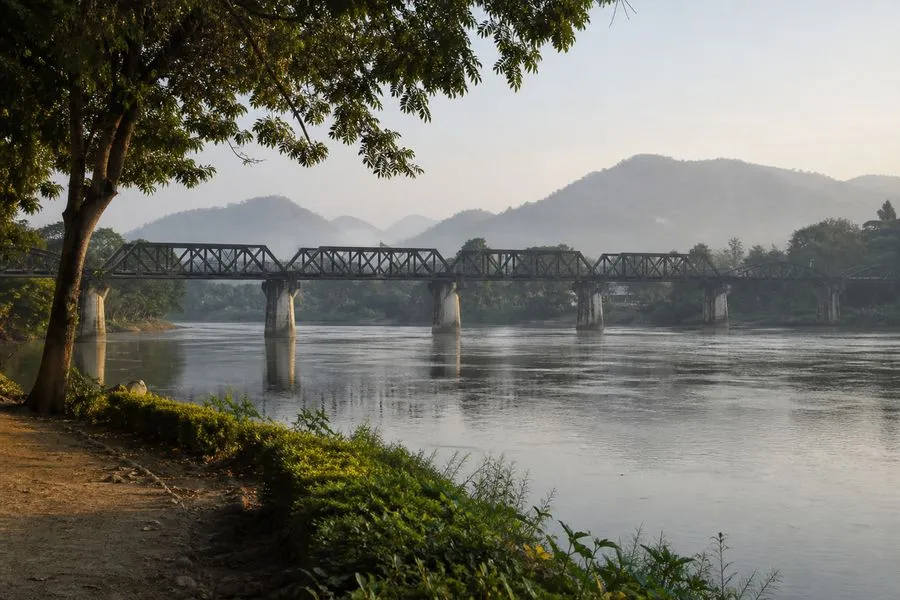
The bridge over the Khwae River is the most recognizable physical landmark. Many visitors arrive with a vague cultural memory of The Bridge on the River Kwai, then discover that the place is not adequately explained by the bridge alone. A photograph of its structure tells you very little about the labor, captivity, deaths, and wartime system behind it.
The Commonwealth war cemeteries make that cost individual. They are memorial grounds, not just landscaped attractions on a sightseeing circuit. Rows of graves turn an enormous wartime story into names and lives, which is precisely why rushing through them between photo stops feels wrong.
The Thailand-Burma Railway Center museum provides the documented narrative that connects the railway, occupation, prisoners, forced labor, and deaths. If your time is limited, I would still avoid treating the museum as an optional indoor extra. The bridge supplies the recognizable image; the museum supplies the context needed to understand what you are looking at.
Taken together, these places give Kanchanaburi a specific and internationally known historical narrative. That is what makes it substantive. It does not need a generic list of temples and markets pasted onto the itinerary to justify the stop.
Who Kanchanaburi Actually Suits
This destination suits travelers prepared to spend time with difficult World War II history rather than collect a bridge photograph. It also works for people building a Central Thailand itinerary who want something that does not repeat Ayutthaya's royal-era ruins.
Who This Trip Suits
The World War II history reader
Treat Kanchanaburi as a dedicated destination. Budget meaningful time for the Thailand-Burma Railway Center museum and the Commonwealth war cemeteries rather than reducing the visit to a drive-by look at the bridge.
The traveler pairing it with Ayutthaya
Keep the distinction clear: Kanchanaburi centers on World War II railway history and a river setting, while Ayutthaya centers on royal-era ruins. That difference stops the two places from blurring into one vague "historic Thailand" loop.
The time-pressed Bangkok visitor
Kanchanaburi is worth adding when the railway history itself interests you. It is not a generic "more temples" extension, and proximity to Bangkok is a poor reason to go if the core subject does not hold your attention.
Factual accuracy matters more here than at many nearby sightseeing stops. The deaths involved are not a theme or travel aesthetic (an obvious point, perhaps, but one worth making before the camera comes out).
Getting to Kanchanaburi
Kanchanaburi is commonly approached as part of Bangkok's broader day-trip and overnight belt. I would not infer a journey time, fare, or best transport mode from that label. Those details were not established in the research for this article, and current options should be checked before booking.
Use the full guide to getting around Thailand to compare the practical characteristics of available transport, then confirm current route information directly for your travel date.
If a proposed plan leaves only enough time for the bridge and a return journey, reconsider whether it serves the reason for visiting.
Kanchanaburi vs. Ayutthaya: How to Choose
Kanchanaburi and Ayutthaya are frequently treated as Central Thailand's heavyweight historical stops, but they do not compete on the same historical axis. Choosing between them is less about ranking two nearby destinations and more about deciding which period and style of visit you want.
| Aspect | Kanchanaburi | Ayutthaya |
|---|---|---|
| What it is built around | World War II Death Railway history and a river and nature setting | Royal-era temple ruins |
| Historical period | World War II, particularly the 1940s | The Ayutthaya Kingdom, from the 14th to 18th century |
| Typical framing in itineraries | Frequently paired with Ayutthaya rather than treated as a strict alternative | Frequently paired with Kanchanaburi rather than treated as a strict alternative |
| Tone of the visit | Memorial sites and history with real gravity | Ruins and heritage sightseeing |
| Honest read | A genuine, substantive Central Thailand stop, not filler | A genuine, substantive Central Thailand stop, not filler |
Choose Kanchanaburi if the Thailand-Burma Railway, wartime occupation, forced labor, and memorial sites are the reason you would make the trip. Choose Ayutthaya if royal-era ruins are the stronger draw. The distinction is clean enough that trying to describe one as a substitute for the other misses the point.
I would not add Kanchanaburi merely because an itinerary seems to require one more excursion from Bangkok. That is how meaningful places become checklist stops. If Ayutthaya already fills the historical slot in your schedule, ask whether you also want to engage with a separate World War II narrative rather than assuming the two visits are redundant.
For the other side of the decision, compare it with Ayutthaya. The two are also commonly paired in broader Central Thailand itineraries, so the answer does not have to be either/or.
Visiting the WWII Sites Respectfully
The Commonwealth war cemeteries are maintained as memorials. The Thailand-Burma Railway Center museum presents a documented historical narrative involving occupation, captivity, forced labor, and real deaths. The conduct expected at any war memorial applies here.
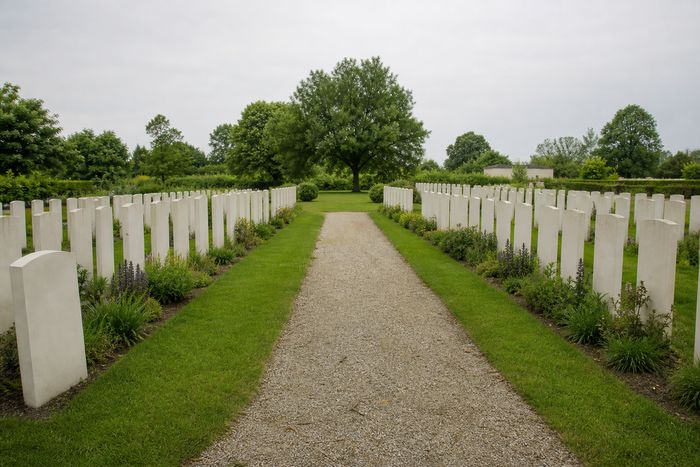
That means keeping your voice and behavior appropriate to the setting, reading the historical material, and avoiding photographs that turn graves or memorial spaces into props. There is no need to perform solemnity for other visitors. Quiet attention is enough.
Visiting as a tourist is not inherently disrespectful. These sites are maintained for public visitation and remembrance. The useful distinction is between arriving to understand what happened and arriving only to reproduce a famous bridge image before leaving.
At the museum, allow the documented account to shape how you interpret the railway and bridge. At the cemeteries, remember that the ordered grounds represent individual deaths, not an abstract chapter in a guidebook.
Honest Verdict: Is Kanchanaburi Worth the Stop?
Yes. I consider Kanchanaburi genuinely worthwhile because it carries a specific, internationally known historical narrative that gives it real weight within Central Thailand. It is not a generic temples-and-markets stop wearing a famous name.
That verdict has a condition: go because the railway history matters to you, and engage with more than the bridge. If you have no interest in the museum, cemeteries, or documented story behind the railway, adding Kanchanaburi simply because it appears on lists of Bangkok excursions is harder to justify.
My verdict does not extend to price, exact journey duration, or transport convenience. The research used here does not establish those details, so they should not be smuggled into the recommendation as if they were settled.
FAQ
What is Kanchanaburi actually known for?
Kanchanaburi is known for the Thailand-Burma "Death" Railway, the bridge over the Khwae River, the Commonwealth war cemeteries, and the Thailand-Burma Railway Center museum. Together, these sites document a World War II history involving Allied prisoners of war and Asian forced labor under Japanese occupation.
Is Kanchanaburi worth visiting, or is it an overhyped Bangkok day trip?
Kanchanaburi is worth visiting for its specific, internationally known historical narrative. It has genuine substance and clear differentiation from generic temple-and-market stops, but it makes most sense when that history is your reason for going.
How do I actually get from Bangkok to Kanchanaburi?
Kanchanaburi is commonly visited within Bangkok's day-trip or overnight orbit, but this article does not assert a specific mode, duration, or fare. Consult the full guide to getting around Thailand and confirm current options for your intended date before booking.
How many days should I spend in Kanchanaburi?
There is no verified day-count recommendation in the research behind this article. Plan qualitatively: allow enough time to visit the museum and cemeteries without reducing them to a rushed bridge stop, with more room if you are pairing Kanchanaburi with Ayutthaya.
Is it okay to visit the WWII sites as a tourist, or does that feel disrespectful?
Yes, it is appropriate to visit them. The museum and war cemeteries are maintained for public visiting and remembrance; behave as you would at any war memorial and treat the documented deaths and forced labor as history, not scenery.
Building a Central Thailand itinerary? Go back to all Thailand destinations, compare it with Ayutthaya, or see also: Nakhon Pathom.
Sources
The historical identity described here comes from the Kanchanaburi destination research dossier.
The Bangkok day-trip and overnight framing is general orientation, not a cited distance or travel-time figure; confirm current transport and price details through the linked getting-around guide before travel.
Last reviewed: August 12, 2026.
Travel conditions and transport options can change. This article does not provide a verified Bangkok-Kanchanaburi fare, schedule, journey time, transport mode, local price tier, or fixed recommended stay length; confirm current details before making plans.
