Yaowarat: Where to Stay Guide (Bangkok)
On this page
- Part of Bangkok's Where-to-Stay Guide
- Who Yaowarat Suits
- Yaowarat vs. Chinatown (and Nearby Areas)
- Yaowarat vs. Chinatown: What's Actually the Same Place
- Getting To and Around Yaowarat
- Price and Lodging Tier
- Noise, Nightlife and Safety Notes
- The Honest Verdict: Book Here, or Just Visit?
- Stay Here, or Just Visit?
- Related Bangkok Areas and Guides
- Frequently Asked Questions
- Is Yaowarat the same as Chinatown?
- Is Yaowarat safe to walk around at night?
- Where does Yaowarat end and the rest of Chinatown begin?
- What's the best time to visit Yaowarat for street food?
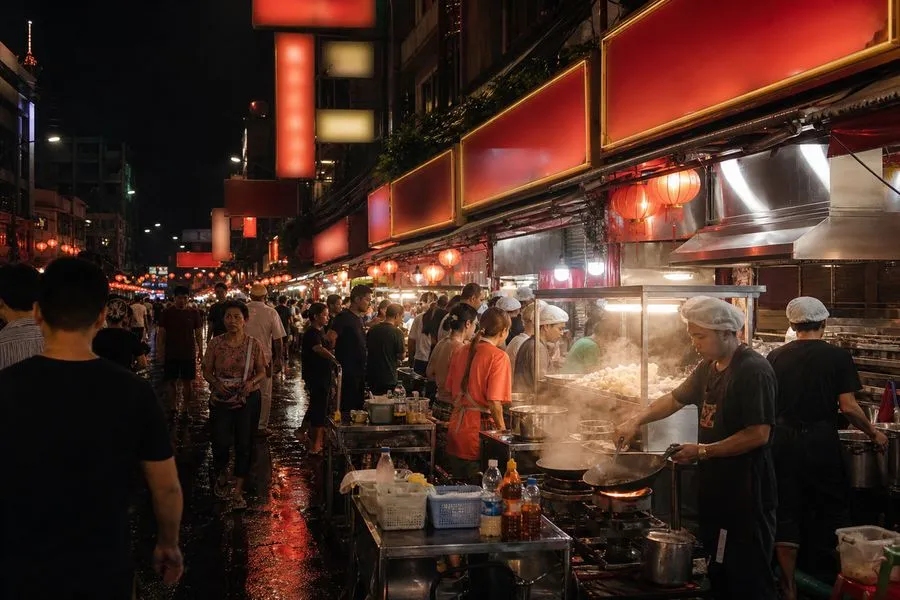
Yaowarat is the specific commercial spine road running through Bangkok's Chinatown, known for gold-shop rows and dense nighttime street food. It is not a separate lodging district.
The useful decision is whether to sleep close to that street or book elsewhere within the wider Chinatown area.
Part of Bangkok's Where-to-Stay Guide
This page covers one named street identity within Bangkok, not a stand-alone district. Start with the Bangkok district guide to see all Bangkok areas, or use the Bangkok travel guide for destination-level planning.
Who Yaowarat Suits
Yaowarat is most useful as a search term for travelers specifically drawn by the gold shops and nighttime street-food scene.
- Nightlife: Low to moderate, with food-market activity rather than a bar strip.
- Families: A moderate-to-high fit if crowds and street noise are acceptable.
- Remote work: A low fit based on the area's market-focused character.
- Lodging: Budget to boutique, using the same accommodation stock listed under Chinatown.
- Best match: Travelers who want the Yaowarat street identity outside the door, not merely somewhere in the wider heritage district.
Yaowarat vs. Chinatown (and Nearby Areas)
Yaowarat is Chinatown's commercial spine road. Chinatown is the wider district; Yaowarat is the particular food-and-gold-trade street within it. Treating them as independent accommodation areas would create a distinction the research does not support.
In my experience navigating Thai cities, search platforms often separate a market street's familiar name from its parent district. That does not necessarily mean you have found two different places to stay (an easy assumption to make when several labels appear on the same map).
Yaowarat vs. Chinatown: What's Actually the Same Place
| Aspect | Yaowarat (this page) | Chinatown (wider district) |
|---|---|---|
| What it names | The specific commercial spine road | The wider 200-plus-year Teochew-Chinese heritage district |
| Best for | Travelers specifically drawn by gold shops and street food | Food-focused travelers also interested in heritage architecture |
| Lodging stock | Apparently the same budget-to-boutique stock as Chinatown, not a separate category | The district's own, better-covered accommodation stock in the same broad tier |
| Nearest MRT | Sources disagree between Wat Mangkon and Hua Lamphong | The same Wat Mangkon versus Hua Lamphong disagreement applies |
| Research priority | Low, with a usefulness score of 4 | High, with a usefulness score of 7 |
The distinction is naming and focus, not geography. For the broader accommodation decision, compare with Chinatown rather than trying to force Yaowarat into a separate district category.
Research note: The Chinatown-contains-Yaowarat relationship is a compiled finding supported consistently by both area dossiers. Character, lodging-tier, and transit details come from this site's internal research assessment rather than a single external citation; those details should be treated as orientation.
Getting To and Around Yaowarat
Yaowarat uses the same access network as Chinatown.
Available research disagrees on whether Wat Mangkon or Hua Lamphong should be called the nearest MRT station, so I would check the walking route from an exact hotel address rather than choose a booking by station label alone.
Ratchawong Pier is the relevant river-access landmark.
The research establishes that Yaowarat Road sits within Chinatown but supplies no defensible street-by-street boundary for where one ends and the other begins. For network context, see how Bangkok's MRT and BTS system works.
Price and Lodging Tier
The defensible price description is budget to boutique. Yaowarat does not appear to have an independent rate tier or separate hotel inventory from Chinatown, and there is not enough sourced evidence here to quote a reliable nightly range.
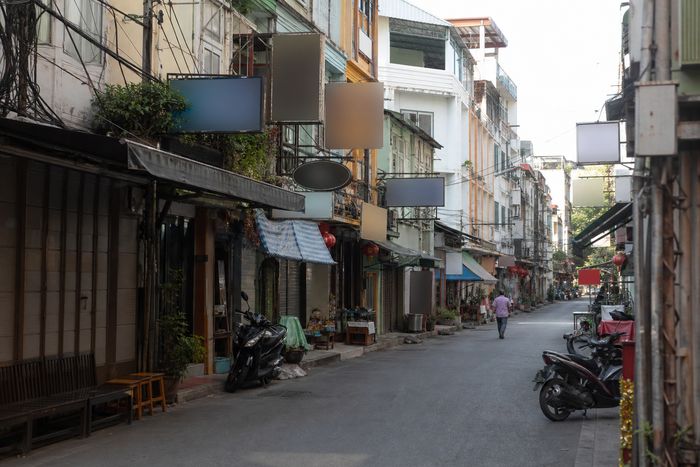
Treat that tier as an orientation signal, then recheck current listings close to your travel dates. A property marketed as being in Yaowarat may appear in the same search under Chinatown because both labels describe the same underlying accommodation area.
Noise, Nightlife and Safety Notes
Expect low-to-moderate nightlife intensity in the form of nighttime food-market crowds, vendor activity, road traffic, and noise along the commercial spine. This is market energy, not the profile of a dedicated bar or entertainment strip.
The road is characterized as crowded and well lit during its active nighttime period, but that is not a current safety rating or a guarantee. No dated incident data or safety index was available in the research used for this page. Assess the exact hotel entrance, walking route, and current local conditions before booking.
The Honest Verdict: Book Here, or Just Visit?
Yaowarat overlaps substantially with Chinatown and shares its lodging stock. Search specifically for Yaowarat only when immediate proximity to the gold-shop and nighttime food-market street is central to the trip; otherwise, search Chinatown and compare exact map locations.
Stay Here, or Just Visit?
- Is gold-shop browsing or the night food market the main draw, ahead of heritage architecture or temples? The Yaowarat framing fits.
- Do you want to be within walking distance of Ratchawong Pier? Either area name can work because they refer to the same broader location.
- Do Yaowarat hotels also appear in Chinatown searches? That is expected, not necessarily a booking-platform error.
- Do you want a quieter, more residential base? Look at another Bangkok district instead.
Come to Yaowarat to eat and shop; book under Chinatown.
Related Bangkok Areas and Guides
Read the Chinatown district guide, continue planning a trip to Bangkok, or see all Bangkok areas.
Frequently Asked Questions
Is Yaowarat the same as Chinatown?
Yaowarat is Chinatown's commercial spine road, not a separate district. Chinatown is the wider heritage-area framing, while Yaowarat names the specific street associated with gold shops and nighttime food activity.
Is Yaowarat safe to walk around at night?
The available character assessment describes crowded, well-lit food-market activity rather than a bar-strip atmosphere. That is general orientation, not a current safety guarantee, because the research contains no dated incident statistics or safety index.
Where does Yaowarat end and the rest of Chinatown begin?
The research does not establish a precise street-by-street boundary. It supports only the practical relationship: Yaowarat is the named commercial spine road within the wider Chinatown district.
What's the best time to visit Yaowarat for street food?
Nighttime best matches the food-market character documented for Yaowarat. Exact opening hours for individual vendors were not available, so check current information for any specific stall you intend to visit.
Use the District Finder to compare Yaowarat and Chinatown with Silom, Riverside, Khao San Road, Sathorn, Ari, Banglamphu, Ratchada, On Nut, and Victory Monument before choosing where to search for lodging.
This page provides general orientation for choosing where to stay, not official safety, legal, or medical guidance. Area character, prices, and access conditions are approximate and can change; consult official government travel-advisory sources for current conditions.
