Don Mueang vs Suvarnabhumi: Bangkok Airport & Station Guide
On this page
- Bangkok has four gateways, and your ticket only tells you one of them
- All four Bangkok gateways at a glance
- Don Mueang or Suvarnabhumi: which airport your domestic flight uses
- Why "AirAsia means Don Mueang" stopped being a rule
- Krung Thep Aphiwat or Hua Lamphong: which station your train leaves from
- When your trip needs both airports: what the transfer actually costs you
- Confirm your gateway before you pay: the five-minute check
- The connection I nearly lost, and what I check now
- Frequently asked questions
- Confirm your own leg before you pay
- Sources
Bangkok has four gateways, and your ticket only tells you one of them
You have booked, or you are about to. The mode is already settled - you are not here to weigh a flight against a night train. The live question is narrower and more annoying: which building in Bangkok does this leg actually use, and does your itinerary quietly touch two of them?
Bangkok runs four long-distance gateways. Two airports, Don Mueang (DMK) and Suvarnabhumi (BKK). Two rail terminals, Krung Thep Aphiwat and Hua Lamphong.
The airport split and the station split are really one problem wearing two hats, both decided at the moment you pay. No airline page and no railway page ever lays them out together, because each one only describes its own hub and assumes you know the rest.
This article will not pick your mode for you - if that is still open, compare every way to get between cities and islands first. It will not hand you a city-pair timetable either. It answers one thing: where you physically show up, and how to confirm that for your own booking rather than mine.
It is one piece of getting around Thailand.
All four Bangkok gateways at a glance
Read this table for the shape, not as gospel. The airport rows track the Summer 2026 schedule (29 March to 24 October 2026); the rail rows track the state of play since the 19 January 2023 consolidation.
Assignments move, so the right-hand column is the same for every row: read the code or the operator on your own booking and confirm it before you pay, because the reputation of a hub is not the fact of your ticket.
| Gateway | What it primarily serves today | Traveler who typically needs it | The mistake that lands people here by accident |
|---|---|---|---|
| Don Mueang (DMK) | Budget and low-cost domestic carriers | Domestic and short-haul budget flyers, many island routes | Assuming every low-cost flight is here, or landing international and expecting BKK; confirm your own booking |
| Suvarnabhumi (BKK) | Full-service and international, plus some domestic | International arrivals, Thai Airways and Bangkok Airways, the direct Koh Samui route | Assuming all domestic flights leave from here; confirm your own booking |
| Krung Thep Aphiwat Central Terminal | Most long-distance Rapid, Express and Special Express trains since January 2023 | Passengers on mainline long-distance services (Chiang Mai, the south, the northeast) | Going to Hua Lamphong out of habit; confirm the terminal for your train number |
| Hua Lamphong | A reduced set of Eastern-line, Ordinary and some special services | Ticket holders for lines that still run from here (Pattaya, Aranyaprathet) | Believing it is closed and not checking; confirm the terminal for your train number |
The point of the table is that "which gateway" is never a fact you can memorise once and reuse. It is a per-booking lookup. What follows explains why, hub by hub.
Don Mueang or Suvarnabhumi: which airport your domestic flight uses
There is a pattern worth knowing, as long as you treat it as a pattern and not a promise. Three carriers base their Bangkok operations at Don Mueang: Thai AirAsia, Nok Air and Thai Lion Air. Two run from Suvarnabhumi: Thai Airways and Bangkok Airways.
Thai VietJet's Bangkok base is not specified in the sources I could check, so I am not going to guess it for you - read the airport code on your own booking.
That split holds as a general rule. Full-service and international skews to BKK; low-cost domestic skews to DMK. It falls apart the moment you turn it into a per-route rule, which is exactly the trap the next section is about.
The island question sits here rather than in the FAQ, because it is where people burn a booking. If you are flying direct to Koh Samui, that route is a Bangkok Airways near-monopoly, and it leaves from Suvarnabhumi. Bangkok Airways built Samui's airport and still operates it, which is why the direct service and the premium fare both live with one carrier.
Budget island routes are a different animal - flights to Phuket, Krabi and the southern airports on the low-cost carriers generally run out of Don Mueang, and from there you connect onward by road and boat.
When those onward boats matter to your plan, the timing is a separate topic covered in ferry schedules that change by season.
So the check, before you pay: open the Airports of Thailand airline-information page for the specific airport, and cross-read it against the airline's own booking channel. The AOT page tells you which carriers operate from that airport this schedule season; the airline confirms your flight. One without the other is half an answer.
Onward per-route connection pages (which flights and trains leave a confirmed gateway) are planned for this section and are not live yet. Route-catalog link point: to be added when those entity pages publish.
Why "AirAsia means Don Mueang" stopped being a rule
I told people this for years. AirAsia in Bangkok means Don Mueang, full stop, do not overthink it. That advice was wrong in both directions inside two years, and I would rather say that plainly than keep repeating a line that stranded readers.
Here is the record, with the strength of each source marked so you can weigh it yourself.
| Date | What changed | Source type |
|---|---|---|
| 1 October 2012 | Thai AirAsia consolidated its Bangkok operations at Don Mueang | Historical, widely documented |
| October 2024 (approx.) | An AirAsia support statement indicated mainline Thai AirAsia operated from both DMK and BKK | Support statement |
| 28 April 2026 | An official AirAsia release described sustained dual-hub Bangkok operations | Official carrier release |
| 15 July to 30 September 2026 | All nine BKK domestic routes reported suspended back to DMK, with BKK service due to resume on 1 October 2026 | Media report |
Notice the last row is media-reported, not an official carrier statement, and the April line is the firm one. That distinction is the whole point.
The safe rule now reads like this: Don Mueang is the main base, a BKK domestic service has existed in some periods and been pulled in others, and which airport your specific route uses is date-dependent.
So you read the three-letter code on your booking and confirm it on the airline's channel. For this carrier the Bangkok airport is seasonal and cost-driven, not fixed, and a guide that prints a flat answer is a guide that will age badly. Mine did.
Krung Thep Aphiwat or Hua Lamphong: which station your train leaves from
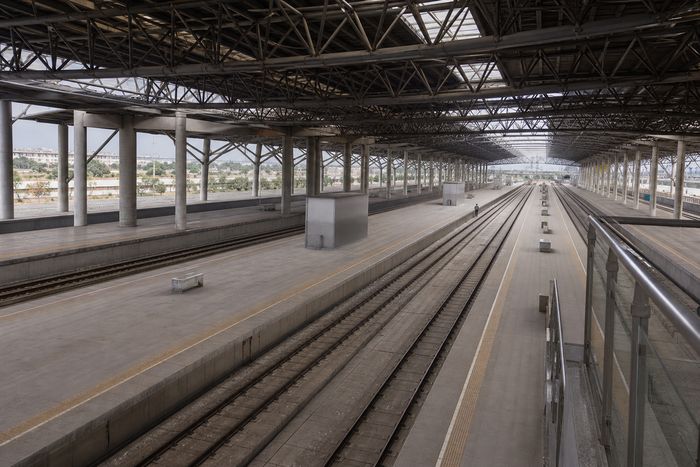
On 19 January 2023 the ground moved.
About 52 long-distance Rapid, Express and Special Express services shifted, at the time of that transition, from Hua Lamphong to Krung Thep Aphiwat Central Terminal, the big new hub better known as Bang Sue Grand Station.
That 52 figure comes from a commercial summary rather than a page I could pull from the railway itself, so take it as the scale of the change, not an audited count. The direction of it is not in doubt: if you are taking a mainline sleeper to Chiang Mai or a Special Express south, you are almost certainly leaving from Krung Thep Aphiwat now.
I learned this the way most residents did - by nearly showing up at the wrong place. I have taken the Chiang Mai night train in every class it sells, always out of Hua Lamphong, for years. Then one booking put my departure clear across the city and I only caught it because the terminal name on the ticket did not match my memory.
Read your train number, not your memory.
Hua Lamphong was reduced, not closed. This is the single detail I most want to land, because getting it wrong sends people to the wrong terminal.
A 2022 plan to shut it fully was blocked after public opposition, and a limited set of services still runs from it - Eastern-line trains and some Ordinary and special departures, including routes toward Pattaya and Aranyaprathet.
If someone tells you Hua Lamphong is closed, they are working from an old headline.
One trap catches arrivals specifically: the MRT Blue Line station serving Krung Thep Aphiwat is still signed Bang Sue (BL11). The metro name and the terminal name do not match, so a first-timer riding in can second-guess a correct stop. Do not resolve that by asking a forum.
Look up your exact train number on the State Railway of Thailand's own D-Ticket site, which tells you the terminal for that service. And watch the domain - a private ticket agency runs on a web address that closely resembles the official railway one, and it is not the operator.
When your trip needs both airports: what the transfer actually costs you
DMK and BKK sit roughly 22 to 30 km apart. The free inter-airport shuttle bus takes at least an hour, and longer when Bangkok traffic does what Bangkok traffic does. Both numbers are approximate, drawn from a commercial illustration rather than an operator timetable, so treat them as a sense of scale, not a stopwatch.
Two situations put you on that shuttle. The first is an international arrival into one airport with a domestic departure booked out of the other - land at Suvarnabhumi, fly onward from Don Mueang, or the reverse. The second is a same-day connection you stitched together from two separate bookings that share no through-protection.
That second case is the one that bites, and I want to be honest about it. When you build the connection yourself across two airports, nobody is holding your onward seat if the first leg lands late. The delay risk is entirely yours.
I will not publish a minimum connection time in minutes, because no sourced figure for it exists and a made-up number would read like a guarantee I cannot make. What I will say is: buffer heavily, treat the shuttle as an hour-plus that could double, and if the timing looks tight on paper it is already too tight in traffic. The pre-booking version of this thinking is the checklist below.
Confirm your gateway before you pay: the five-minute check
None of this needs to be complicated at the point of sale. It needs a habit. Run these before the payment goes through, not at the curb.
- Read the three-letter airport code printed on the booking, not the city name. "Bangkok" is not an airport; DMK and BKK are.
- For a flight, open the AOT airline-information page for that specific airport and see which carriers it lists this schedule season.
- Cross-check that against the airline's own newsroom or your booking confirmation - the airline confirms your flight, the AOT page confirms the airport's line-up.
- For a train, look up your exact train number on SRT D-Ticket to get its terminal. Do not assume the station you used last time.
- Check whether your arrival leg and your departure leg are at the same gateway. If they are, you are done.
- If they are not, price and time the transfer before you commit - especially the DMK-to-BKK hop.
- Confirm the booking is an actual confirmation, not a pending request. A reseller that is not synced in real time with the operator is effectively taking a manual order; confirmation can lag by days and your seat or berth may not be locked.
- Verify the site is the operator's own. The airline's site, SRT D-Ticket via railway.co.th, and the AOT airport pages are the sources; a lookalike rail domain is not the railway.
Then write down the date you checked. These assignments move, and a screenshot from three months ago is not a live fact. This whole routine reduces risk.
It does not guarantee anything, and I would not trust anyone who told you it did.
The connection I nearly lost, and what I check now
Here is the trip shape that almost cost me a leg, stripped to hub logistics. No fares, no flight numbers I would have to invent - just the itinerary and the note I wish I had written against each line.
Leg 1 - International arrival into Bangkok. Check: which airport does this land at? An international flight can put you at either hub. I assumed the airport my onward budget flight used, which is how the whole thing went sideways.
Leg 2 - Domestic budget flight onward, assumed to leave from the same airport. *Check: read the code on this booking. I had it filed in my head as a Don Mueang carrier, and this is exactly the dual-hub period when that assumption was live. The airport code on the ticket is the fact; my memory of "that airline means DMK" was not.
Had the two legs been split across DMK and BKK, I would have needed the shuttle - an hour-plus - between a late arrival and a departure I did not have enough buffer for.*
Leg 3 - Onward island leg. Check: is this same-airport, or another transfer? Budget island routes lean toward Don Mueang; a direct Samui flight would have meant Suvarnabhumi and Bangkok Airways instead. Different airport, different carrier, different building.
What caught it, barely, was reading the codes side by side instead of trusting the pattern. The mistake was specific to me; the lesson is not. Do not connect off a reputation.
Connect off the code on the page.
Frequently asked questions
Is Hua Lamphong still open? Yes, and this is the most-repeated error about it. It lost most long-distance departures in the January 2023 consolidation but was not closed; a reduced set of Eastern-line and Ordinary services still runs from it.
Confirm the terminal for your own train number on SRT D-Ticket.
My booking says BKK, but I thought this airline only flew from Don Mueang - is that a mistake? Probably not. This carrier's Bangkok domestic airport has moved more than once and was reportedly suspended at BKK for part of 2026.
The code on your booking is the fact; the reputation is not. Trust the code.
How do I get from a Bangkok airport to my train at Krung Thep Aphiwat? It depends which airport you landed at, so there is no single route. The metro station serving the terminal is still signed Bang Sue (BL11), which trips people up.
Leave a realistic cushion rather than trusting a promised time, and confirm your train's terminal on SRT D-Ticket.
How much time should I leave between landing at one Bangkok airport and departing from the other? Honestly, no sourced minimum exists, so I will not invent one. The free shuttle runs at least an hour and longer in traffic.
Treat a self-built cross-airport connection as unprotected and build in heavy buffer, because nobody else is holding your onward seat.
How do I know I'm on the official booking site and not a lookalike? Use the airline's own site, SRT D-Ticket via railway.co.th, and the AOT airport pages. A reseller not synced with the operator is really taking a manual request, so confirmation can lag and seats may not be locked.
Note that a private agency runs on a rail domain confusingly close to the official one.
Confirm your own leg before you pay
Read the airport code or the train number on your booking, run it through the checklist above, and note the date you checked. That is the entire method: stop memorising the answer, start verifying it per booking. For the ride after you land, here is local transport once you've landed in Bangkok.
Sources
- State Railway of Thailand, Krung Thep Aphiwat Central Terminal consolidation, summarised by thailandtrains.com (thailandtrains.com/krung-thep-aphiwat-central-terminal-bangkok), as of the 19 January 2023 event. Supports the terminal move, the approximate 52-service figure, and the MRT Bang Sue name.
- Hua Lamphong station status, thailandtrains.com/hua-lamphong-station-bangkok, as of the post-2022 closure-plan reversal. Supports reduced-not-closed and the remaining services.
- Airports of Thailand, Don Mueang airline-information page (donmueang.airportthai.co.th), Summer 2026 schedule, 29 March to 24 October 2026. Supports the carrier-to-airport assignments and the reader's own verification route.
- AirAsia Newsroom, official capacity-reduction release (newsroom.airasia.com), as of 28 April 2026. Supports the sustained dual-hub line of the timeline.
- Nation Thailand, media report on the Suvarnabhumi domestic suspension (nationthailand.com/news/general/40069124), as of 28 July 2026. Supports the 15 July to 30 September 2026 suspension and 1 October 2026 resumption; media-reported.
- State Railway of Thailand D-Ticket official booking channel (railway.co.th), referenced via seat61.com/Thailand.htm. Supports the train-number verification route and the official-versus-lookalike distinction.
- AirAsia blog, Bangkok DMK vs BKK (airasia.com/blog/thailand/bangkok/bangkok-dmk-vs-bkk-airports), commercial and indicative only. Supports the approximate 22-30 km distance and the "at least an hour" shuttle time; not an authoritative figure.
Where a figure here rests on a commercial summary rather than a primary source, I have said so in the text. No Department of Land Transport or Royal Thai Police source was retrieved for this page, and no SRT-hosted page confirming the 52-service count was retrieved.
Last verified: 11 August 2026. Every hub, terminal and carrier assignment in this article is dated and changes without much notice. Nothing here is a guarantee that your connection will hold or that these figures are still current when you read them. Before you pay, confirm your own leg on the airline's channel, the AOT airport page or SRT D-Ticket, and note the date you checked.
