Thailand Ferry Low Season: Will Your Boat Actually Run?
On this page
- The short answer, and why nobody can give you a calendar
- Why the Andaman and the Gulf run opposite seasons
- Coast by coast: what actually changes, and how good the evidence is
- The Andaman coast, leg by leg
- The Gulf coast and the November-December Koh Tao pattern
- Trang's islands, where no official source exists at all
- Joint bus-and-ferry tickets, or booking each leg separately
- If your crossing is canceled: what I actually do
- FAQ
- Before you book
- Sources
The question I get most about island travel isn't which beach. It's whether the boat will run.
Someone books a three-week trip, pins an island leg in the middle of it, then reads one blog line that says the ferries stop in low season and starts bracing to lose a day they already paid for.
That fear is reasonable and the blog line is mostly wrong.
Ferry service in Thailand doesn't switch off by calendar; it changes leg by leg, coast by coast, on dates individual operators decide close to the season.
This piece is about reading your one crossing's risk instead of memorizing a season, and it sits inside the rest of my getting around Thailand notes.
The short answer, and why nobody can give you a calendar
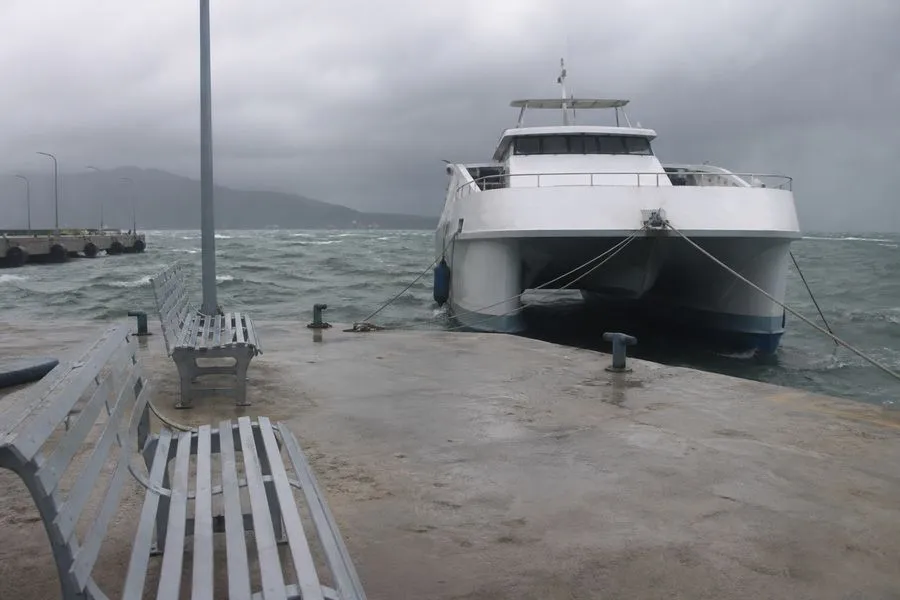
I got stranded at Chumphon pier once when my boat to Koh Tao was canceled. The notice came from the operator that morning, posted at the counter and online, not from any schedule I could have checked the week before. That is the whole problem in one scene.
Here is what you need to know before you go looking for a calendar: there isn't one. No Thai government body publishes a dated seasonal ferry-closure order. The Marine Department's jurisdiction over boat safety is confirmed, but it carries no seasonal advisory you can plan around.
The only genuinely official live source is the Thai Meteorological Department's shipping forecast, and that reports wave and wind conditions for the day, not a timetable.
So suspension and reduction dates get set and announced by the operators themselves, close to the season, and they move from one year to the next. If you haven't fixed how you're traveling yet, compare modes before you book and come back to the crossing.
Seasonal ferry status checker - pick your coast and travel month (and your corridor, if you know it) to see whether your leg reads as normal, reduced, or higher-risk, with the same evidence label the table below uses. It never shows an authoritative schedule; reconfirm with the operator and the TMD forecast close to travel.
Why the Andaman and the Gulf run opposite seasons
Two coasts of the same peninsula sit in the path of alternating monsoon wind systems. When one side is taking the weather, the other is in its lee, so their calm and rough sailing periods typically run out of phase.
That mechanism is the reason your travel month means different things on different coasts. The Andaman side (Phuket, Phi Phi, Lanta, and down to Trang) sees reduced or suspended direct service on a lot of legs roughly May through October, depending on the operator and the exact route. The Gulf side (Chumphon and Surat Thani out to Koh Tao, Koh Phangan and Koh Samui) runs close to year-round through those same months.
Watch the language operators use for this.
On the Andaman side some of them market the May-to-October window as "Green Season" rather than posting a closure date, and they'll describe the schedule only as something that "may adjust based on sea conditions."
That is not a plan you can hold them to. It is a polite way of saying they'll decide when the weather tells them to, which is exactly why a country-wide low-season rule is useless to you. The useful unit is the single leg, in your month, on your coast.
Coast by coast: what actually changes, and how good the evidence is
Read the table below by finding your corridor first, then the mechanism, then the fallback if there is one. The column that matters most is the last one. Every seasonal claim on this page traces back to an operator, a reseller or a media report, never to a regulator, and the evidence-quality label tells you how much weight the window can carry.
Treat every window as "typically," not as a booking you can rely on. A range in the date columns means the sources disagree or stay vague, and I've left it as a range rather than pretending to a precision nobody actually has. Find your row, then reconfirm the specific date with the operator close to travel.
| Corridor / leg | Typically calmer window | What happens in the rougher months | Documented exception or fallback | Evidence quality |
|---|---|---|---|---|
| Andaman mainline, Phuket-Phi Phi (direct sea legs) | Roughly Nov-Apr | Direct sea legs reduced or suspended on several operators, roughly May-Oct; operator-set dates that vary year to year | None on the direct sea legs | commercial/reseller |
| Andaman, Phuket/Krabi-Koh Lanta (direct sea legs) | Roughly Nov-Apr | Direct sea legs reduced or suspended, roughly May-Oct | Year-round sheltered Hua Hin car-ferry crossing, reached by road | commercial/reseller |
| Trang islands, Pak Meng to Koh Mook / Kradan / Libong / Ngai | Onward ferries roughly Nov-Apr | Direct onward ferry links to Phuket/Phi Phi/Lanta don't run | Year-round longtail access from Pak Meng Pier | no official source found |
| Gulf, Chumphon-Koh Tao | Close to year-round | Weather-variable rough-sea cancellation pattern concentrated Nov-Dec, non-fixed | No fixed window; build slack and book flexibly | operator and media report, not officially confirmed |
| Gulf, Surat Thani / Donsak-Koh Phangan / Koh Samui | Close to year-round | Occasional weather disruption; runs close to year-round | Multiple operators and piers serving the route | operator's own site |
The Andaman coast, leg by leg
This is where "the Andaman shuts in low season" falls apart, and I should own it: I used to tell people exactly that. The Andaman shuts down in May, I'd say, book the Gulf instead. That sentence is wrong at the leg level, and I've since used the leg it gets wrong.
Break the corridor into its actual pieces.
The direct sea legs (the Phuket-Phi Phi speedboats and ferries, the direct Phuket or Krabi runs to Koh Lanta) are the ones that get reduced or suspended on several operators through the monsoon window, roughly May to October.
Those are the crossings exposed to the open southwest swell, and those are the ones the commercial sources describe going quiet.
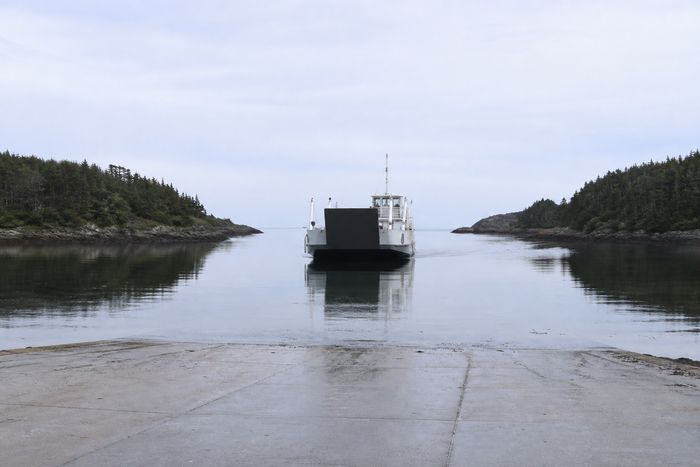
But Koh Lanta doesn't only reach the mainland by open water.
The car-ferry crossing via the sheltered Hua Hin pier (the one on Lanta, not the beach town far to the north) runs year-round regardless of what the direct sea legs are doing, because the channel it crosses is short and protected.
That means you can still get to Koh Lanta in August by going overland and taking the short sheltered crossing, even when the direct boat from Phuket isn't sailing.
It is the one documented weather-proof fallback I'd stake a plan on this coast, and it is sourced to commercial transfer pages rather than a regulator, so treat it as reliable-in-practice, not guaranteed.
I've taken that road-and-crossing routing myself in the monsoon months while I was based in Krabi and spending time on Lanta, on days the direct boats weren't an option. So when I told people the coast "shuts," I was collapsing a corridor of separate legs into one wrong headline. Some legs pause.
One doesn't. Book the crossing, not the coast.
The Gulf coast and the November-December Koh Tao pattern
The Gulf is the safer coast for an island leg in the Andaman monsoon window, because its rough season runs opposite and the Chumphon and Surat Thani routes stay close to year-round. That is the real reason to lean Gulf if your fixed-trip dates land in, say, July.
Close to year-round is not always, though, and Koh Tao is the exception worth naming. There's a recognized pattern of rough-sea cancellations on the Chumphon-Koh Tao crossing concentrated in November and December. It's weather-variable and not a fixed closure; some years barely bite, some years chew up a run of days.
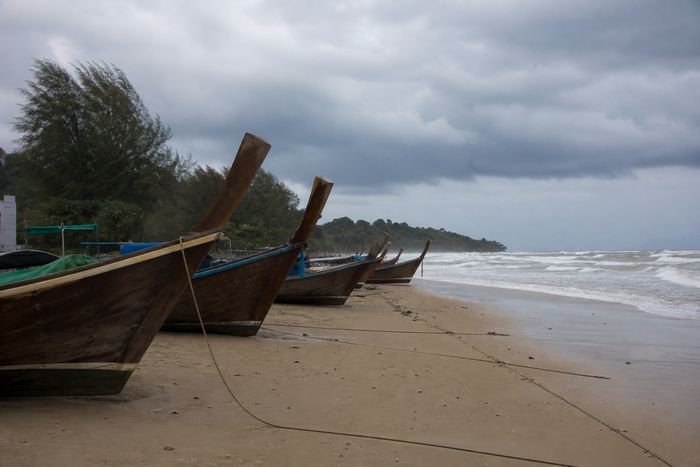
Be clear about where that pattern comes from. It is reported by operators, by media and on traveler forums, and it is not officially confirmed by any regulator. In one November event I looked at, a news report and the operator's own Facebook page gave overlapping but not identical suspension dates - close, but not the same days.
That is the texture of the evidence here: good enough to take seriously, not clean enough to plan a connection down to the hour.
What that means for you is practical. Cancellations get announced day by day, often with little notice, the way mine did at Chumphon. Don't expect a published window you can route around.
If your trip runs through late November or December and Koh Tao is on it, build slack into the itinerary, keep the ticket flexible, and reconfirm the same week you travel rather than trusting a date you saw in the spring.
Trang's islands, where no official source exists at all
If your departure point is down in Trang, this is the part I have to be most honest about, because the data mostly isn't there. Koh Mook, Koh Kradan, Koh Libong and Koh Ngai are reachable year-round by longtail from Pak Meng Pier, and that access holds through the monsoon.
The direct ferry connections onward to Phuket, Phi Phi and Lanta are a different story: according to commercial sources they run only in the high-season window, roughly November to April, and there's no official schedule sitting behind that at all.
Here's what the best available data looks like for this pier, as one illustration rather than a timetable. The Satun Pakbara Speed Boat Club is listed on a commercial site running Pak Meng to Koh Kradan at about THB 600 (around US$17) one-way, roughly 40 minutes, with two daily trips. I could not confirm those departure times or fares against any official source, and neither could our research round.
Treat that single data point as a starting question to put to the operator, not as a schedule to book against. Call ahead or ask at the pier locally, and assume nothing about the onward legs until someone at the counter confirms it.
Joint bus-and-ferry tickets, or booking each leg separately
The rule I'd give a first-timer: for an island leg, buy the joint product from an operator that owns both halves of it.
The large Gulf operators sell the road leg and the sea leg as one ticket with connecting coach or van service, and that's generally the more reliable way to book, because one company controls the handover between bus and boat.
Lomprayah High Speed Ferries (running since 1996, with a seven-vessel catamaran and ferry fleet) links Koh Samui, Koh Phangan, Koh Tao and Chumphon, selling the Bangkok leg on a connecting air-conditioned coach.
Boonsiri sells connecting van and bus service on Gulf routes the same way.
The warning is about who you buy from. A booking made through a third-party reseller that isn't synced in real time with the operator is effectively a manual request. Confirmation can take hours or even days, and your seat or class isn't guaranteed while you wait.
When the confirmation actually matters, book on the operator's own channel and get the immediate confirmation instead of a pending "request."
On fares, treat these as indicative, undated snapshots from commercial sources rather than current prices. On the Gulf, Koh Samui to Koh Phangan runs roughly 150 to 550 THB depending on vessel class, and Koh Tao to Koh Samui roughly 500 to 900 THB depending on operator and class. On the Andaman side, Phuket to Koh Phi Phi is roughly 400 to 600 THB one-way by standard ferry and roughly 800 to 1,200 THB by speedboat.
Numbers move; use these to sanity-check, not to budget to the baht.
If your crossing is canceled: what I actually do
The sequence is boring on purpose, because the day my Koh Tao boat got pulled I wasted an hour on rumors at the pier. First, confirm the cancellation through the operator's own channel, not a forum thread or a reseller. Second, check the TMD shipping forecast to see whether you're looking at a one-day sea state or a settled rough patch, because that decides whether waiting makes sense.
Then look for a road-plus-sheltered-crossing routing where one exists (the Koh Lanta car ferry is the clean example). And treat a flexible or same-day-refundable ticket as the cheap insurance it is; the few baht extra is nothing against a lost day of a fixed trip.
The walk-away rule matters most. If a maritime leg's status can't be confirmed close to the travel date and there's no fallback routing, that is the moment to change the plan, not to gamble on it. And don't try to arrange a private boat around an operator's weather decision.
If the professionals with the biggest hulls are staying in port, a longtail you chartered to prove a point is not the answer.
Scenario cards
A1-a - Phuket to Koh Lanta in August. Direct sea legs may be reduced or suspended in the monsoon window. The documented move is the overland routing to the sheltered Hua Hin car-ferry crossing, which runs year-round.
Book the road-and-crossing combination rather than waiting on the direct boat.
A1-b - Chumphon to Koh Tao in late November. Service is nominally year-round, but this is the window with the recognized rough-sea cancellation pattern. Build slack into the itinerary, keep the ticket flexible, and reconfirm the same week through the operator's own channel plus the TMD shipping forecast.
A1-c - Trang islands in June. Longtail access from Pak Meng is year-round, but the onward direct ferry links to Phuket, Phi Phi and Lanta are high-season only per commercial sources, with no official timetable. Treat the onward leg as unconfirmed and plan your exit by road.
Red flags: signs your crossing probably won't run as booked
- A seasonal-closure claim with no named regulator, no date and no primary source. What to do instead: ignore the calendar and check the operator's own channel for your leg.
- A blanket "the ferries are closed" line with no leg-level detail. What to do instead: find your specific corridor before you believe it; some legs run when others don't.
- A fare or schedule with no date attached. What to do instead: assume it's stale and reconfirm the current number with the operator.
- A booking "confirmation" that isn't immediate and is described as a request pending manual handling. What to do instead: book on the operator's own channel where confirmation is instant.
- Cancellation news that exists only as a same-day social-media post. What to do instead: use it as a signal for today, never as proof of an ongoing rule.
Once you're actually across, the on-island half is its own subject: see local transport once you're on the island.
FAQ
Do island ferries actually stop running in Thailand's low season? There's no blanket stop; it's leg by leg.
Andaman direct sea legs are typically reduced or suspended roughly May to October by operator decision, the Gulf runs close to year-round through those months, and at least one Andaman crossing (the sheltered Hua Hin car ferry to Koh Lanta) runs all year.
Is it risky to book a Koh Tao boat in November? The November-December rough-sea cancellation pattern is real and recognized, but it's operator-, media- and forum-sourced, not officially confirmed, and it isn't a fixed closure. Some years it barely shows. Build slack into your dates, book a flexible ticket, and reconfirm the same week you travel.
What happens if my ferry is canceled or I miss it? Rebooking terms vary by operator, so I only state them where the research confirms them. On the Andaman mainline there's one documented fallback routing: go overland and take the year-round sheltered crossing to Koh Lanta. Elsewhere, confirm status and check the shipping forecast before deciding to wait or reroute.
Should I book a joint bus-and-ferry ticket or each leg separately? For island legs, the joint product from an operator that owns both the road and sea halves is generally the more reliable booking, because one company controls the handover. The real risk isn't the joint ticket; it's a non-integrated reseller whose confirmation is a pending manual request rather than an instant seat.
How do I know my crossing will actually run on my date? Check the operator's own channel close to the travel date, and check the Thai Meteorological Department's shipping forecast for live sea state. There's no government seasonal calendar to check, so any site presenting a tidy closure timetable is guessing.
Before you book
Do one concrete thing before you lock in an island leg: find your exact crossing in the reliability table, run it through the seasonal checker for your travel month, and set a reminder to reconfirm with the operator in the week before you travel.
If you're still deciding how to get there at all, compare modes before you book.
Sources
- Ministry of Transport, Marine Department directory entry - confirms jurisdiction over boat safety; no dated seasonal advisory found. https://www.mot.go.th/en/marine/info
- Thai Meteorological Department, shipping forecast - official rolling wave and wind advisory, the live source to check; not a schedule. https://www.tmd.go.th/en/forecast/shipping (as of 2026-07-31)
- Andaman Wave Master (Phuket operator) - the operator's own "Green Season" framing and "may adjust based on sea conditions" wording. https://www.andamanwavemaster.com/destination/phuket
- Koh Lanta low-season transfer sources (commercial) - the year-round sheltered car-ferry crossing and road-plus-crossing routing. https://www.byklo.rent/en/blog/how-to-get-to-koh-lanta ; https://amazinglanta.com/koh-lanta-transfers-in-low-season
- Satun Pakbara Speed Boat Club, via phuketferry.com - single confirmed Pak Meng to Koh Kradan operator, fare and duration; no official Trang source found. https://www.phuketferry.com/route-trang-koh-kradan.html
- Lomprayah High Speed Ferries (official) - Gulf network coverage and the joint coach-plus-ferry product. https://lomprayah.com
- Boonsiri Sealine (official) - connecting van and bus plus ferry service on Gulf routes. https://boonsiriferry.com
- Indicative fare snapshots (commercial) - Gulf short hops and Phuket-Phi Phi ranges, labeled as estimates. https://phanganist.com/transport/koh-samui ; https://thailandboattickets.com/en/guides/ferry-phuket-koh-phi-phi
Last reviewed: 11 August 2026. Seasonal ferry windows are set by individual operators year to year, so re-check this page's windows before each monsoon season rather than treating them as settled.
This article is about reducing risk, not eliminating it. Following it will not guarantee your crossing runs. Confirm current schedules, terminals and fares directly with the operator before you travel, and check the Thai Meteorological Department's shipping forecast for live sea conditions. Third-party and blog sources, including the commercial pages cited here, go stale quickly.
