Grab, Taxis, Songthaews and Scooters: Thailand Guide
On this page
- Ride-Hailing, Taxis, Songthaews and Scooters: Getting Around Once You've Arrived
- The Four Ways You'll Actually Get Around Once You've Landed
- Ride-Hailing Apps: Legal Since October 2025, But Not Everywhere
- What the October 2025 Rule Actually Changed
- Where Grab and Bolt Actually Work
- Metered Taxis and the Meter Problem
- What to Do When the Driver Won't Start the Meter
- Songthaews and Tuk-Tuks: The Fare Is a Conversation
- Renting a Scooter: The License You Actually Need
- What the Law Actually Says, and What It Doesn't
- Getting the Permit Before You Go
- The Insurance Half of the Chain
- If You Crash Without the Right Permit
- How Risky Is Riding Here? The Numbers, and Why They Disagree
- Which Option to Use, by Trip Type
- Frequently Asked Questions
- Before You Rely on Any of This
- Sources
Ride-Hailing, Taxis, Songthaews and Scooters: Getting Around Once You've Arrived
You have landed, your bag is in a room somewhere, and now you need to cross town today. Four options will be in front of you: an app, a metered taxi, a shared truck with bench seats, and a rented scooter. Three of those are a pricing problem.
The fourth is a paperwork problem that stays invisible until you're on the pavement with a broken wrist and an insurer reading your policy back to you. Read the scooter part slowly.
Two things I'll be honest about up front. The ride-hailing rule that changed in October 2025 is documented and dated, and I'll cite it. The licensing rule for riding a scooter on a foreign permit is not cleanly documented anywhere official that I could find, and I'll say so where it matters instead of rounding it into confidence.
This article is general information about local transport in Thailand. It is not legal advice on Thai driving licenses, not insurance advice, and not a safety guarantee. Licensing requirements and insurer conditions get interpreted differently by different operators and different policies, so confirm with Thailand's Department of Land Transport and with your own insurer before you ride.
The Four Ways You'll Actually Get Around Once You've Landed
Everything below is a last-mile question: airport to hotel, hotel to trailhead, one side of a town to the other.
If the leg before this one is still unbooked, that's a different decision, and I've written about how to get between cities and islands in the first place separately.
| Option | How the fare is set | Where it's reliably available | Biggest risk to watch for |
|---|---|---|---|
| Ride-hailing app, car (GrabCar/JustGrab, Bolt) | App quote before you accept the ride | Listed across all of Grab's own defined Thai regions, per Grab's own coverage page; strongest in large cities | Thin or no coverage in small towns and on many islands; long waits where driver supply is low |
| Ride-hailing app, motorbike taxi (GrabBike) | App quote before you accept | Concentrated in large cities | Frequently unavailable outside big urban areas; you ride pillion in traffic |
| Metered taxi | Meter, plus separate surcharges and tolls | Bangkok, and other large cities in varying numbers | Driver refuses the meter and names a flat fare; or the meter runs while the route lengthens |
| Songthaew / shared truck | Depends entirely on the city: fixed route and fixed fare in some, negotiated in others. Agreed before boarding; no sourced reference fare | Widespread, including places apps don't reach | You carry one city's fare convention into another one and get it wrong |
| Tuk-tuk | Always negotiated, never metered. Agreed before boarding; no sourced reference fare | Tourist areas of most cities | Fare quoted only after arrival; poor value on anything but short hops |
Read that table column by column rather than row by row.
The fare-setting column tells you when you have leverage (before you board, or not at all), and the availability column is the one that decides whether the other three columns matter at all in the town you're standing in.
Ride-Hailing Apps: Legal Since October 2025, But Not Everywhere
Two questions get mashed together constantly, and they have different answers. Is ride-hailing legal in Thailand? Yes, and specifically regulated now.
Will it be there when you open the app in a small provincial town or on an island? Often not.
What the October 2025 Rule Actually Changed
The Electronic Transactions Development Agency (ETDA) issued an announcement on additional requirements for digital platform operators running public hire car or motorcycle services, under the Royal Decree on the Operation of Digital Platform Services Subject to Notification.
It was published in the Royal Gazette on 4 July 2025 and took effect on 2 October 2025. That is the one solidly sourced legal fact in this article, which is why I'm dating it precisely.
What it does: it pushes platforms from being passive intermediaries into being active regulators of their own service. Vehicles have to be registered as public vehicles under Department of Land Transport rules, the classification commonly referred to as "Ror Yor 18." Drivers must hold a valid public driving license.
Driver and passenger identity get verified at every login through a digital ID such as ThaID, and account sharing is prohibited. Fares have to comply with legal transport fare rates.
Now the part the press releases skip.
According to September 2025 reporting in the Bangkok Post, Grab Thailand was still offering incentives to get drivers registered under Ror Yor 18, and Bolt said it had helped "tens of thousands" of drivers obtain the public driving license.
That reads as a rolling compliance process rather than a clean cutover on 2 October. If you've been here a few years and think you already know how this works, this is the bit that changed, and the app itself is where you re-check it.
Where Grab and Bolt Actually Work
Grab's own transport page lists GrabCar and JustGrab across all of the Thai regions it defines. GrabBike, the motorbike-taxi hailing product, is concentrated in large cities. Coverage thins out or disappears in smaller towns and on plenty of islands, and that is a completely separate fact from legality.
It's the fact that strands you when you have a 6:00 a.m. dive boat and no ride to the pier.
Bolt is a smaller competing platform operating in some Thai cities. Between the two, the practical move is boring: open the app for the specific town, on the specific date, before you build a plan around it.
Grab's own 2025 highlights report names Udon Thani, Ubon Ratchathani, Chiang Rai, Phitsanulok and Nakhon Sawan as its top secondary-province growth markets, which is company self-reported and tells you where coverage is expanding rather than where it's guaranteed.
I've had a Grab request sit unmatched for eleven minutes in a provincial town that the coverage map technically included. The app said available. The road said otherwise.
Metered Taxis and the Meter Problem
Bangkok's metered taxis are required to run the meter.
Per Travelfish's Bangkok transport page, a secondary source giving indicative figures only, the starting fare is about 35 THB, and a metered run from Suvarnabhumi into central Bangkok lands roughly in the 200-500 THB range.
On top of the meter there's a 50 THB airport-pickup surcharge, and expressway tolls are paid separately, in cash, usually handed to the driver at the booth. Treat all of those as approximate rather than as a tariff card.
Two distinct problems show up, and they need different responses. The obvious one is outright meter refusal: the driver names a flat fare before you move, and the number bears no relationship to the distance. Reported amounts in the 700-1,500 THB band for short rides circulate as anecdotes, and I'd read them as illustration of the pattern rather than as a price list.
The subtler version is worse because it looks fine: the meter is running, everything seems legitimate, and the route quietly grows an extra loop. Watching the route on your own phone map is the only defense I've found that works while it's happening.
What to Do When the Driver Won't Start the Meter
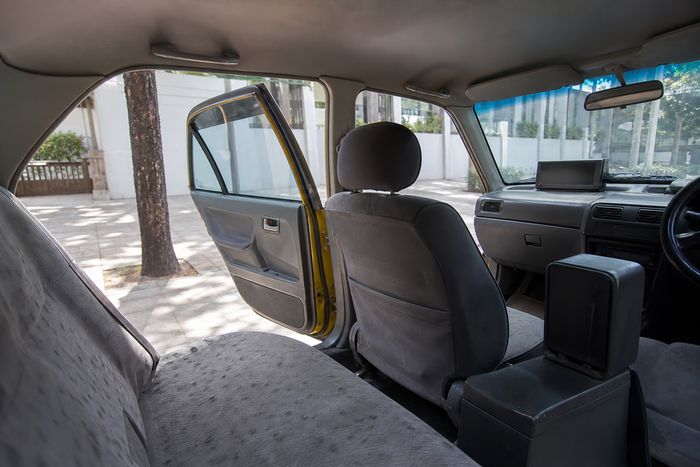
Keep the door open until the meter is running and showing the starting fare before you settle in. That's the whole technique. An open door is a negotiation; a closed door with your bag in the trunk is not.
At an official airport taxi queue, you were given a dispatch slip. If the assigned driver starts negotiating a flat fare, hand the slip back to the queue official and ask for a different driver. That is what the queue is for.
If you want to file a complaint, photograph the license plate. If you don't, decline, step back, and either flag the next taxi or open an app. These are recommended practices from a secondary source rather than a regulation you can cite at someone, but they are what works.
Red flags, and the counter-move for each
- Driver names a flat fare before departure instead of starting the meter - decline and take the next cab; there is always a next cab.
- Driver won't quote anything and says "up to you" or gives you a number only on arrival - agree the fare or confirm the meter is on before the door closes.
- Meter is running but the route visibly lengthens - track it on your own map and say the destination name aloud again while you still have the option to get out.
- At a dispatch-slip queue, the assigned driver negotiates instead of driving - return the slip to the queue official and request another driver.
- The app quote and the street quote differ by a large multiple - take the app; the multiple is the answer.
- Shared truck driver names a fare only once you're moving - agree it before you climb into the back, every time.
- Driver says the meter is "broken" - that's the same refusal in different words; step out.
- Someone approaches you inside the terminal offering a ride - use the official queue or the app instead.
Songthaews and Tuk-Tuks: The Fare Is a Conversation
The city-by-city convention is the entire point here, and it's what nobody tells you.
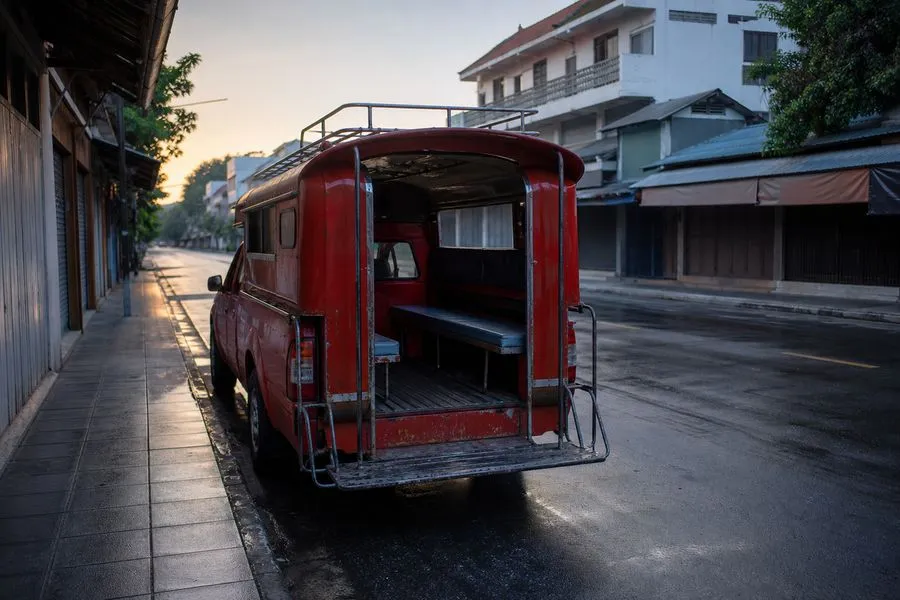
In Chiang Mai, the red songthaews (locals call them "rot daeng") work shared-taxi style: you tell the driver where you're going, they decide whether it fits their direction, and the fare is negotiated.
In Phuket the blue ones and in Pattaya the white ones run fixed routes at fixed fares, more like a bus with no doors. Same vehicle, different rules, and the rules do not travel with you.
I learned this by being that person. Fresh off years of Chiang Mai habit, I stood at a songthaew in Phuket and started politely negotiating down from a fare that was, it turns out, simply the posted fare for that route. The driver waited me out with the patience of a man who has watched this exact performance many times.
I paid the fare. It was correct. My negotiating position was the thing that was wrong.
Here's the honest gap: the research behind this article contains no reliable reference fare for a songthaew ride anywhere in Thailand. I'm not going to invent a band, because a made-up number is worse than no number - you'd anchor on it and argue from it.
What you do instead is agree the fare before you board, in whatever mix of Thai numbers and fingers works, and where an app operates in that town, pull up an in-app estimate for the same trip as a second opinion.
It won't match a shared-truck fare, but it tells you the order of magnitude.
Tuk-tuks are unmetered and always negotiated. I treat them as a short-hop or a novelty rather than a value option, and I've never once found one cheaper than the alternative when the alternative existed.
Renting a Scooter: The License You Actually Need
The paperwork nobody checks at the rental counter is exactly the paperwork an insurer checks after a crash. That sentence is the article.
A rental shop wants a deposit and a returned bike. An insurance adjuster wants the document that made you a legal rider at the moment of impact. Those two parties are asking for entirely different things, and only one of them asks after you're already hurt.
So take it as one chain, in this order: what the law requires you to hold, what your insurance requires you to have held, and what the actual crash risk looks like on Thai roads. Each link only makes sense with the one before it.
What the Law Actually Says, and What It Doesn't
For the deep legal analysis of the permit question, see what the law actually requires before you ride. What follows here is the last-mile version: what you need to be carrying, and what it costs you if you aren't.
The baseline is that Thailand's Land Traffic Act requires a valid Thai motorcycle driving license to ride on public roads. Thailand is a signatory to the 1949 Geneva Convention on Road Traffic, which permits driving on a valid foreign license or International Driving Permit during an initial period of a visit.
The precise duration and scope of that allowance is not clearly defined in Thai law according to the sources I reviewed, and I could not locate any official Department of Land Transport or Royal Thai Police page confirming it.
I'd rather tell you that than paper over it with a confident number of days.
I have a Thai driving license. Nine years of residency, the DLT queue, the reaction-test machine, the whole morning. It is completely useless as guidance for you, because a resident's route through the DLT is not a route a three-week visitor has.
That's why the Geneva Convention allowance, not my license, is your actual question - and it's the part nobody can pin down.
The safe general rule I give people now: carry your home license and an IDP whose vehicle category matches the engine size you intend to ride. A US state license on its own does not satisfy the requirement, and neither does an IDP that lacks the motorcycle category. I used to tell people "just get an IDP" and leave it there.
That advice was wrong, and I've had to retract it more than once. An IDP without the matching motorcycle category is the same gap wearing a booklet.
On penalties, be careful with what you read.
One regional source cites an official fine of up to 10,000 THB and a theoretically possible three-month detention it describes as rarely applied, alongside reported real-world fines commonly in the 500-1,000 THB range and sometimes settled informally.
That's what one unverified source states. No official penalty schedule was located, so don't plan around any of those figures. The takeaway that survives the uncertainty: riding without the correct permit is an offense, and the DLT and your rental operator are who to ask about specifics.
As for checkpoints, one commercial source describes stops on the Patong-Karon road in Phuket where police check helmet use first and license or IDP second, with a compliant stop taking two to three minutes.
That's a single source describing a single location, so read it as texture rather than a national procedure.
Getting the Permit Before You Go
An IDP without the matching motorcycle category, or a home-state license with no IDP at all, does not satisfy the requirement - and the permit has to be carried alongside your original home license, not instead of it.
This is the one item on the whole list that you cannot fix after arrival.
An IDP is issued by your home country's authorized body. Approximately US$20-40, roughly ten business days, two passport photos, valid one year. It cannot be issued once you are already in Thailand.
Confirm the current cost and turnaround with your issuing body, since those details move.
Pre-rental preparation checklist
Before you fly:
- Apply for the IDP at home. Two passport photos, approximately US$20-40, about ten business days, valid one year. There is no version of this you can do after you land.
- Check that the IDP actually carries the motorcycle category covering the engine size you intend to ride. Look at the booklet's category stamps rather than assuming the permit is generic.
- Get your insurer's licensing clause in writing before the trip. Email, not a phone call. Ask specifically what they require of a rider at the moment of a motorcycle accident.
At the shop:
- Refuse to leave your original passport as security. Travelers are consistently advised never to do this; a photocopy plus a cash deposit is what one 2026 rental-industry source describes as becoming standard at vetted operators, with reported deposits somewhere in the 500-5,000 THB range. If a shop insists on holding the original, walk away and find another shop.
- Treat a shop that never asks to see your license as a warning sign rather than a convenience. Low friction at the counter is not the same as low exposure on the road.
- Photograph the bike's existing damage before you take possession. Every scratch, both sides, the underside of the fairing, with a timestamp.
- Ask what the shop's own cover actually includes beyond the compulsory third-party policy, and get the answer before money changes hands.
The Insurance Half of the Chain
Multiple independent commercial and insurance-adjacent sources report that standard travel policies void motorcycle-accident coverage where the rider lacked a valid IDP with the correct motorcycle endorsement, held alongside their home license, at the time of the crash.
I could not find an official government or insurance-regulator source stating this, so treat it as a well-documented practical risk rather than settled law. The practical response is the same either way: get your own policy's licensing clause from your own insurer, in writing, before you ride. Policies differ, and yours is the only one that will matter.
That is not a scare tactic and it isn't aimed at cautious people. It's an asymmetry. The cost of complying is a US$20-40 booklet and ten days of lead time.
The cost of not complying is bounded only by what a Thai hospital charges for orthopedic surgery, and you find out which one you're paying on the worst day of the trip.
Separately, and often confused with the above: Thailand's compulsory motor insurance, "Por Ror Bor," attaches to the vehicle rather than the rider, and it covers third-party bodily injury only. Comprehensive cover and theft cover are separate products, either from the rental shop or from your own policy.
According to the commercial source I have for this, that's the standard structure, and it's worth asking the shop exactly what their paperwork covers, because "the bike is insured" is a sentence that means very little on its own.
My own version of this lesson wasn't a motorbike. It was a hospital admission on a policy that nearly did not pay, and three days of arguing about a clause I had never read. I read clauses now.
If You Crash Without the Right Permit
Medical care first. Everything else waits.
Thai hospitals commonly require upfront payment, card or cash, from accident patients who don't have valid insurance in place, and the amount can be substantial before treatment proceeds. Your embassy or consulate cannot pay medical bills on your behalf - that's worth knowing before you're the one asking.
Contact your insurer directly and early rather than assuming an answer in either direction. I'm not going to predict whether a specific claim gets paid, because that's a decision made by an adjuster reading your policy wording, and no article can make it for them. What I can tell you is that people lose claims by going silent and self-managing for a week, then filing.
How Risky Is Riding Here? The Numbers, and Why They Disagree
The WHO figures are the solid ground. According to the WHO Global Status Report on Road Safety 2023, using 2021 data, Thailand's road-traffic death rate was 25.4 per 100,000 population, ranking the country 9th of 175 WHO member states. That year saw an estimated 18,218 road-traffic deaths, an average of about 50 per day.
The most affected age group is 15-29.
The motorcyclist share is where it gets messy, and the mess is the useful part. You will see percentages quoted confidently all over the internet, and they don't agree, because they are not measuring the same thing.
| Source and year | Figure quoted | What it actually measures |
|---|---|---|
| WHO Global Status Report on Road Safety 2023 (2021 data) | 83.8% | Share of all traffic deaths |
| Thai Health Promotion Foundation, year unspecified (via april-international.com) | 74% | Share of road-accident fatalities; no year given |
| Commercial insurance site citing WHO 2023 (insurance-thailand.com) | 74% | Fatalities, second-hand citation of WHO; does not match the WHO figure above |
| Thailand Road Safety Center (ThaiRSC) 2025 (via interriskthai.co.th) | approx. 89.5% | Share of all reported cases (32,352 injuries and 579 fatalities recorded), not a death share |
Anyone quoting you a single headline percentage has picked one and dropped the rest.
The honest summary is that motorcyclists account for the large majority of Thai road deaths under every source, that the specific number depends on whether you're counting deaths or recorded cases and in which year, and that a "cases" figure is not comparable to a "deaths" figure no matter how similar the two percentages look.
The rules you ride under: helmets are legally required for both rider and passenger, the blood-alcohol limit is 0.05%, handheld mobile phone use is prohibited while hands-free is permitted, and speed limits are commonly cited at 80 km/h urban and 90 km/h rural with variation by province.
Traffic drives on the left. These came from a commercial travel-insurance source rather than an official DLT or Royal Thai Police page, none of which I was able to retrieve, so verify anything you plan to rely on. The helmet requirement is the one to just do regardless of what any page says.
One timing note if you're renting over New Year.
The "Seven Dangerous Days" enforcement period, 29 December to 4 January, brings intensified checkpoints and tighter alcohol-limit enforcement; one commercial source also reports crashes spiking sharply over that window.
Renting a bike during that week means both more police and more traffic behaving badly.
Which Option to Use, by Trip Type
Airport transfer in a major city. Use the official metered-taxi queue or the app, and let the door stay open until the meter starts. In Bangkok, budget for the meter plus the 50 THB airport surcharge plus tolls in cash, and know that the tolls are legitimate even though they feel like an upsell.
A short hop where a shared truck runs a fixed route. Take the songthaew. In a fixed-fare city you hand over the posted fare and sit down; in a negotiated-fare city you agree the number before you climb in.
Do not carry the habit from one to the other, as I did, in front of an audience.
Cross-town in a city with app coverage. Open the app. The quote before you accept is the whole value proposition, and it removes the fare conversation entirely.
If nothing matches within a few minutes, the coverage map was optimistic and you're back to the street.
A stay on an island with no app coverage. This is the real decision. Your options narrow to negotiated rides, which get expensive across a week, or renting a bike.
If you cannot confirm the rental is legally compliant for the documents you're actually holding - home license plus an IDP with the matching motorcycle category - walk away from it. Rent a car with a driver, negotiate a day rate with a songthaew, stay closer in, restructure the trip.
And if getting to that island involves a boat, check the season before you book your ferry before any of this matters.
None of this eliminates an overcharge or a crash. It reduces the number of ways either one can happen to you.
Frequently Asked Questions
How much should a songthaew ride actually cost? It depends on the city's convention rather than any national tariff. Phuket's blue and Pattaya's white songthaews run fixed routes at fixed fares; Chiang Mai's red ones work as negotiated shared taxis. No reliable reference fare exists in the sources behind this article, so I won't give you a number to anchor on.
Agree the fare before you board, and where an app operates in that town, use its in-app estimate for the same trip as a sanity check.
Is Grab legal in Thailand? Yes, and since 2 October 2025 it is specifically regulated.
The ETDA announcement under the Royal Decree on the Operation of Digital Platform Services Subject to Notification was gazetted on 4 July 2025 and took effect on that date, requiring public-vehicle registration under DLT rules, valid public driving licenses for drivers, identity verification at every login, and fares that comply with legal transport rates.
Legal does not mean available everywhere, though - coverage concentrates in the bigger cities and destinations.
My taxi driver won't turn on the meter - what should I do? Don't get in, or don't close the door until the meter is running and showing the starting fare. At an official airport queue, hand the dispatch slip back to the queue official and ask for a different driver. Photograph the plate if you intend to complain, and otherwise just decline and open an app instead.
Can I get an International Driving Permit after I've already landed in Thailand? No. An IDP is issued by your home country's authorized body, takes roughly ten business days, and cannot be issued once you are abroad.
In practice that means the scooter decision gets made before your flight, not at the rental counter - if you didn't apply at home, the compliant version of renting a bike isn't available to you on this trip.
How do I tell whether a rental shop is a reasonable one? A shop that asks to see your license and IDP is a better sign than one that waves you through. Expect to leave a passport photocopy plus a cash deposit rather than your original passport, and if a shop insists on holding the original, walk away. Ask what the bike's cover actually includes beyond the compulsory third-party policy, and photograph the existing damage before you ride off.
Does the October 2025 rule mean every ride-hailing driver is now properly licensed? No, and this is where the rule and the road diverge.
As of September 2025 reporting, registration was still a rolling process, with one platform incentivizing drivers to register under Ror Yor 18 and another reporting it had helped only tens of thousands of drivers obtain the public license.
What you do get is what the app shows you: verified driver details and a GPS-tracked trip, which is the check actually available to you in the moment.
Before You Rely on Any of This
This piece assumes you already arrived.
If the leg before this one is still open, go pick your mode with how to get between cities and islands in the first place, and if that leg crosses water, check the season before you commit to a ferry date.
Everything else in this series sits under getting around Thailand.
Two standing re-check notes.
The ride-hailing rules changed in October 2025 and platform compliance was still rolling out at launch, so anything here about coverage or driver licensing should be confirmed in the app before you rely on it.
Every fare figure above is indicative and unverified, dated to the sources listed below.
Sources
- World Health Organization, Thailand country page / Global Status Report on Road Safety 2023 (2021 data, published 2023) - road-traffic death rate of 25.4 per 100,000, 18,218 annual deaths, the 15-29 age group, and the 83.8% motorcyclist death share. https://www.who.int/thailand/our-work/road-safety
- Electronic Transactions Development Agency (ETDA), Royal Gazette announcement on digital platform services for public hire car or motorcycle services - the ride-hailing rule, gazetted 4 July 2025, effective 2 October 2025. https://www.lexpertiselawfirm.com/post/new-regulations-for-ride-hailing-platforms-issued-by-thailand-s-electronic-transactions-commission
- Bangkok Post, "New ridesharing rules present some roadblocks" (September 2025) - platform obligations and the incomplete rollout. https://www.bangkokpost.com/business/general/3109578/new-ridesharing-rules-present-some-roadblocks
- The Thaiger, "Thailand rolls out stricter ride-hailing rules from October" (September 2025) - Ror Yor 18 registration and ThaID verification. https://thethaiger.com/hot-news/transport/thailand-rolls-out-stricter-ride-hailing-rules-from-october
- Grab official transport page and 2025 highlights report (December 2025), company self-reported - regional coverage and secondary-province growth markets. https://www.grab.com/th/en/transport and https://www.grab.com/th/en/press/others/2025highlights
- Riders Corner, driving-license and motorcycle-rental guide (secondary source) - the Land Traffic Act baseline and the 1949 Geneva Convention allowance. https://www.riderscorner.net/guides/driving-license-motorcycle-rental-chiang-mai-thailand
- Big Bike Tours, motorcycle license requirements guide (commercial secondary source, no official confirming source found) - the insurance and licensing interaction. https://www.bigbiketours.com/motorcycle-license-requirements-thailand-your-complete-international-permit-guide
- Travelfish, Bangkok transport detail page (secondary source, indicative figures only) - flag-fall, the airport fare band, and the meter-refusal pattern and responses. https://www.travelfish.org/transport_detail/thailand/bangkok_and_surrounds/bangkok/bangkok/56
Honest gap: no official Department of Land Transport or Royal Thai Police source confirming the foreign-license/IDP allowance, the permit-category mapping, or the penalty schedule was found during research for this article.
What's stated here is the safe practice reported by secondary sources. Confirm with the DLT and with your own insurer before you ride.
This article is general information about transport options in Thailand. It is not legal advice on Thai licensing, not insurance advice, and not a safety guarantee. Licensing requirements and insurer conditions are interpreted differently by different operators and different policies, and no article can tell you how a specific claim will be decided. Confirm current requirements with the Department of Land Transport, and confirm your own coverage in writing with your insurer, before you ride.
