Common Tourist Scams in Thailand and How They Work
On this page
- The line that starts most of them: "it's closed today"
- The gem scam, step by step
- The jet-ski and scooter damage claim
- The tuk-tuk commission tour
- What all three have in common
- The three mechanisms side by side
- Red flags, and what each one actually tells you
- Counterfeit alcohol and methanol: what is actually documented
- If it is happening right now
- Scenario cards
- Sources
- Questions travelers actually ask
- Before you go
The line got me in my first month here.
A man near a temple wall in Bangkok told me, pleasantly and with real regret in his voice, that the place was closed for a ceremony, and that he knew somewhere better.
I didn't get in the tuk-tuk, but only because I was tired and wanted lunch, not because I understood anything. What I understand now is that almost none of this is danger in the street sense.
These are small businesses running a script, and a script can be learned.
This page is general safety information, not legal, medical or insurance advice. Legal, medical and insurance specifics are jurisdiction- and policy-specific and must be verified against current primary sources; where sources conflict, this site documents the conflict rather than picking the most-repeated version. Reporting a scam is a channel and a record, not a refund, and nothing here promises an outcome or a recovery of money.
This page covers three mechanisms - the gem shop, the jet-ski or scooter damage claim, the tuk-tuk commission tour - plus the counterfeit-alcohol question and the reporting channel.
It does not cover visas, insurance policy detail, hospital choice or water hazards.
For framing: as of its 07/07/2026 check, the US Department of State had Thailand at its lowest advisory level, with a higher-level carve-out for the deep southern provinces.
That level moves, so check it yourself before you fly. It's money and pressure this page is about.
The line that starts most of them: "it's closed today"
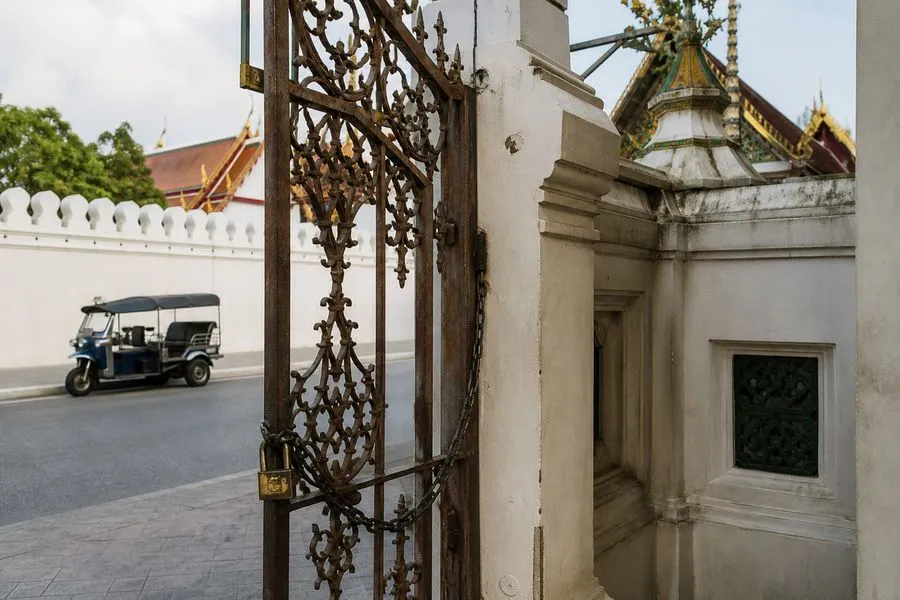
An unsolicited stranger tells you the Grand Palace is shut for a royal ceremony. Or the temple you're walking toward is closed until three. Nobody asked.
The information arrives free.
That single sentence is not a scam in itself. It's the redirect that opens two of the three chains below, which is why I put it first instead of burying it in a list of twenty warnings.
It works for three reasons that have nothing to do with gullibility: it arrives dressed as helpfulness, so refusing it feels rude; you cannot check it from where you're standing, because the gate is around the corner and you don't read Thai; and it comes with the solution already attached, because the person telling you has a friend with a vehicle.
The counter is one line. Verify a closure at the gate itself, or from an official channel, never from the person offering you the alternative. If the alternative and the bad news come from the same mouth, that is the whole tell.
This pattern is most associated with the big Bangkok landmarks - the Grand Palace, Wat Pho, the Khaosan Road area. That's where it's most often reported, not where it exclusively happens, and a quiet street somewhere else is not thereby clean.
The gem scam, step by step
The US Embassy and Consulate in Thailand documents this one on its own "Common Scams to Avoid" page, and the chain runs in a fixed order.
A friendly stranger or a driver approaches near a landmark and says the attraction is closed. He offers a cheap ride, sometimes a free one, to somewhere better. The destination is a gem or jewelry shop, and the shop is running a sale described as government-sponsored, on today only.
Inside, you get a high-pressure pitch on loose stones, and the pitch is not about how the stones look. It's about what they're worth when you get home.
Two flat statements break the whole thing.
The first is the Embassy's own: neither the Thai government nor the royal family owns or sponsors any gem shop. Not one. There is no scheme, no seasonal state sale, no royal endorsement to be had.
The claim is load-bearing precisely because it cannot be checked in the moment against the body supposedly granting it, and because it borrows an authority that a visitor can see is genuinely respected here.
The second, also from the Embassy: the stones sold this way are typically glass or synthetic, and essentially worthless.
Notice why the pitch has to be about resale. If you were buying a ring because you liked it, the price would be the price and you'd either want it or not. The investment frame is what makes a number you don't understand feel like a bargain instead of a cost - you have to believe you're buying below value, and belief is easier to install than taste.
The certificate, the export paperwork, the assurance about a jeweler back home: all of it supports the resale story, and the resale story is where the margin is.
What happens if you paid? Be clear-eyed. You are now in a dispute in a foreign country over a purchase you agreed to, signed for and carried out of the shop.
Report it, contact your card issuer if you paid by card, and keep every scrap of paper. I'm not going to tell you the money comes back, because I have no basis for saying so.
The jet-ski and scooter damage claim
This is the expensive one, and it's the only mechanism on this page with a prevention step that works nearly every time.
The Embassy documents the shape of it: the operator takes the renter's original passport as collateral, or a cash deposit, or both. On return, the operator claims damage the renter did not cause. Payment is demanded on the spot.
The passport may be withheld while the demand is made, and intimidation gets used - a raised voice, a gathering of friends, the sense that this ends when you pay. Sums commonly cited fall in the 10,000-50,000+ THB band, with some cases reportedly reaching the hundreds of thousands. Treat that as a range people report, not a tariff and not what you should expect to be asked for.
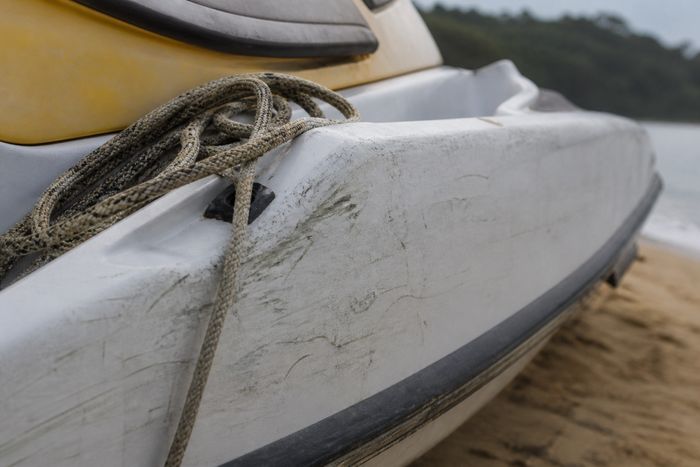
Two conditions make the claim workable, and both are set before you ever get on the machine. Your document is already in their hands, so walking away costs you your passport.
And there is no agreed record of the machine's condition before it went out, so the scuff being pointed at was almost certainly there when you took it - and without a joint photo taken beforehand, there is no way to say so.
So fix both, before handover:
- Photograph or video the machine with the operator standing there, on your phone, slowly, all the way around, including the hull below the waterline or the scooter's underside and fairings. The point is not the footage. The point is that they watched you take it.
- Offer a cash deposit or a card hold instead of the original passport. A photocopy, if they'll take one.
Here's the part the alarmist lists skip: a deposit request is not a red flag here.
Rental and vendor transactions in Thailand commonly expect cash upfront or some payment guarantee, and travelers used to a domestic card-and-network model read that as suspicious when it's just how business runs.
The flag is the document, not the deposit.
I used to give worse advice than that. For a couple of years my line was "just don't rent from a beach operator," which is advice about who, and it does nothing for you. It doesn't help the person who handed a passport to a tidy shop with a printed price list and a laminated menu of half-day rates.
Leverage is the variable, not the storefront.
Deposit extortion of this kind is most associated with Phuket - Patong in particular - and with Pattaya. Reported concentration, again, is not a map of where it can happen.
Whether you may legally ride a scooter here at all, and what that does to a claim, is a separate question with a separate answer, and it isn't this page's.
The tuk-tuk commission tour
Same opening line. The attraction is closed, but the driver will show you four temples and a viewpoint for 200 baht, or for nothing, or for the price of the fuel.
Then the route acquires stops you didn't ask for. A gem shop. A tailor.
Maybe a "government factory outlet."
According to Thai legal-information sources, the shop pays the driver a commission or a fuel voucher for each passenger delivered, and here is the clause that explains everything: the driver gets paid whether or not you buy.
The closed-attraction pretext itself is documented in the US Embassy's official scam guidance; the commission arrangement comes from that professional-tier legal source rather than an official one, which is worth knowing when you weigh it.
Your presence is the product. Not the tour, not a sale. That's why the fare to you can sit near zero, and it's why the driver seems entirely unbothered by the hard sell happening to you inside - his transaction closed when the door opened.
He isn't your guide and he isn't complicit in the pitch. He's a delivery service.
Counter: agree the destination and the fare out loud before the vehicle moves, and treat any unrequested extra stop as the end of the ride. Get out, pay what you agreed for the distance covered, walk. It is not rude.
It's the deal you made.
What all three have in common
Three features run through every mechanism above. Pressure to decide immediately, because a decision that can wait until tomorrow can be checked. Leverage taken before the dispute exists - your passport, your deposit, your position in a vehicle you didn't choose the route of.
And an authority claim you cannot verify against the body supposedly granting it, whether that's a government sponsoring a sale, an accreditation on a wall, or a driver's assurance about a closure.
The general rule that falls out of this: rank a claim by the strength of its source, not by how confidently it's delivered. Confidence is free. And when you hear "everyone knows this," treat that as a reason to check rather than as corroboration.
The three mechanisms side by side
| Scam | How it starts | The pressure tactic | The financial ask | The documented mitigation |
|---|---|---|---|---|
| Gem shop | Unsolicited claim that a landmark is closed, then a cheap or free ride to a "better" place | A "government-sponsored" sale, today only, with a resale-value pitch | Purchase of stones that are typically glass or synthetic and essentially worthless | Verify closures at the gate; know that no gem shop is owned or sponsored by the Thai government or royal family; leave without buying |
| Jet-ski / scooter damage claim | Ordinary-looking rental where the operator takes the original passport and/or a cash deposit | Claimed damage on return, the document withheld, intimidation while you decide | Commonly cited at 10,000-50,000+ THB, with some cases reportedly higher; a reported range, not a set figure | Joint photo or video of the machine with the operator present before handover; cash deposit or card hold instead of the original passport |
| Tuk-tuk commission tour | Same closed-attraction pretext, then a tour priced suspiciously low or offered free | Unrequested stops at shops; sales pressure inside, which the driver is indifferent to | Near zero to you; the shops pay the driver per delivered stop regardless of whether you buy | Agree destination and fare before moving; treat an unrequested stop as the end of the ride |
| Counterfeit alcohol | Not a scam mechanism; a product risk, included here because readers arrive with the two conflated | None - no one is working you; the exposure is in what's in the glass | None - the risk is medical, not financial | Sealed or bottled drinks from licensed venues; caution with pre-mixed spirits in shared formats; urgent medical care on suspicion |
These are the mechanisms this site's research could source to an official or professional-tier source. It is not a complete inventory of every scam in the country, and a scam that isn't listed here is not thereby rare.
Red flags, and what each one actually tells you
- A stranger you didn't ask tells you an attraction is closed. The information is free because it isn't the product; the redirect is.
- The same person immediately offers a convenient alternative. Bad news and solution from one mouth means one interest is being served.
- A sale described as government-sponsored, limited to today, or otherwise time-boxed. The clock exists to stop you checking, and the sponsorship claim is not true of any gem shop here.
- A rental operator insists on your original passport rather than a copy or a cash/card deposit. They are acquiring the thing that makes a disputed scratch into a payment.
- Reluctance to photograph or video the machine together before you take it out. An operator with nothing to claim later has no reason to object.
- A resale-value pitch on something you did not walk in to buy. Investment framing exists to make an unfamiliar price feel like a discount.
- A claimed accreditation, affiliation or official status you can't check against the issuing body. Unverifiable authority is the cheapest component in the whole setup.
- A price so far below plausible that someone else must be covering the difference. Someone is. Ask who, and what they're getting.
Counterfeit alcohol and methanol: what is actually documented
This section is where most pages go wrong in one direction or the other, so here is the split between what is confirmed and what isn't.
Confirmed, from official public-health guidance published in 2025: methanol can be fatal for an adult at approximately 30 mL, which is roughly one standard shot. That's an approximate figure, not a threshold with a safe side. The fatal course typically runs 12-48 hours after ingestion.
And the early symptoms - nausea, dizziness, confusion - look like ordinary drunkenness before they progress to vision problems, seizures or respiratory failure. That resemblance is the whole danger. People go to bed to sleep it off.
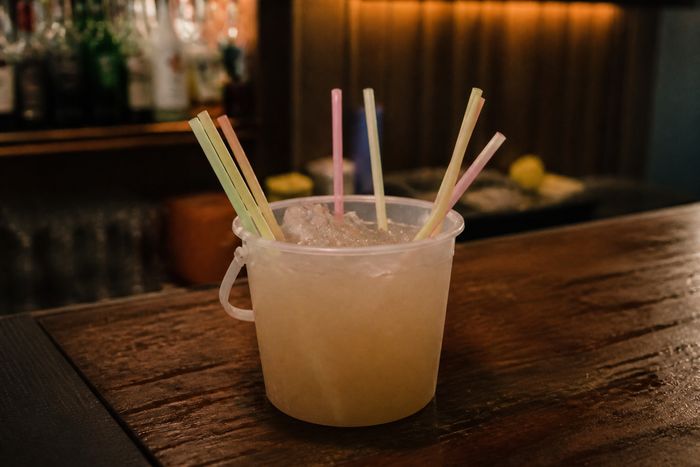
Confirmed and Thailand-specific: on 21 October 2025 the UK Foreign, Commonwealth & Development Office expanded its methanol-poisoning warnings to include Thailand. That is an advisory-list inclusion. It is not an incident count, and it should not be read as one.
Now the correction this section exists to make, and I'm not going to soften it. The recent fatal cluster most readers have in mind - the one that circulated widely, the one people mean when they bring this up - happened in a neighboring country, Laos, not in Thailand. This site's research located no dated in-country fatal incident in Thailand.
So the honest position is a documented advisory-level risk sitting on a thin in-country record. Not dismissed. Not dramatised.
If you have seen a page that implies those deaths happened here, it is wrong, and the sloppiness matters, because a reader who catches one exaggeration stops believing the parts that are true.
Behavior that follows from the confirmed facts: stick to sealed or bottled drinks from licensed venues, be careful with pre-mixed spirit-based drinks served in shared formats, and if you suspect methanol, get urgent medical care rather than waiting to see whether it passes.
The 12-48 hour window is not time to observe. It's time you're losing.
If it is happening right now
If you're reading this standing somewhere unpleasant, the reporting channel is the tourist-police line, cited consistently as 1155 across US Embassy and legal-information sources. Confirm it with your hotel or your embassy if it doesn't connect - phone numbers change and this one carries a check-before-you-rely-on-it caveat.
For a medical emergency, including suspected methanol poisoning, the ambulance number is 1669, same caveat.
Sequence, in this order:
- Document. Photos of the vehicle, the claimed damage, the shop, the receipt, the person if you can do it without escalating. Time-stamped photos on your own phone are worth more than your memory in a week.
- Don't surrender a passport as leverage. If it's already held, say that when you call - it changes what the situation is.
- Pay by card, not cash, if a payment becomes unavoidable. A card leaves a trail and a counterparty. That is not the same as a guaranteed chargeback, and I'm not promising you one.
- Report it even when recovery looks unlikely. The report is what exists later, and later usually means an insurer asking what proof you have.
Say it plainly: a report is a channel and a record, not a refund. Nobody, including me, can tell you the police will resolve it or that your passport comes back on any particular schedule. What I can tell you is that the people who end up with nothing are usually the ones who paid cash, took no photos and filed nothing.
For what a policy does with a theft or fraud loss, and what it wants from you, see what your travel insurance covers if you're scammed or robbed.
Scenario cards
"A driver just told me the Grand Palace is closed." What's happening: the redirect. Whether or not the palace is open is beside the point; the offer that follows is the business. Next five minutes: don't take the ride. Walk to the gate and look, or check an official channel. Not the person who told you. Afterwards: remember that this same sentence opens two different chains - the gem shop and the commission tour - so hearing it again tells you where you are.
"I'm in a gem shop and they want a decision now." What's happening: the time-boxed "government-sponsored" sale, which does not exist. No gem shop here is owned or sponsored by the Thai government or the royal family. Next five minutes: leave without buying. You don't owe an explanation, and the free ride was not a debt. Afterwards: if you already paid, report it and contact your card issuer with everything you have. I can't tell you it comes back.
"The jet-ski operator says I damaged it and has my passport." What's happening: the leverage was arranged at handover, before any dispute existed. Next five minutes: don't escalate physically. Photograph the claimed damage and the whole machine. Ask for the police rather than settling in cash, and call the tourist-police line. Afterwards: keep every photo, receipt and note - that file is what an insurer or a report is built from.
"My friend is confused and can't see properly after drinking last night." What's happening: treat it as a medical emergency, not a hangover. The 12-48 hour onset window and the overlap between early methanol symptoms and ordinary intoxication are exactly why this gets missed. Next five minutes: get urgent medical care immediately. Call 1669 if you need an ambulance. Afterwards: keep the bottle if you still have it, or at least the name of the venue.
Sources
- US Embassy & Consulate in Thailand, "Common Scams to Avoid" (th.usembassy.gov/common-scams-to-avoid) - the gem-shop and jet-ski/scooter mechanisms, the closed-attraction pretext, and the statement that no gem shop is government- or royal-owned or sponsored.
- UK Foreign, Commonwealth & Development Office, 21 October 2025 (gov.uk) - Thailand's inclusion in the expanded methanol-poisoning warnings.
- US Department of State travel advisories (travel.state.gov) - the advisory level cited in the introduction, as of 07/07/2026; time-sensitive.
- Official public-health guidance on methanol, 2025 - the approximate 30 mL lethal dose, the 12-48 hour onset window and the symptom profile. Cited by description; no URL was captured in this site's research.
- Tourist Police line 1155 and emergency number 1669 - recorded in this site's research as consistently cited across US Embassy and legal-information sources; no standalone URL captured, and both numbers should be confirmed current.
Two gaps worth naming: the commonly cited 10,000-50,000+ THB damage-claim band comes from corroboration across official and commercial sources rather than a single primary figure, and no dated in-country fatal methanol incident was located in this site's research.
Questions travelers actually ask
A jet-ski company is demanding cash for damage I didn't cause - what do I do? Document everything before you do anything else: the claimed damage, the whole machine, the receipt, the location. Don't hand over your passport as leverage, and if it's already held, say so when you call the tourist-police line on 1155. If a payment becomes unavoidable, pay by card rather than cash so there's a trail and a counterparty.
This page cannot promise you get the money back, and anyone who promises that is guessing.
How real is the risk of counterfeit alcohol poisoning in Thailand? Confirmed: Thailand appears on the UK FCDO's expanded methanol warning list as of 21 October 2025, and methanol is lethal in very small amounts. Unconfirmed, and just as important: this site's research found no dated in-country fatal incident in Thailand, and the recent cluster most readers have in mind occurred in a neighboring country.
So it's a documented advisory-level risk on a thin in-country record - worth precautions, not worth panic. The mechanism and the symptom timeline are in the section above.
Is the gem scam still happening, or is it an old story? It's documented on the US Embassy's current scam page, which is the strongest source I found on any mechanism here. The fact that it's an old scam is a reason it's still running, not evidence it stopped - formats that keep working don't get retired. The pretext costs the operator nothing and the margin is in glass, so the economics haven't changed in decades.
Why would a tuk-tuk driver offer to drive me around all day for almost nothing? Because the shops on the route pay him per delivered passenger, whether or not you buy anything. Your presence is the product, so the fare he charges you can be almost anything, including zero. The cheap price isn't generosity and it isn't a bargain you found.
It's the cost of the sales pitch you're being driven to.
Is it ever okay to leave my passport as a rental deposit? Offer a copy, a cash deposit or a card hold instead - the original passport is what turns a disputed scratch into a demand you can't walk away from. A deposit request itself is normal in Thailand, where cash upfront and payment guarantees are ordinary business practice, so don't read every request for money as a scam. The flag is the document, not the deposit.
If an operator will take nothing but your original passport, that's your answer about the operator.
Who do I actually call if I've been scammed, and will anything come of it? The tourist-police line, cited as 1155 - confirm it's current with your hotel or embassy if it doesn't connect - and 1669 only for a medical emergency. Be realistic about what a report is: a channel and a record, not a refund, and no one can tell you an outcome in advance. The record is often exactly what an insurer needs from you weeks later, which is reason enough to file.
What a policy actually does with a fraud or theft loss is covered in what your travel insurance covers if you're scammed or robbed.
Before you go
Run the four scenarios in the Spot the Scam quiz on this page before you travel - it takes two minutes and it's built from the same tells as the red-flags box above.
Then fix the two things that create the leverage in the first place: never hand over the original passport, and never take a rented machine out without a joint photo of it with the operator standing there.
Those two habits remove more exposure than any amount of vigilance.
After that, read up on on-the-ground water hazards worth knowing before you go, because the other thing that ruins a trip here does not negotiate. There's more on staying safe and getting medical care in Thailand in the rest of this section.
This article is general information about documented scam mechanisms in Thailand. It is not legal, medical or insurance advice, it does not diagnose anything, and it is not a substitute for emergency medical care. Reporting a scam is a channel and a record, not a promise of recovery, and no outcome is guaranteed for any scenario described here. Every THB figure on this page is a commonly cited range rather than a fixed amount. Legal, medical and insurance specifics are jurisdiction- and policy-specific and must be verified against current primary sources, including the tourist-police number, the emergency number and the current US State Department advisory level; where sources conflict, this site documents the conflict rather than resolving it by picking the most-repeated version.
