Is Cannabis Legal in Thailand Right Now? (2026 Status)
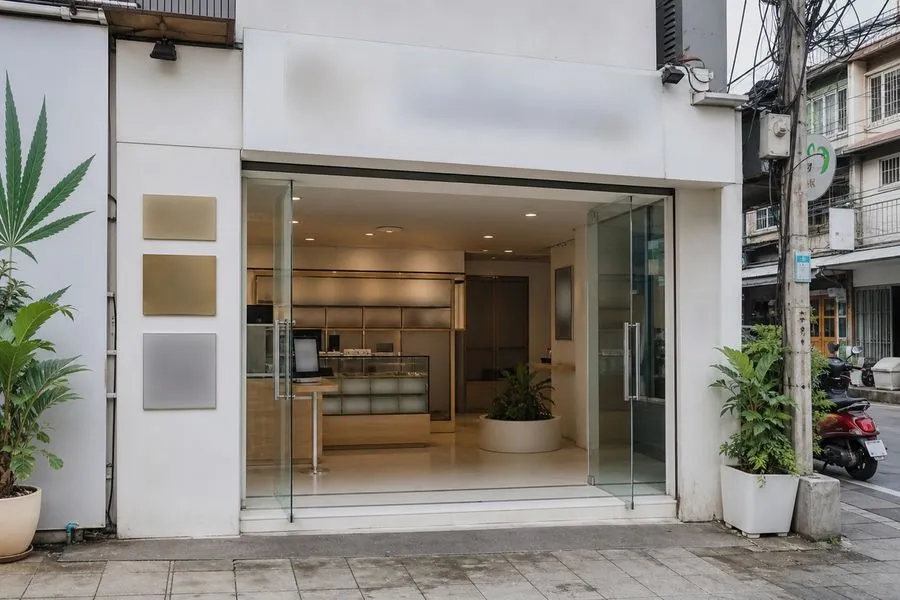
On this page
- Quick Answer: Genuinely Unsettled - Here's What That Means for You
- Where Cannabis Fits Among Thailand's Entry and Legal-Risk Rules
- How We Got Here: The Regulatory Timeline
- What the Current Regulations Actually Say
- The Real Disagreement: Is Recreational Use Itself Illegal?
- If You're Buying or Using: The Practical Mechanics
- Before You Buy or Use: A Cautious Reader's Checklist
- The Shrinking Legal Market - Why So Many Shops Are Closing
- "Thailand Legalized Weed in 2022" - Myth vs. Fact
- What's Coming: The Draft Cannabis and Hemp Act
- Checked and Verified
- Related Procedures in This Hub
- Keep Reading: The Full Overstay and Consequences Guide
- FAQ
- Is cannabis actually legal in Thailand right now, or is that outdated 2022 information?
- Do I need a prescription to buy or use cannabis as a tourist?
- Why do sources, including lawyers, disagree about whether recreational use is illegal?
- How do I know if a dispensary is actually operating legally?
- Can I bring cannabis home with me, or mail it?
- What actually happens if I'm caught using cannabis in public, or without documentation?
- Sources
Thailand's cannabis rules no longer match the simple version many visitors remember from 2022.
Cannabis was removed from the narcotics schedule, shops multiplied, and "Thailand legalized weed" became the travel shorthand.
Since then, regulations have pushed the market toward licensed sales and documented medical use.
I carried that 2022 shorthand in my own head longer than I should have. The change registered properly when a dispensary I used to walk past in Chiang Mai closed rather than renew.
An open cannabis market had started contracting, while the legal answer tourists wanted had become harder, not easier.
This content is general information, not legal advice. Cannabis is a controlled-substance topic whose underlying legal status is disputed even among professionals. Getting it wrong can create a risk of arrest, detention, or prosecution, not only a fine. Verify the current position with a qualified Thai attorney before making a decision based on this page.
Quick Answer: Genuinely Unsettled - Here's What That Means for You
Checked on August 12, 2026: Cannabis was delisted from Thailand's narcotics schedule in 2022 and has not since been re-listed. However, ministerial measures introduced from 2025 through 2026 have tightened the operative framework toward licensed, prescription-gated use. Whether casual recreational possession or private use without documentation is itself illegal remains genuinely disputed, including among professional Thai legal sources. I am not going to turn that disagreement into a confident yes or no. The cautious approach is to treat cannabis as restricted: use a currently licensed dispensary, obtain the required documentation, never consume it in public, and never carry it across a border.
Where Cannabis Fits Among Thailand's Entry and Legal-Risk Rules
Cannabis is the most volatile legal-risk subject in this site's full visas-and-entry category. It sits beside rules that can catch visitors after arrival, rather than determining whether they qualify to enter Thailand.
The difference is verification pressure.
A visa rule may change on a stated effective date; cannabis policy has shifted through overlapping regulations, licensing measures, and a draft act that had not yet reached Parliament by the research cutoff.
Check this page's date before acting, even if you read it recently.
How We Got Here: The Regulatory Timeline
In 2022, cannabis was removed from the narcotics schedule through Emergency Powers exercised by then Public Health Minister Anutin Charnvirakul. According to the Bangkok law firm legal.co.th, no later primary law had re-listed the plant as a narcotic by the 2026 research window.
That did not create a permanently settled recreational market. In June 2025, cannabis flower was reclassified as a controlled herbal substance under the Protection and Promotion of Thai Traditional Medicine Knowledge Act B.E. 2542, administered by the Department of Thai Traditional and Alternative Medicine, or DTAM.
Two separate regulations followed in 2026, one addressing extracts and another addressing commercial flower sales and licensing.
| Date | Event | Status as of August 12, 2026 |
|---|---|---|
| 2022 | Cannabis delisted from the narcotics schedule through Emergency Powers, according to legal.co.th | Delisting remains in place; no new primary law identified in the research has re-listed it |
| June 2025 | Flower reclassified as a controlled herbal substance under DTAM, according to Juslaws | Part of the current controlled-herbal-substance framework |
| March 26, 2026 | Category 5 narcotics regulation published for cannabis and hemp extracts above 0.2% THC; effective April 26, according to Deemed Consulting | Operative extract regulation under the Narcotics Code |
| April 30, 2026 | Ministerial Regulation (No. 2) B.E. 2569 published and effective immediately, according to Juslaws | Operative commercial-sale and licensing framework for flower |
| Early June to July 7, 2026 | Draft Cannabis and Hemp (Control) Act completed public consultation but had not entered parliamentary deliberation, according to The Star | Draft only, not enacted law |
A friend's 2022 trip report may accurately describe that moment. It does not answer what documentation a shop or customer needs in 2026.
What the Current Regulations Actually Say
Ministerial Regulation (No. 2) B.E. 2569 governs the commercial sale and licensing of cannabis flower under DTAM. Juslaws reports that it was signed on April 29, published in Royal Gazette Volume 143, Part 28 on April 30, 2026, and took effect immediately.
It amended the pre-existing B.E. 2559 regulation.
Licenses issued under the earlier regulation remain valid until their existing expiration dates. The new requirements apply when they are renewed. That distinction helps explain why shop status cannot be inferred from the sign over the door.
A separate Ministerial Regulation on Category 5 narcotics was published on March 26 and became effective April 26, 2026. According to Deemed Consulting, it governs cannabis and hemp plant extracts containing more than 0.2% THC under the Narcotics Code. Raw flower and higher-THC extracts therefore run on distinct legal tracks.
No standalone Cannabis and Hemp Act had passed Parliament through at least July 2026. Juslaws describes the ministerial regulations as the operative framework until an act passes, if it passes in its current form.
The Real Disagreement: Is Recreational Use Itself Illegal?
Four sources reviewed for this page reach four materially different answers. These are not interchangeable authorities: a law firm's legal reading carries different weight from a hotel blog, dispensary guidance, or an aggregator. Still, the disagreement itself matters because visitors encounter all four versions when trying to make a practical decision.
| Source (type) | Bottom-line claim on recreational use |
|---|---|
| Deevana Hotels (commercial tourism blog) | Casual recreational use without a prescription is now illegal; possession without documentation may risk confiscation, fines, or criminal charges |
| legal.co.th (Bangkok law firm) | Cannabis remains fundamentally legal because no overriding law has reversed the 2022 change; it identifies restrictions involving protected buyers and localized public-nuisance smoking charges |
| Wikipedia (aggregator) | Only medicinal use is legal, while recreational use remains widespread in practice after rules introduced in 2025 sought to curb it |
| Stash BKK (licensed dispensary) | Flower may be bought from a licensed dispensary with a PT33 prescription, possessed, and consumed privately; public consumption is separately prohibited |
I once answered a newly arrived friend's "but is it actually legal?" with "it depends who you ask." That sounded evasive. Unfortunately, it was more accurate than either confident answer.
This is not a research gap I can responsibly fill by choosing my preferred interpretation. Even a licensed Thai attorney reviewing the page must work from a framework that has shifted repeatedly without one consolidating cannabis act. Unless you have advice addressing your exact circumstances, treat cannabis as a restricted, prescription-gated substance rather than a casually legal one.
If You're Buying or Using: The Practical Mechanics
The reasonably corroborated purchase route is through a licensed dispensary with a PT33 prescription issued by a licensed practitioner. Commercial guidance from Stash BKK says buyers must be at least 20 and carry ID or a passport. The same source says delivery is not permitted and describes edibles as legal only when approved by the Thai Food and Drug Administration.
The prescription process is reported inconsistently. Stash BKK describes on-site telemedicine taking about 10-15 minutes, costing roughly 100 THB, and producing a PT33 valid for 30 days at any licensed dispensary. Theo Courant instead says tourists need an in-person consultation with a Thai doctor, generally costing about 300-500 THB.
Treat those as competing commercial accounts, not a guaranteed price or process.
Reported eligibility restrictions also prohibit sales to people under 20 and to pregnant or breastfeeding women. That detail comes from an aggregator rather than a primary regulation in this research, so confirm it directly rather than relying on a shop's interpretation.
Public consumption is prohibited, with commercial guidance reporting a fine of up to 25,000 THB. Private use does not solve the separate dispute over undocumented recreational use.
One point is not softened by that dispute: do not import or export cannabis in either direction, even with a prescription. Do not fly out with it, cross a land border with it, bring it into Thailand, or mail it internationally.
Before You Buy or Use: A Cautious Reader's Checklist
Use this as a risk filter, not as proof that a particular transaction is lawful.
- Confirm that you are at least 20 and carry your passport or other accepted identification.
- Ask the dispensary to confirm that its license is current. An open, staffed shop is not proof of valid licensing.
- Obtain a PT33 prescription from a licensed practitioner before buying flower.
- Ask what process, fee, validity period, and dispensing conditions apply before paying. Published commercial accounts conflict.
- Buy only through a currently licensed dispensary and retain your prescription documentation.
- Do not consume cannabis in public. A fine of up to 25,000 THB has been reported.
- Do not import, export, carry, or mail cannabis across Thailand's border in either direction, even with a prescription.
- Do not assume that undocumented recreational possession or private use is safe merely because cannabis remains delisted.
- Consult a qualified Thai attorney if your situation involves possession without documentation, enforcement contact, or any controlled-substance question.
The checklist is intentionally conservative. Nine years in Thailand has taught me that being able to explain what a shop employee said is not the same as holding documentation an officer accepts.
The Shrinking Legal Market - Why So Many Shops Are Closing
More than 7,000 cannabis shops reportedly did not renew their licenses after the 2026 tightening, according to an Asia News Network report from early February 2026. By July, the Public Health Minister reportedly estimated that more than 6,000 illegal or expired-license outlets were still operating nationwide, as reported by The Star.
Those figures come from media reporting, but their practical signal is clear: a large licensing shakeout is underway. Some stores closed. Others reportedly continued trading without current licenses.
Do not use polished displays, staff confidence, online reviews, or the fact that the door is open as substitutes for license verification. The Chiang Mai shop I used to pass looked permanent until it wasn't (a useful correction to my own assumptions).
"Thailand Legalized Weed in 2022" - Myth vs. Fact
Myth: "Thailand legalized weed in 2022, so it is basically a normal legal cannabis market now."
Fact: The 2022 measure removed cannabis from the narcotics schedule. It did not freeze the regulatory system in that form. Measures introduced in 2025 and 2026 brought flower under a controlled-herbal-substance and licensing framework, while a separate regulation addressed extracts above 0.2% THC. Thousands of shops reportedly declined to renew or continued with expired licenses. Professional and commercial sources still disagree about whether casual recreational possession or private use without documentation is itself illegal.
"Delisted" and "unrestricted" are not the same claim. The first is supported by the timeline. The second is not.
What's Coming: The Draft Cannabis and Hemp Act
A draft Cannabis and Hemp (Control) Act intended to restrict cannabis to medical use completed public consultation in early June 2026, according to The Star. As of July 7, it had not reached parliamentary deliberation.
The reported draft would regulate cultivation directly for the first time, while the current rules address sale, transfer, and extraction. It may change before passage or may not pass in its current form. Watch the status; do not treat the draft as enacted law.
Checked and Verified
Legal facts checked on August 12, 2026. Because this page has a 90-day fact shelf life and unusually high volatility, re-check its date and obtain current professional advice before relying on it.
Related Procedures in This Hub
Readers weighing this risk often also ask about Thailand's vaping ban and its genuinely disputed penalty figures. For another rule visitors often discover only after arrival, see another low-stakes-looking rule most visitors hit by surprise.
Keep Reading: The Full Overstay and Consequences Guide
This page does not cover detention or enforcement procedure. If you're already facing a consequence-if-caught situation, see the full overstay and ban-tier breakdown and consult a qualified Thai attorney.
FAQ
Is cannabis actually legal in Thailand right now, or is that outdated 2022 information?
The 2022 delisting is real, but "cannabis is legal" is no longer a sufficient answer. Regulations introduced in 2025 and 2026 tightened licensing and medical-use controls, while professional sources still disagree about undocumented recreational use.
Do I need a prescription to buy or use cannabis as a tourist?
Yes, the documented route for legal purchase at a licensed dispensary requires a PT33 prescription. Commercial sources conflict over whether the consultation may occur through on-site telemedicine or must be in person, and they report costs ranging from roughly 100 to 500 THB.
Why do sources, including lawyers, disagree about whether recreational use is illegal?
They disagree because Thailand's framework has changed repeatedly since 2022 without one consolidating Cannabis and Hemp Act. The sources also interpret the effect of ministerial controls differently, which is why this page discloses all four positions instead of selecting one.
How do I know if a dispensary is actually operating legally?
There is no reliable visual test.
More than 7,000 shops reportedly did not renew licenses, while an estimated 6,000-plus illegal or expired-license outlets reportedly remained open nationwide in July 2026, so request current licensing confirmation.
Can I bring cannabis home with me, or mail it?
No. Import and export are illegal in both directions, including when you have a valid Thai prescription, so do not carry or mail cannabis across the border.
What actually happens if I'm caught using cannabis in public, or without documentation?
Public consumption carries a reported fine of up to 25,000 THB.
Consequences beyond that can depend on quantity, documentation, circumstances, and how authorities apply the disputed recreational-use position; consult a qualified Thai attorney rather than relying on a general-information page.
If you engage with cannabis in Thailand at all, use a currently licensed dispensary, obtain a documented prescription, never consume it in public, and never move it across a border in either direction.
Treat any confident statement that recreational use is flatly "legal now" with skepticism until Thai authorities settle the question.
Sources
- legal.co.th: "Cannabis Policy Changes 2026." Covers the 2022 delisting basis and one professional interpretation of current legality.
- Juslaws: "New Thailand Cannabis Law: April 30, 2026 Ministerial Regulation No. 2 B.E. 2569." Covers flower controls and licensing.
- Deemed Consulting: "Thailand Cannabis: April 2026 Extract Regulation & Export Impact." Covers the separate regulation for extracts above 0.2% THC.
- Deevana Hotels: "Thailand Cannabis Law." Supplies one commercial interpretation that undocumented recreational use is illegal.
- Stash BKK: "Thailand Cannabis Laws," updated July 13, 2026. Covers PT33 guidance, age, border rules, and the reported public-use fine.
- Theo Courant: "Cannabis Thailand: Buy." Supplies the conflicting in-person consultation and 300-500 THB cost account.
- Wikipedia: "Cannabis in Thailand." Aggregator used only to disclose one conflicting interpretation and reported buyer restrictions.
- Asia News Network: "Over 7,000 Cannabis Shops in Thailand Close Due to Stricter Regulations and New Law." Covers reported non-renewals.
- The Star: "Thailand Cannabis Draft Law Targets Medical Use and Shop Controls." Covers reported expired licenses and draft-act status.
This article provides general information, not legal advice. Cannabis rules in Thailand are changing, and professional sources dispute the legal status of undocumented recreational use. Arrest, detention, or prosecution may be possible depending on the circumstances, not only a fine. Verify the current rules with the relevant Thai government office or a qualified Thai attorney before buying, possessing, using, importing, or exporting cannabis.


Reviewed by Nattapong Sirichai, licensed Thai attorney, member of the Lawyers Council of Thailand, practising immigration and administrative law, Bangkok. Last reviewed: 2026-08-12. The review covers the legal statements on this page, not travel opinion.