Thailand Overstay Fines and Ban Tiers, Explained

On this page
- If You Are Already Overstaying, Start Here
- The Fine: 500 Baht a Day, and Where It Stops
- The Consequence Ladder by Length of Overstay
- Under 40 Days: The Arithmetic Is the Whole Story
- Past 90 Days: When a Fine Becomes a Ban
- Re-Entry Bans: The Tiers and What Decides Yours
- If You Walk Up to the Counter Yourself
- If Immigration Finds You First
- Detention, Deportation, and Where That Risk Actually Starts
- The Two Waivers People Will Quote at You
- What to Do in the Next 48 Hours
- Bad Advice That Makes an Overstay Worse
- Questions People Ask Once They Are Already Over
- Will I actually be detained if I overstay in Thailand?
- I already overstayed by a few days - what should I do right now?
- What is the longest re-entry ban I could face?
- Does the fine keep climbing after 20,000 baht?
- Is the emergency overstay fine waiver still in effect?
- My flight was cancelled and I left a few hours late - will I be fined?
- If Your Date Has Not Passed Yet
- Sources
Two kinds of writing about Thai overstay exist online, and both will hurt you. One treats a single day past your date as the end of your relationship with the country.
The other treats it as a rounding error you sort out with a smile and a few hundred baht.
What you actually need is a ladder: what each length of overstay costs, where the money stops, where a re-entry ban starts, and how much of the outcome you still control.
That is what this page is, with the source named next to each figure and a step you can take today.
If you are reading this in a guesthouse with a flight tomorrow, skip to What to Do in the Next 48 Hours and come back to the background later.
Figures on this page reflect the published rules as reviewed on 12 August 2026; immigration rules move, so confirm before you act.
This article is general information, not immigration legal advice. Thai overstay cases are administered by officers with discretion and the consequences include criminal exposure, so for your own situation consult a licensed Thai immigration attorney and verify current terms with the Thai Immigration Bureau or the nearest Royal Thai Embassy or Consulate before you act.
If You Are Already Overstaying, Start Here
Three things hold no matter how long you have been over.
The fine runs per day from the date your permitted stay expired, with no grace period built into the published rule - day one counts, under Order No. 21/2558 as published by Samut Prakan Immigration, a provincial office of the Immigration Bureau.
Presenting yourself changes the outcome, and not by a little; the ban schedule for someone who walks up to a counter is a different schedule from the one for someone enforcement finds. And nothing on this page replaces the Immigration Bureau or a licensed Thai attorney, both of which can look at your actual stamp.
If you have not passed your date yet, close this article. You are in a different situation with a different remedy, and the remedy only exists before expiry: extend before your permission expires.
An extension application filed on Form TM.7 costs 1,900 THB for up to 30 additional days at officer discretion, per the US Embassy in Thailand, and it keeps you out of the whole framework below.
One thing I want to say early, because I used to be part of the problem. For years I repeated the traveler-lounge line that a day or two "always gets waived." The sourced rule says discretion, not entitlement.
I was giving people a plan built on a coin flip, and I was wrong to do it.
The Fine: 500 Baht a Day, and Where It Stops
500 THB for every day you are over. That accumulates to a ceiling of 20,000 THB, which you reach at 40 days of overstay, under Order No. 21/2558 (2015), effective 20 March 2016, as published by Samut Prakan Immigration. Those two numbers and that date are the only arithmetic in this topic that behaves predictably.
The arithmetic only works if you know the date it counts from. Not your visa's validity, not the date on your ticket - the date your permission to stay expired, which is what the entry stamp or your latest permission says.
If that is fuzzy for you, sort it out first: how long your entry permission was supposed to last covers where the number comes from and where people misread it.
I have watched someone at a Chiang Mai immigration counter argue about a date they had read off the wrong stamp, which is a bad place to discover the difference.
Here is the fact that gets misread more than any other on this subject. Hitting the 20,000 THB cap feels like hitting the end of the penalty. It is not.
The cap freezes the money and nothing else. Past 40 days you stop paying more per day, and you keep moving toward, and then up through, the re-entry ban tiers. People read "capped at 20,000" and relax, and the sentence they needed was that the expensive part of a long overstay was never the cash.
Cash matters at the counter in one narrow way: fines are settled in Thai baht, and I would not assume a card terminal is available or working at whatever hour you are standing there.
The Consequence Ladder by Length of Overstay
Read the table by finding your day count in the left column, then reading across. The two ban columns are the whole point of the layout: the same row can end in a fine-only outcome or in years of exclusion depending on which of those two columns describes how your overstay ends.
Where a cell says the published tiers do not specify a value, that is exactly what it means - no sourced figure exists for it, which is not the same as a confirmed zero.
The ban column here is drawn from a single official publication: the Samut Prakan Immigration page setting out Order No. 21/2558. One provincial office of the Immigration Bureau, one document, effective 20 March 2016. That is a government source, and it is still one source.
If your day count puts you in a ban row, have a licensed Thai immigration attorney confirm the current tier before you go anywhere near a departure gate.
Overstay length and what it costs you
| Days overstayed | Fine | Re-entry ban if you present yourself | Re-entry ban if you are caught | Detention risk |
|---|---|---|---|---|
| 1 day | 500 THB | Not specified in the published tiers | 5 years (published for arrest under 1 year of overstay) | Possible: overstay is a criminal offense; no day-count threshold is published |
| 1-39 days | 500 THB per day, accruing | Not specified in the published tiers | 5 years (published for arrest under 1 year of overstay) | Possible: overstay is a criminal offense; no day-count threshold is published |
| 40-90 days | 20,000 THB (cap reached at 40 days) | Not specified in the published tiers | 5 years (published for arrest under 1 year of overstay) | Possible: overstay is a criminal offense; no day-count threshold is published |
| 91 days to 1 year | 20,000 THB (capped) | 1 year | 5 years | Possible: overstay is a criminal offense; no day-count threshold is published |
| Over 1 to 3 years | 20,000 THB (capped) | 3 years | 10 years | Possible: overstay is a criminal offense; no day-count threshold is published |
| Over 3 to 5 years | 20,000 THB (capped) | 5 years | 10 years | Possible: overstay is a criminal offense; no day-count threshold is published |
| Over 5 years | 20,000 THB (capped) | 10 years | 10 years | Possible: overstay is a criminal offense; no day-count threshold is published |
All figures above trace to Order No. 21/2558 (2015), effective 20 March 2016, as published by Samut Prakan Immigration. Verify before you travel: this cluster of rules has a short shelf life and these were reviewed on 12 August 2026.
Under 40 Days: The Arithmetic Is the Whole Story
Nineteen days over is 9,500 THB. That is the calculation, and in this band it is most of what there is to know: the fine accrues daily from the expiry date, and it keeps climbing until the 20,000 THB cap at day 40.
On bans, I want to be precise rather than reassuring. The published voluntary-surrender tiers begin above 90 days. Below that, the sources I have do not list a tier, which is an absence in the document, not a promise from the Immigration Bureau.
Write it on your own mental whiteboard the same way: no published tier applies to me, not I cannot be banned.
Officer discretion also exists in this band, and it cuts both ways. An officer can decide a very short overstay is not worth the fine. An officer can also decline to, and you have no standing to argue.
Plan on paying, and treat anything better as a result you did not budget for.
Past 90 Days: When a Fine Becomes a Ban
Above 90 days the outcome changes category.
The published voluntary-surrender schedule attaches a 1-year re-entry ban on top of the capped fine for an overstay of more than 90 days up to 1 year, and the ban lengthens from there as the overstay does, per Order No. 21/2558 as published by Samut Prakan Immigration.
Notice what happens to the two curves. The money flatlined at 20,000 THB back at day 40 and never moves again. The ban keeps stepping up: 1 year, then 3, then 5, then 10.
So a reader who tells themselves "I already hit the cap, waiting another month costs nothing" has it backwards - after day 40, waiting is the only thing that still costs, and it is charged in years rather than baht.
Re-Entry Bans: The Tiers and What Decides Yours
Two variables set your tier. How long the overstay ran, and how it ended. Most people only think about the first one, which is why the second one blindsides them.
These are published tiers under Order No. 21/2558 (2015), effective 20 March 2016, sourced to the Samut Prakan Immigration publication of that order - a provincial Immigration Bureau page, and the only official statement of the full schedule I have been able to put my hands on.
Individual outcomes are administered by officers on the day, from a file, under a framework where overstay is a criminal offense. The table below is a schedule, not a calculator, and it does not bind the officer in front of you.
Same overstay, two endings
| How the overstay ended | Overstay length band | Re-entry ban | What the traveler controls |
|---|---|---|---|
| You present yourself | 91 days to 1 year | 1 year | This row is the one you can choose while nobody is looking for you |
| You present yourself | Over 1 to 3 years | 3 years | Length is fixed by now; manner of resolution still is not |
| You present yourself | Over 3 to 5 years | 5 years | Same tier as a sub-1-year arrest, reached only after years over |
| You present yourself | Over 5 years | 10 years | Nothing further to preserve on the ban; get legal representation |
| Found by enforcement | Under 1 year of overstay | 5 years | Nothing at this point - the manner of resolution was decided for you |
| Found by enforcement | Over 1 year of overstay | 10 years | Nothing at this point - the manner of resolution was decided for you |
If You Walk Up to the Counter Yourself
The voluntary-surrender ladder, as published in Order No. 21/2558 (effective 20 March 2016) by Samut Prakan Immigration: more than 90 days and up to 1 year carries a 1-year re-entry ban; more than 1 up to 3 years carries 3 years; more than 3 up to 5 years carries 5 years; more than 5 years carries 10 years.
Each of those sits on top of the per-day fine, which by then is the 20,000 THB cap.
Nothing in that schedule rewards delay. Every tier boundary you cross while deciding what to do is a longer ban you have opted into by default.
If Immigration Finds You First
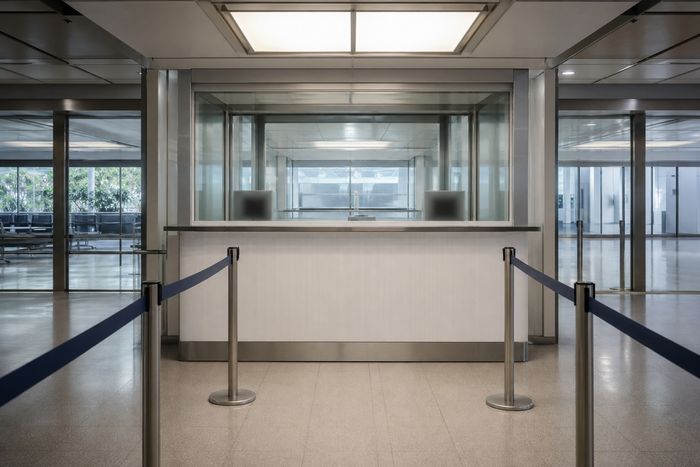
The arrest ladder has two rungs, and both are steep. An overstay of under 1 year, when enforcement finds you, carries a 5-year re-entry ban. Over 1 year, it is 10 years.
Same source, same 2016 order.
Put a six-month overstay through both schedules. Walk up to a counter yourself: 20,000 THB and a 1-year ban. Get found: 20,000 THB and a 5-year ban.
Identical conduct, identical day count, four extra years of exclusion, and the only variable is who initiated the contact. That is the single most useful thing on this page, and it is also the one piece of the outcome still in your hands at almost every stage.
Detention, Deportation, and Where That Risk Actually Starts
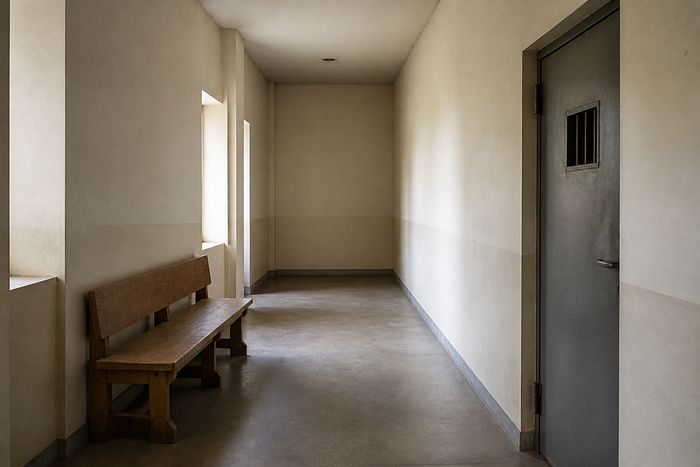
Here is the honest version of the answer to the question everyone actually opens this page with.
Overstay is a criminal offense under the Thai immigration framework, and the consequence set published with Order No. 21/2558 by Samut Prakan Immigration is a fine, potential detention, deportation and a re-entry ban.
Not one of those four; the set. So detention is a real category of outcome, not a forum invention.
What no source I found establishes is a day count at which detention stops being possible and becomes likely. There is no published line that reads "after X days you will be held." I am not going to supply one, because a number invented to make this section feel complete is exactly the kind of thing a reader would then plan a departure around.
If you want a threshold, the Immigration Bureau and a licensed Thai immigration attorney are the two places that can speak to how cases like yours are actually being handled right now.
The safe general rule, then, does not depend on a threshold.
Assume detention is possible from the first day of overstay, that the risk of a hard outcome rises with length and with being found rather than presenting yourself, and that a long overstay is a case to bring an attorney to rather than a counter to improvise at.
If your overstay runs into months or years, get legal representation before you travel to any airport or land border.
I will say what my own experience covers and what it does not. Nine years here, five visa categories, more hours in the 90-day report queue than I want to add up, one lease dispute and one hospital admission that nearly went badly on the insurance side. I have never overstayed, never paid an overstay fine, and never been detained.
What I have is a resident's read on how these counters work and a near-miss I still think about, below.
The Two Waivers People Will Quote at You
The first one is real but thin. For a very short overstay measured in hours - the cancelled-flight case - the Royal Thai Embassy in Washington DC describes the fine as usually waived at the discretion of the immigration officer. Read the operative word twice.
Discretion means an officer may, and the same sentence means an officer may not. There is no application, no form, no appeal, and no version of this you can build a plan on.
My Chumphon night is why I take this personally: a cancelled Ko Tao boat put me a day behind a schedule I had built with zero slack, and I spent the evening on a pier doing date math I should never have needed to do.
It resolved. It resolved because the plan had a day of margin available elsewhere, not because anyone waived anything. An overstay is usually a logistics failure, not a decision, and the fix is buffer days, not counter charm.
The second one is more dangerous, precisely because it sounds like a rule.
On 4 March 2026, the Tourism Authority of Thailand reported that the Immigration Bureau had introduced temporary relief for travelers affected by the Middle East airspace closures: for affected travelers whose permission to stay expired on or after 28 February 2026, a full waiver of the overstay fine on departure, plus stay extensions of up to 30 days per application.
The announcement tied its own duration to the situation returning to normal or to an official revocation order, without a fixed end date.
Whether it is still in force, I cannot tell you. No source after early March 2026 that I could find confirms its current status, so treat it as unresolved rather than active.
If someone tells you the fine is waived because of that measure, the correct response is to confirm it with the Immigration Bureau directly, for your nationality, your dates and your circumstances, before it becomes part of your plan.
What to Do in the Next 48 Hours
The sequence below is ordered around one dependency: everything else in this article is arithmetic performed on your permitted-stay expiry date. Get that date wrong and every number you calculate is wrong in the same direction. So establish it from the document, then count, then place yourself, then decide who you need to talk to before you move.
Action algorithm - already past your date
- Establish your exact permitted-stay expiry date from the entry stamp in your passport or from your latest permission document. Not from memory, not from what you assumed the entry gave you, not from a friend's identical trip.
- Count whole days from that expiry date to today, and again to the departure date you can realistically make. Two numbers, because they may fall in different bands.
- Find your band in the consequence table above and read all four cells across, including the column for being found by enforcement.
- If you have not actually passed the expiry date, stop here and go to extend before your permission expires instead. The extension route closes at expiry, so this is the one step with a deadline attached to it.
- If your band sits in a ban row, or you cannot tell which band you are in, contact a licensed Thai immigration attorney before you travel to the airport. Before, not after, and not from the queue.
- Verify the current figures with the Immigration Bureau (immigration.go.th) directly, including the status of any relief measure someone has told you applies to you.
- Plan to present yourself rather than be found. The two ending columns in the comparison table are the entire argument for doing this today rather than next month.
Bad Advice That Makes an Overstay Worse
Bad advice concentrates at exactly this moment for an obvious commercial reason: an anxious person with a deadline and a passport problem is the easiest customer a guaranteed-outcome pitch will ever meet.
The flags below are the ones I would treat as disqualifying.
Red flags
- A guaranteed waiver, extension or ban removal. Official guidance frames these as discretionary grants. Nobody can guarantee a discretionary decision, so a guarantee is either a misunderstanding of the process or a sales line.
- A fee for something a government agency provides free. Pay government fees to the government. If a service wants payment for the step itself rather than for clearly described assistance, walk away.
- A domain built to resemble an official one. The
*.thaiembassy.orgfamily is the official mission domain, and*.go.this the Thai government space. A commercial name that merely looks similar is not either of those, and it is not where your passport number belongs. - Anyone presenting the airspace-closure relief measure as a standing safety net. It was announced as time-bound and tied to a specific disruption, and its current status is unresolved.
- A penalty figure with no named, dated official source behind it. If someone quotes a fine or a ban length and cannot tell you which order it comes from and when it took effect, the number is folklore.
- "Just pop over the border and come back." Exiting and re-entering does not erase an overstay, and a cycle of short entries is not a substitute for holding the right permission. Anyone selling it as a fix for your current problem is selling you a second problem.
Questions People Ask Once They Are Already Over
Will I actually be detained if I overstay in Thailand?
Possibly, and the honest answer is that no source I have puts a day count on it.
Overstay is a criminal offense and the consequence set published with Order No. 21/2558 includes fine, potential detention, deportation and a re-entry ban, but there is no published threshold where detention becomes likely rather than possible.
Assume it is possible from day one, that risk rises with length and with being found rather than presenting yourself, and ask the Immigration Bureau or a licensed Thai attorney about your own case.
I already overstayed by a few days - what should I do right now?
Work the seven steps in What to Do in the Next 48 Hours, starting with reading your expiry date off the stamp rather than trusting memory. The fine accrues at 500 THB per day from that expiry date with no grace period, so your day count and your realistic departure date are the two numbers that matter.
Then plan to present yourself rather than be found, because that choice moves the ban column, not just the mood at the counter.
What is the longest re-entry ban I could face?
Ten years. It is reached either by a voluntary-surrender overstay of more than 5 years or by being found by enforcement after more than 1 year of overstay, per Order No. 21/2558 (2015), effective 20 March 2016.
Worth knowing that the whole tier schedule on this page rests on one official publication of that order by Samut Prakan Immigration, a provincial Immigration Bureau office, which is why an attorney should confirm the current tier before a long-overstay departure.
Does the fine keep climbing after 20,000 baht?
No. The money stops at 20,000 THB, which you reach at 40 days of overstay. The ban schedule keeps escalating after that point, so hitting the cap is not the end of the consequence - it is the point where the currency changes from baht to years.
Is the emergency overstay fine waiver still in effect?
Unknown, and that is the only accurate answer available.
On 4 March 2026 the Tourism Authority of Thailand reported an Immigration Bureau relief measure for travelers affected by Middle East airspace closures, covering permissions expiring on or after 28 February 2026, with a full overstay-fine waiver on departure and extensions of up to 30 days per application.
No source after early March 2026 confirms whether it still stands, so do not plan around it and confirm it with the Immigration Bureau before treating it as applicable to you.
My flight was cancelled and I left a few hours late - will I be fined?
Maybe.
The Royal Thai Embassy in Washington DC describes the fine for very short overstays as usually waived at the discretion of the immigration officer, which is discretion rather than an entitlement you can claim.
The safe assumption is that you owe the fine unless an officer decides otherwise, so carry baht and treat a waiver as a good surprise.
If Your Date Has Not Passed Yet
Everything above is avoidable, and the exit is narrow and time-limited: it closes the moment your permission expires. If you still have days left, spend them on the extension question instead of the overstay ladder, and read extend before your permission expires next.
If you are working out a longer stay in Thailand and want the surrounding pieces in order, review the full visas and entry category.
Sources
Government-tier sources are marked; nothing commercial backs a figure on this page.
- Samut Prakan Immigration, provincial office of the Thai Immigration Bureau (government,
*.go.th) - "Warning of overstay in Thailand", publishing Order No. 21/2558 (2015), effective 20 March 2016. Backs the 500 THB per day rate, the 20,000 THB cap at 40 days, the criminal-offense consequence set, and every re-entry ban tier in both tables. Page reflects the standing rule as checked 10 August 2026. https://www.samutprakanimmigration.go.th/warning-of-overstay-in-thailand - Royal Thai Embassy, Washington DC (government,
*.thaiembassy.org) - "Advice on Thailand Visa Overstay Regulations". Backs the officer-discretion treatment of very short overstays. Retrieved 10 August 2026; page not dated at source. https://washingtondc.thaiembassy.org/en/page/advice-on-thailand-visa-overstay-regulations - Tourism Authority of Thailand (TATnews) - "Thai Immigration Bureau introduces temporary relief measures for travelers affected by Middle East airspace closures", 4 March 2026. Backs what the relief measure said, and the statement that its current status is unresolved because no later source confirms it. https://www.tatnews.org/2026/03/thai-immigration-bureau-introduces-temporary-relief-measures-for-travellers-affected-by-middle-east-airspace-closures
- US Embassy and Consulate in Thailand (US government) - "Thai Visas for Americans". Backs the pointer that extending before expiry on Form TM.7 (1,900 THB, up to 30 days, at officer discretion) avoids the overstay framework. Checked through 7 August 2026. https://th.usembassy.gov/thai-visas-for-americans
- Thai Immigration Bureau (government,
*.go.th) - cited as the authority to verify current figures against, including the status of any relief measure. As of 10 August 2026. https://immigration.go.th - US Department of State, Thailand country information page (US government) - cited as a second official reference on the US side for a reader who wants one before acting. As of 10 August 2026. https://travel.state.gov/content/travel/en/international-travel/International-Travel-Country-Information-Pages/Thailand.html
This page is general information about published Thai immigration rules and is not immigration legal advice; overstay cases carry criminal exposure and are decided by officers with discretion, so consult a licensed Thai immigration attorney about your individual situation. Immigration rules and fee schedules change: the figures here reflect the published rules as reviewed on 12 August 2026, and you should verify current terms with the Thai Immigration Bureau or the nearest Royal Thai Embassy or Consulate before you travel or pay anything. Never pay a third party for a step a government agency provides free, and check that a site's domain is genuinely official before entering payment or personal information. No extension, waiver or discretionary grant is ever guaranteed, whatever a paid facilitator promises.
