Bringing a Pet to Thailand: Permit, Cost & How to Apply
On this page
- Who needs this
- Eligibility and requirements: health certificate, vaccination, microchip, breed rules
- Before you fly: pre-travel document timeline
- The rabies-titer myth: this is about leaving Thailand, not entering it
- Myth vs. fact
- Fees and costs: the government fee, the arrival fee, and what's actually your airline's charge
- How to apply: the DLD import permit process, step by step
- Quarantine, and what actually gets a pet held up
- FAQ
- Does my dog or cat need a rabies antibody titer test to enter Thailand?
- Will my pet be quarantined when we land?
- How much does this actually cost?
- Is my airline's pet-policy page the same as the government requirement?
- When should I start the paperwork before moving?
- Are any breeds banned from entering Thailand?
- Sources
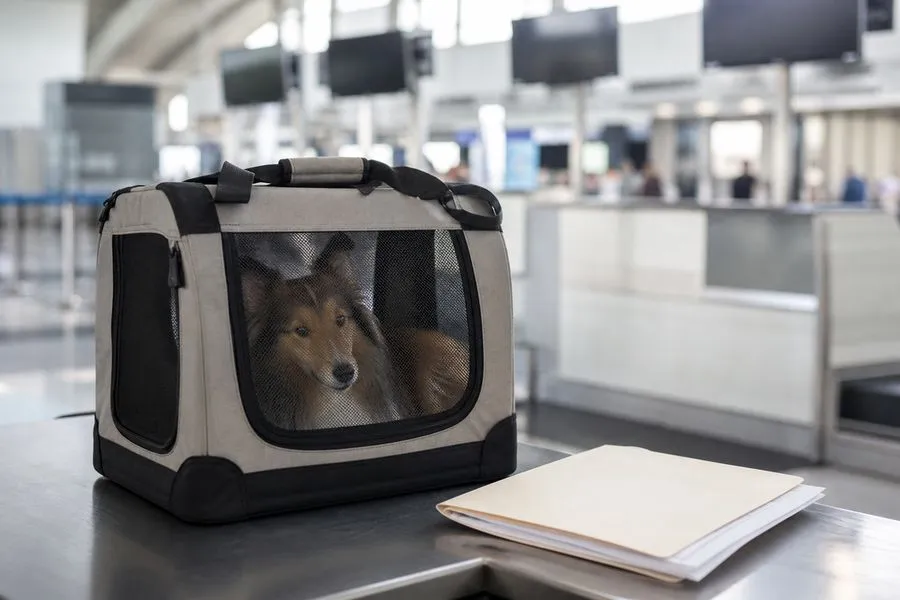
Bringing a pet into Thailand involves a real government process: obtain a free Department of Livestock Development (DLD) Import Permit, then pay 500 THB per animal at the Animal Quarantine Station (AQS) on arrival.
Your airline does not handle the permit for you.
Quick answer: The paperwork is mandatory but manageable once you separate Thailand's import rules from airline policy and forum folklore. A rabies antibody titer test is not required for a pet entering Thailand from any country. Facts checked August 11, 2026.
This content is general information, not legal advice. Requirements can change and vary by circumstance. Verify current requirements directly with the Department of Livestock Development and your airline before finalizing travel plans for a pet.
Who needs this
This process applies to anyone relocating to Thailand with a dog, cat, or another pet covered by DLD rules. I treat it as a long-term relocation task, not an errand to save for the final week before departure.
Put it on the same calendar as the rest of your entry paperwork. The permit application has its own lead time, the veterinary certificate has a short validity window, and the microchip must come before the rabies vaccination. Those dependencies are what catch people, not a particularly difficult form.
If you are coordinating a visa at the same time, see this inside the full long-stay setup picture. The pet process remains separate from your own permission to enter Thailand. You can also compare this with the rest of Thailand's entry and visa procedures.
Eligibility and requirements: health certificate, vaccination, microchip, breed rules
Thailand requires a veterinary health certificate from the government veterinary authority in the pet's country of origin, a rabies vaccination, and an ISO-compliant 15-digit microchip. The sequence matters: implant the microchip before the rabies vaccination. A vaccination recorded before the identifying chip does not satisfy that sequencing requirement.
The certificate must be issued inside the applicable validity window. For a USDA-endorsed certificate, sources commonly point to about 10 days before travel, while some broader guidance refers to a vaccination or documentation window of roughly 21 days. Do not pick the more convenient number.
Confirm the exact deadline with the government veterinary authority issuing the certificate.
Two dog breeds are explicitly prohibited from import into Thailand:
- Pit Bull Terrier
- American Staffordshire Terrier
That is a Thai import restriction, not an airline policy. Do not book transport for either breed on the assumption that an airline's acceptance overrides the DLD rule.
Before you fly: pre-travel document timeline
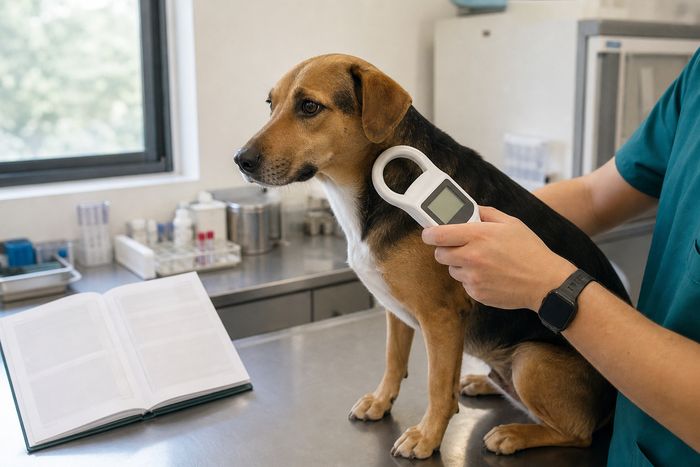
- First, implant the microchip. It must be an ISO 15-digit microchip and must be in place before the rabies vaccination.
- After microchipping, complete the rabies vaccination. Make sure the record identifies the chipped animal.
- Apply for the DLD Import Permit. Email the AQS at your intended port of entry 7-60 days before travel. About 30 days ahead is the practical target.
- Time the health certificate carefully. Obtain it from your origin country's government veterinary authority inside its validity window. For USDA-endorsed certificates, that is commonly about 10 days before travel, but guidance varies between roughly 10 and 21 days. Confirm the exact window with the issuing authority.
- Carry the complete paper document set. Bring the permit, which is valid for 60 days after issuance, along with the original supporting documents. I would not rely only on files stored on a phone.
- Pay at the AQS after landing. The arrival fee is 500 THB per animal, paid in cash.
This is mechanically simple. It is unforgiving only when someone performs the steps out of order.
The rabies-titer myth: this is about leaving Thailand, not entering it
No pet from any origin country needs a rabies antibody titer test to enter Thailand under Thailand's import rules. That answer does not change because the pet comes from a country described as high-risk.
The confusion runs in the opposite direction. Thailand itself is classified as a high rabies-risk country by the World Organisation for Animal Health. That classification can affect a pet later leaving Thailand for a stricter destination such as the UK, an EU country, Canada, or the United States.
It does not create a titer requirement for entering Thailand.
A surprising number of secondary pages reverse this relationship. Once one page gets it backward, relocation marketing and forum answers repeat it until an unnecessary test starts to sound like settled law.
Myth vs. fact
| Myth | Fact |
|---|---|
| "My airline's pet-travel page tells me what the Thai government requires." | An airline's crate, AVIH, cargo, and booking rules are its own commercial policies. Meeting the airline checklist does not satisfy the DLD checklist, and DLD approval does not guarantee that an airline will transport the pet. |
| "My dog needs a rabies antibody titer test to enter Thailand because our home country is high-risk." | Thailand does not require a titer test for entry from any origin country. Thailand's own high-risk classification matters when a pet later leaves for a stricter destination. |
| "The paperwork order does not matter if enforcement looks relaxed." | The microchip must precede the rabies vaccination. A quarantine officer can detain a pet for at least 30 days, at the owner's expense, when documentation is incomplete or incorrect. |
The titer claim is the first thing I correct when someone tells me an agent has produced a daunting list of "Thai requirements." The next question is where each item came from.
Fees and costs: the government fee, the arrival fee, and what's actually your airline's charge
The DLD Import Permit and airline transport are unrelated cost structures administered by unrelated parties. Paying one does not reduce, replace, or include the other.
| Fee or cost | Amount | Charged by | When and how paid | Status |
|---|---|---|---|---|
| DLD Import Permit, Form R1/1 | Free | Department of Livestock Development, through the Animal Quarantine Station | Apply by email before travel; no application fee | Fixed government process |
| AQS arrival fee | 500 THB per animal | Animal Quarantine Station | Cash on arrival at the port of entry | Fixed arrival charge |
| Airline transport, including crate, AVIH surcharge, or service level | Commonly about USD 150-800+, with higher costs possible | Airline, not a government body | Booked and paid separately under the carrier's policy | Wide carrier-dependent estimate |
The government-side cost is small and fixed: a free permit followed by 500 THB per animal at the AQS. The airline-side amount is the variable part. Pet size, crate, routing, and service level can move it across a wide range, so the USD 150-800+ figure is only a planning estimate, not a Thai government tariff.
I would keep these as separate lines in a moving budget. Combining them into one "Thailand pet import cost" hides which party is charging you and makes it harder to spot an agent presenting a free government permit as a paid product.
Airline policy still matters. It just answers a different question: whether and how that carrier will transport the animal.
This government-versus-commercial split appears in other relocation tasks too; see the other relocation-extra procedure with its own government-vs-commercial-source confusion.
How to apply: the DLD import permit process, step by step
Apply by email to the Animal Quarantine Station at the Thai port where your pet will enter. The commonly cited application window is 7-60 days before travel, with 30 days ahead recommended. Sources place processing at roughly 5-15 business days, so I would not aim for the seven-day edge unless the travel date gives you no alternative.
- Identify the arrival port and its AQS. The application goes to the station responsible for that intended port of entry.
- Check the document sequence. Confirm that the ISO 15-digit microchip date precedes the rabies vaccination date.
- Prepare and email the permit application. Submit Form R1/1 and the required supporting records within the 7-60 day application period.
- Allow processing margin. Guidance varies, but roughly 5-15 business days is a sensible planning range.
- Coordinate the veterinary certificate separately. Do not obtain a short-validity certificate so early that it expires before the flight. Confirm its exact window with the issuing government veterinary authority.
- Check the issued permit dates. The permit is valid for 60 days, so it must still cover the actual arrival date.
- Print the complete set. Carry the permit, health certificate, microchip record, and vaccination documentation when traveling.
- Complete AQS arrival formalities. Present the documents and pay 500 THB per animal in cash.
The pre-travel timeline in the previous section is the sequencing spine. The awkward part is that the permit needs advance time while the certificate belongs close to departure. Those are parallel deadlines, not one long application.
A friend in my Chiang Mai circle learned this several days before a booked flight. They had followed the airline's crate-and-paperwork checklist and assumed it was also Thailand's import procedure. The airline page never mentioned the DLD's separate permit window.
They caught the omission before departure, but only just (and with considerably less sleep than the dog).
That near-miss is why I lead with the split: ask the DLD what Thailand requires, then ask the carrier what it requires. Do not ask either party to speak for the other.
Quarantine, and what actually gets a pet held up
Thailand does not impose routine blanket quarantine on a healthy pet arriving with complete, correct documentation. That is the useful answer, but it is not a promise that detention cannot happen.
A quarantine officer may detain a pet for at least 30 days, at the owner's expense, when documents are incomplete or incorrect. The practical risk is discretionary detention caused by a paperwork problem, including a vaccination that predates the microchip or a certificate outside its accepted validity window.
That changes how I think about the checklist. The 500 THB fee is not the scary part. A preventable documentation gap can create a month-long welfare, housing, and cost problem after an already difficult flight.
Go through the dates as if you were checking someone else's file.
Match the microchip number across every record, verify that the vaccination follows implantation, confirm the certificate deadline with its issuing authority, and make sure the permit remains valid on arrival.
Bring paper copies.
I have watched people devote more attention to choosing a crate than to identifying which authority issued each document. The crate can satisfy the airline while the papers fail the AQS. Both checklists matter, and neither provides cover for mistakes on the other.
FAQ
Does my dog or cat need a rabies antibody titer test to enter Thailand?
No. Thailand's import rules do not require a rabies antibody titer test for entry from any origin country. Thailand's high rabies-risk classification instead affects a pet's later departure for stricter destinations.
Will my pet be quarantined when we land?
Not automatically. Healthy pets with complete, correct documents are not routinely quarantined, but an officer can order detention for at least 30 days at your expense over a documentation problem. Follow the pre-travel timeline and check every date before departure.
How much does this actually cost?
The DLD Import Permit is free, and the AQS arrival fee is 500 THB per animal. Airline transport is separate and is commonly estimated around USD 150-800+, though the carrier-dependent total can be higher.
Is my airline's pet-policy page the same as the government requirement?
No. The airline administers its transport policy, while the DLD and AQS administer Thailand's import process. Approval from one does not replace approval from the other.
When should I start the paperwork before moving?
Start well before the final week and aim to submit the DLD permit application about 30 days ahead, within the commonly cited 7-60 day window. Implant the microchip before vaccination, then obtain the health certificate within the exact validity period confirmed by its issuing authority.
Are any breeds banned from entering Thailand?
Yes. Pit Bull Terriers and American Staffordshire Terriers are explicitly prohibited from import into Thailand.
Keep the DLD checklist and airline checklist in separate folders, with separate deadlines and charges.
After the pet paperwork, another arrival-week task with its own set of myths to unlearn is opening a bank account, while the other relocation-extra procedure with its own government-vs-commercial-source confusion covers drones.
For the wider context, compare this with the rest of Thailand's entry and visa procedures.
Sources
- Royal Thai Embassy pages for Switzerland and Los Angeles, checked in the August 11, 2026 research review: DLD permit process, application window, AQS arrival fee, and quarantine discretion.
- Specialized pet-relocation industry source cluster, checked in the August 11, 2026 research review: corroborating fees, certificate timing, prohibited breeds, and separation of airline costs from government charges.
- World Organisation for Animal Health country rabies-risk classification, checked in the August 11, 2026 research review: basis for the distinction between entering Thailand and later leaving for a stricter destination.
This content is general information, not legal advice. Requirements can change and vary by circumstance. Verify current requirements directly with the Department of Livestock Development and your airline before finalizing travel plans for a pet.


Reviewed by Nattapong Sirichai, licensed Thai attorney, member of the Lawyers Council of Thailand, practising immigration and administrative law, Bangkok. Last reviewed: 2026-08-12. The review covers the legal statements on this page, not travel opinion.