Thai Bank Account for Foreigners: What Actually Works
On this page
- Who needs this
- Which visa status actually qualifies you
- Which visa gets you in the door
- What it costs: minimum deposits, bank by bank
- Documents to bring - and the "certificate of residence" trend
- Bank visit checklist
- If you're refused at one branch: what actually works
- If you're refused
- The DTV myth, corrected
- FAQ
- Can I open a Thai bank account as a foreigner?
- Does having a DTV make it easier to open an account?
- What's the minimum deposit to open an account?
- I was refused at one branch - should I give up?
- Which Thai bank is easiest for foreigners?
- Sources
Opening a Thai bank account is an official process administered by each bank, but that does not make the outcome predictable.
Since the 2024-2026 tightening of know-your-customer checks, tourist visas, visa-exempt entries, visas on arrival, and the DTV no longer provide a reliable route into the major banks.
Long-term status helps. The particular branch still matters more than most official-looking document lists suggest.
Current status, checked August 11, 2026: Major banks generally expect a qualifying long-term or non-immigrant status. The DTV is treated as a tourist visa for this purpose. One branch's refusal is not necessarily the bank's final answer because branch-level discretion remains substantial.
Who needs this
This is a first-month residency task for people building a life in Thailand, not a useful tourist errand. Retirees, people on marriage extensions, Non-B visa and work-permit holders, LTR holders, and some ED visa holders have realistic routes, subject to their category-specific paperwork.
DTV holders often arrive with a different expectation. I understand why: a long-validity visa designed around remote work sounds as if it should demonstrate enough commitment for a basic savings account. It does not, at least in bank KYC treatment.
A local account becomes part of ordinary financial setup once you are staying long term.
I would handle it alongside see the other arrival-week task most residents hit early, rather than assuming that a passport and an afternoon at the mall will settle it.
For the broader context, see this task inside the full first-month setup sequence.
Which visa status actually qualifies you
Bangkok Bank, Kasikorn Bank, commonly called KBank, Krungsri, and SCB were all reported in the 2025-2026 research cluster as requiring a long-term or non-immigrant visa category for new foreign applicants.
A tourist visa, visa-exempt entry, or visa on arrival is no longer sufficient on its own at these major banks.
That exclusion pattern comes from multiple specialized immigration and finance sources checked during the August 2026 review, rather than one national regulation that dictates identical branch behavior.
The practical routes are Non-B status with a work permit, Non-O status based on retirement or marriage, an Education visa with its supporting documents, and LTR status.
The LTR route is different because Thailand's Board of Investment publishes a specific account-opening procedure and identifies support from Kasikorn Bank and Bangkok Bank (Board of Investment LTR portal, bank account opening procedure).
Which visa gets you in the door
Use this as a screening checklist, not a promise from a particular teller.
- Reliable path: LTR. The BOI documents a specific procedure supported by Kasikorn Bank and Bangkok Bank. See the LTR's BOI-documented account-opening path.
- Reliable path: Non-B with a work permit. Bring the documentation tied to both the visa category and your employment.
- Reliable path: Non-O based on retirement or marriage. Expect the branch to inspect the current visa or extension and its supporting documents.
- Reliable path: Education visa. Eligibility depends on category-specific documentation rather than the visa page alone.
- Generally no longer works: tourist visa, visa-exempt entry, or visa on arrival. Major banks do not treat these as qualifying long-term status.
- Commonly misunderstood: DTV. Major banks treat it as a tourist visa for KYC purposes. Do not rely on it to open an account.
Visa status gets you through the first gate. It does not erase branch discretion, and it does not mean every account type will be available. If your status is still unsettled, compare long-stay visa categories before making repeated bank visits.
What it costs: minimum deposits, bank by bank
There is no honest single answer to "the minimum deposit." A 2026 cross-bank comparison suggests savings-account opening amounts from THB 0 to THB 500 among the four banks below, while current and foreign-currency accounts may require much more. These figures were not confirmed against each bank's own published fee schedule, so treat them as planning amounts and ask the branch for its current minimum.
| Bank | Savings account minimum | Current account minimum | Foreign-currency deposit account minimum | Notes |
|---|---|---|---|---|
| Bangkok Bank | THB 500 | THB 10,000 | USD 1,000 | Secondary-sourced |
| KBank (Kasikorn) | THB 0 | Not available | Not available | THB 500 fixed deposit; secondary-sourced |
| SCB | THB 500 | THB 10,000 | Not available | Secondary-sourced |
| Krungsri | THB 500 | Not available | USD 100 | Secondary-sourced |
Figures come from a 2026 cross-bank comparison, not each bank's own fee page. Confirm the exact amount and available account type directly with the branch before relying on these numbers.
The deposit itself is rarely the hard part. Showing up with THB 500 does not rescue an application when the branch rejects the visa category or wants additional proof of residence. Conversely, a qualifying applicant should not assume the first quoted minimum applies across every bank and account type.
Documents to bring - and the "certificate of residence" trend
Bring originals, not a phone gallery of documents. At minimum, prepare your original passport with at least 6 months of validity and the page showing your qualifying long-term visa or extension. Then add the documents specific to that category, such as the work-permit material connected to a Non-B application.
A certificate of residence has become an increasingly common request during the 2025-2026 tightening. This is a branch-level documentation pattern reported across the research sources, not a single national legal requirement that every bank applies identically.
I would obtain one before starting the bank circuit if it is practical, because returning with it costs more time than carrying an extra document the teller does not request.
Bank visit checklist
- Original passport valid for at least 6 more months
- Current long-term visa or extension page
- Documents specific to the visa category, including work-permit documentation where applicable
- Certificate of residence, because branches increasingly ask for it
- Opening deposit appropriate to the account type, with enough flexibility for a branch-specific figure
- The address and operating hours of a second branch in case the first refuses the application
Do not present the certificate of residence as proof that the bank must approve you. It addresses one increasingly common documentation request; it does not change a DTV into qualifying non-immigrant status.
The process resembles getting a Thai driving license has the same kind of branch-by-branch variation. A complete folder improves your odds, but the person examining it still has room to interpret the branch's requirements.
If you're refused at one branch: what actually works
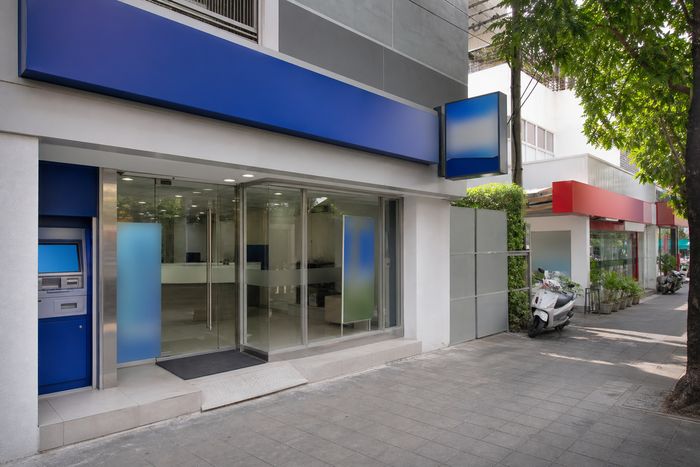
One refusal is not a national verdict. The August 2026 research cluster consistently found that applicants with identical paperwork can receive different answers at two branches of the same bank. That is the load-bearing fact here: visa category gates the application, but branch-level discretion often decides the outcome.
I learned to be less confident about this after giving a friend bad advice. I said that a newly issued DTV ought to make opening an account easier because a "digital nomad visa should count for something." The branch refused the application outright and explained that the DTV read as a tourist visa for KYC purposes.
My logic sounded tidy. It was also wrong.
For applicants with a genuinely qualifying status, trying another branch is sensible. A smaller Krungsri branch or an independent bank may also assess unusual cases individually.
Reports include occasional DTV exceptions when the applicant has a certificate of residence, but those outcomes are inconsistent and are not official policy (a fairly important distinction when you are planning your week).
If you're refused
- Ask what failed. Find out whether the branch rejected your visa category or identified a missing document. Do not leave with only a general "cannot."
- Try another branch of the same bank. Take the same complete paperwork before concluding that the bank itself rejects your category.
- Add a certificate of residence if you lack one. Branches increasingly request it alongside the passport and long-term visa page.
- Treat a DTV exception as an exception. A smaller Krungsri branch or independent bank might consider the case, but this is inconsistent, not guaranteed, and not a published route.
- Stop repeating an application that cannot pass the visa gate. If other routes fail, assess whether LTR eligibility offers a structurally reliable path instead.
Record what each branch says. "Missing certificate of residence" gives you an action; "DTV treated as tourist status" tells you that another stack of photocopies will not solve the underlying issue.
The DTV myth, corrected
The DTV does not make opening a Thai bank account easier.
Bangkok Bank, KBank, and SCB reject DTV holders for new account opening under the 2025-2026 KYC pattern because they classify the DTV as a tourist visa rather than evidence of permanent-residency intent.
Read the DTV's own terms - it does not ease this.
A minority of smaller Krungsri branches or independent banks reportedly make case-by-case exceptions. That is not a reliable path and should not be described as one.
LTR status is not comparable. The Board of Investment provides an official LTR-specific account-opening procedure supported by Kasikorn Bank and Bangkok Bank. The correction is blunt because it needs to be: DTV does not help; LTR genuinely does.
For other entry and residency procedures, compare this with the rest of Thailand's entry and visa procedures.
FAQ
Can I open a Thai bank account as a foreigner?
Generally, yes, if you hold a qualifying status such as LTR, Non-B, Non-O, or ED and provide the category-specific documents. Check the eligibility checklist first, then confirm the requirements with the branch you plan to visit because approval still varies by branch.
Does having a DTV make it easier to open an account?
No. Thai banks treat the DTV as a tourist visa for KYC purposes, and major banks commonly reject DTV holders opening new accounts. Only the LTR has a genuinely easier, BOI-documented procedure.
What's the minimum deposit to open an account?
A savings-account minimum is commonly reported at about THB 0-500 among the banks compared here, with higher amounts for some current and foreign-currency accounts. The table uses a secondary 2026 comparison rather than bank-confirmed fee schedules, so verify the exact figure directly with your branch.
I was refused at one branch - should I give up?
No. Ask whether the problem was your visa category or a missing document, then follow the refusal checklist and try another branch before deciding that the bank rejects your category outright. A different branch cannot make a nonqualifying visa reliable, but it may assess qualifying paperwork differently.
Which Thai bank is easiest for foreigners?
The research does not support naming one bank as reliably easiest. Branch-level discretion is a stronger predictor than the logo outside, so start with the eligibility checklist, carry the complete document set, and keep a second branch in mind.
For the order in which banking fits with the rest of your arrival tasks, see this task inside the full first-month setup sequence.
Sources
Facts and requirements last checked August 11, 2026.
- Board of Investment LTR portal, official LTR-specific bank account opening procedure and stated Kasikorn Bank and Bangkok Bank support.
- Multiple specialized immigration and finance sources dated 2025-2026, checked in the August 11, 2026 targeted research review, covering short-term visa exclusions, DTV treatment, residence-document requests, and branch discretion. No single regulator page governs this cluster of bank-level practices.
- 2026 cross-bank minimum-deposit comparison covering Bangkok Bank, KBank, SCB, and Krungsri. The figures were not confirmed against each bank's own published fee schedule.
This content is general information, not legal or financial advice. Bank eligibility, accepted documents, account types, and opening deposits vary by bank and branch and can change without notice. Verify your current eligibility and required documentation directly with the specific bank branch before visiting.


Reviewed by Nattapong Sirichai, licensed Thai attorney, member of the Lawyers Council of Thailand, practising immigration and administrative law, Bangkok. Last reviewed: 2026-08-12. The review covers the legal statements on this page, not travel opinion.