TM30 in Thailand: Who Files It, Documents & Deadlines
On this page
- Quick answer: it's not your form, but it can still stop you
- Who has to file this, and for what kind of stay
- Why this matters to you even though you don't file it
- Deadlines and the re-entry reset rule
- How and where it actually gets filed
- Landlord vs. tenant: who provides what
- What to do if your landlord won't file
- My landlord won't file TM30 - what now
- The fine nobody can confirm
- FAQ
- What is TM30, and is it something I need to do myself?
- Who is responsible for filing TM30, me or my landlord?
- Why does something my landlord files affect my own 90-day report?
- What can I do if my landlord won't file TM30?
- Do I need a new TM30 every time I leave and re-enter Thailand?
- Is there a fine if TM30 isn't filed, and who pays it?
- Sources
Quick answer: it's not your form, but it can still stop you
TM30 is a residence notification that the property owner, landlord, house master, or hotel manager must file under Section 38 of the Thai Immigration Act B.E. 2522 (1979). The legal obligation belongs to that person, not to the foreign tenant, according to Thailand Law Online's summary of Section 38.
You still need to care about it. A current TM30 receipt that matches your address is required for your own 90-day report and several other immigration applications. You can prepare your paperwork correctly and still get blocked because somebody else failed to submit theirs.
I used to tell people that TM30 was "the landlord's problem, not yours." That advice was legally accurate and practically bad. My current version is: it is the landlord's legal job, but it becomes your problem the moment it is not done.
Checked on August 12, 2026.
This content is general information, not legal advice. Verify current requirements and any question about fines or penalties with the Royal Thai Immigration Bureau or the relevant local immigration office before relying on it.
Who has to file this, and for what kind of stay
The responsible filer is the property owner, landlord, house master, or hotel manager. A foreign tenant supplies supporting documents but does not take over the legal filing obligation under Section 38.
TM30 applies across condos, houses, serviced apartments, hotels, and dormitories, for short stays as well as long ones. One submission can include more than one foreign occupant staying at the same address, according to PKF Thailand's account of the notification rules and filing process.
That distinction matters when a landlord says, "You need to do your TM30." In practice, they may mean that they need copies of your passport and entry details. It does not mean Section 38 has transferred the legal duty to you.
The requirement itself is not new.
Chaengwattana Immigration announced strict enforcement of the existing rule effective March 28, 2019, and the redesigned "New Notification of Residence for Foreigners" online system went live on September 15, 2023, according to an official Uttaradit Immigration Office notice.
At one apartment I moved into, the landlord had never heard of TM30. She assumed the building's juristic office handled it automatically. It did not.
I walked her through what was needed and sent every tenant-side document in one message so there was no excuse left hiding in the paperwork (an undignified but effective use of an afternoon).
For the wider sequence of arrival tasks, see where TM30 fits into your first month of paperwork in Thailand.
Why this matters to you even though you don't file it
A current TM30 receipt with the correct address is required for your 90-day report, a Residence Certificate request, certain visa-sticker procedures, extensions, and re-entry permits, according to the Thailand Elite TM30 guide.
The legal duty and the person who suffers the administrative consequences are different people.
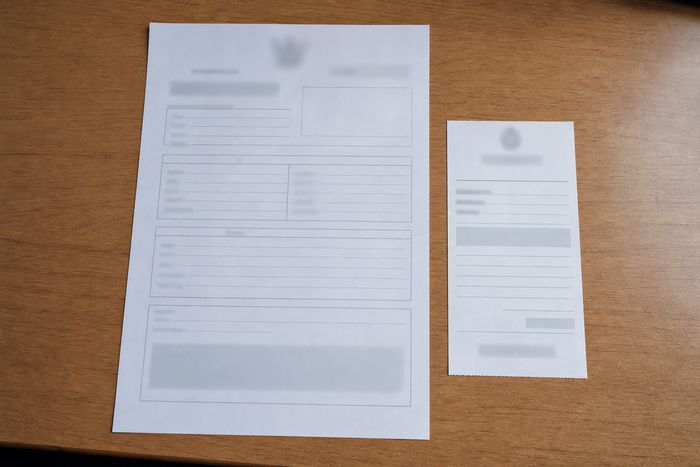
The sharpest failure point is the address. A mismatch between the address on the TM.47 90-day report and the latest TM30 is described as the single most common reason online 90-day submissions get rejected. This is not an obscure theoretical dependency.
It is often the first sign a tenant gets that the residence record is wrong.
After helping that new landlord file, I submitted my next 90-day report online and received a rejection. The address on file was one digit different from the address shown on the TM30 receipt. I caught it only after putting both documents side by side and reading each line instead of assuming "same building" meant "same record."
If your immediate problem is the report, use the filing that a current TM30 makes possible rather than trying to solve the report cycle here. For an extension, read why your extension application also needs a current TM30 receipt.
This is also why I recommend asking for the receipt before your own deadline approaches. Do not settle for "the landlord says it was filed." Check the recorded address against the address you will use.
Deadlines and the re-entry reset rule
The owner, landlord, house master, or hotel manager must notify the relevant local immigration office or police within 24 hours of a non-Thai national arriving at the property, under Section 38.
Two situations are easy to confuse:
You leave Thailand and return to the same home. A fresh TM30 is required after every re-entry, even when your landlord and address have not changed. The 24-hour clock restarts with the new arrival, according to the Thailand Elite guide.
You remain in Thailand and continue living at the same address. No new TM30 is required in the middle of that continuous stay merely because time has passed. There has been no re-entry to restart the clock.
So, "the address has not changed" is not enough after an international trip. The relevant event is your arrival in Thailand. Tell the landlord promptly and provide the latest entry-stamp copy rather than assuming the old residence notification continues unchanged.
If this notification feeds into another deadline, use the full extension and 90-day reporting due-date tracker - this is a related but distinct reporting obligation from TM30.
If a blocked report or extension is already approaching its deadline, read what's at stake if a blocked 90-day report or extension slips past its deadline.
How and where it actually gets filed
The landlord or other responsible property party has three filing channels. Each has a different practical failure point, and none changes who holds the legal obligation.
| Channel | How it works | Typical friction |
|---|---|---|
| In person | Filed at the relevant local immigration or police office, with the fastest confirmation of the three channels. | The filer or an authorized representative must attend with the document set. |
| Registered post | Sent by registered mail; processing is reported at about 2-4 weeks and a return envelope is required. | It is the slowest option and easy to misjudge when another immigration deadline is close. |
| Online | Filed through the residence-notification system after the owner or landlord registers for a username and password. | Registration must be completed first. The system is unavailable if the filer has an outstanding unpaid fine on record, which can leave the tenant unaware of why the attempt failed. |
PKF Thailand documents these channels, their conditions, and the supporting paperwork. The online block is worth asking about directly if a landlord insists that the website "just doesn't work." The problem may sit on the owner's record, not in the tenant's passport information.
Landlord vs. tenant: who provides what
| Landlord or owner provides | Tenant provides |
|---|---|
| Copy of the title deed | Copy of the passport bio-data page |
| Copy of the lease contract | Copy of the visa page |
| Copy of the owner's ID | Copy of the latest entry stamp |
| Copy of the house-registration book | Copy of the departure card, where applicable |
| Property license instead of the ownership documents where applicable to a dormitory or apartment | The departure-card field may be left blank for an air arrival after July 1, 2022 |
| Power of Attorney if an agent handles the submission | Clear, current copies sent promptly to the responsible filer |
The departure-card reference is historical TM6 territory. Thailand discontinued TM6 for air travelers on July 1, 2022, so an air traveler arriving after that date can leave that item blank, according to PKF Thailand's document guidance.
I send the bio-data page, visa page, and newest entry stamp together rather than waiting for the landlord to ask for each copy separately. That does not make me the filer. It simply removes the easiest reason for delay.
What to do if your landlord won't file
Most of the landlords I have dealt with were cooperative once they understood the requirement. The trouble tends to be unfamiliarity, an absent owner, or the assumption that a juristic office has already handled it. A flat refusal is harder, but silence does not give you permission to ignore your own approaching immigration deadline.
My landlord won't file TM30 - what now
-
Confirm the obligation in writing. Message or email the landlord and state that Section 38 places the notification duty on the property owner, landlord, house master, or hotel manager. Keep the exchange factual. Many failures start with unfamiliarity rather than a deliberate refusal.
-
Send your supporting documents immediately. Offer the passport bio-data page, visa page, and latest entry-stamp copy in one batch. This establishes that the tenant-side documents are ready and prevents the conversation from stalling over missing copies.
-
Ask about practical help if the owner is genuinely unavailable. Some commercial sources describe informal runners who physically submit TM30 paperwork for roughly 500-1,000 THB, excluding any late-filing penalty. That range is not confirmed by an official source. A runner is an unofficial paid workaround, not an official filing channel, not a right, and not a replacement for the landlord's documents or underlying legal obligation.
-
Contact the relevant immigration office before your own deadline. If a 90-day report or extension is time-sensitive, explain that the responsible property party has not completed the notification. Ask the office what it will accept in your circumstances instead of allowing the deadline to pass without contact.
A runner cannot manufacture an owner's title deed, identification, house-registration copy, or authorization. If someone offers to "solve TM30" without the landlord's actual document set, I would ask exactly what is being filed and under whose authority before paying anything.
The cleanest outcome remains the boring one: landlord files through an official channel, tenant supplies current passport and arrival copies, and both sides retain the receipt.
The fine nobody can confirm
I cannot give you a reliable fine figure for landlord non-compliance. This research found no official primary source confirming an exact amount, so presenting one as settled law would be false precision.
An "800 THB" tenant-side workaround payment appears in an unverified, forum-sourced claim repeated by ThaiEmbassy.com. I am naming it only to reject it as a citable official figure. It is not confirmed policy, and it should not be repeated as though the tenant can pay a standard charge and regularize the record.
The same caution applies to fees quoted by an intermediary. A runner's service charge is not automatically an immigration fine, and neither number establishes who is legally liable.
If a possible penalty matters to your case, ask the local immigration office directly. Give them the arrival date, property type, filing status, and whether another application is pending. That answer is more useful than a number copied from a forum without a primary legal source.
FAQ
What is TM30, and is it something I need to do myself?
TM30 is a residence notification filed under Section 38 of the Thai Immigration Act B.E. 2522 (1979). The property owner, landlord, house master, or hotel manager files it, not the foreign tenant; your role is to provide the supporting passport and arrival documents.
Who is responsible for filing TM30, me or my landlord?
Your landlord, property owner, house master, or hotel manager is legally responsible, not you. You still need their cooperation because your current TM30 record affects your own 90-day report, extension, and other immigration applications.
Why does something my landlord files affect my own 90-day report?
A current TM30 with an address matching the TM.47 is required for the report.
An address mismatch is described as the single most common reason online submissions are rejected, so compare the receipt with the filing that a current TM30 makes possible before submitting.
What can I do if my landlord won't file TM30?
Confirm the Section 38 obligation with the landlord in writing and send your supporting documents immediately. If that fails, follow the checklist in this article and contact the relevant immigration office before any deadline tied to your own application.
Do I need a new TM30 every time I leave and re-enter Thailand?
Yes.
A fresh notification is required after each re-entry into Thailand, even when you return to the same address, because the 24-hour clock restarts; no new filing is needed while you continuously remain at that address without leaving and re-entering.
Is there a fine if TM30 isn't filed, and who pays it?
This research found no official primary source confirming a specific fine amount for landlord non-compliance. Do not treat a forum figure or an intermediary's service charge as official policy; ask the relevant local immigration office about liability and any penalty in your circumstances.
If your real question is how to submit the report, go to the filing that a current TM30 makes possible. If you are not sure which immigration procedure applies, use the visa selector and see the full /visas-and-entry/ category.
Sources
- Thailand Law Online, "TM30" - Section 38, legal basis, responsible filer, and 24-hour notification requirement.
- PKF Thailand, "Hastily enforced TM30 in Thailand sows widespread confusion" - covered properties, filing channels, system constraints, and supporting documents.
- Thailand Elite, "TM30" guide - downstream immigration dependencies, address-mismatch failures, and the re-entry reset rule.
- PropertyScout, "TM30: all there is to know" - commercial account of postal timing and the unconfirmed runner-service price range.
- Uttaradit Immigration Office, official residence-notification system notice - online system relaunch and enforcement background.
- ThaiEmbassy.com, "About TM30" - included solely to identify and reject the unverified "800 THB" claim as an official figure.
Facts checked on August 12, 2026.
This content is general information, not legal advice. Verify current requirements and any fine or penalty question with the Royal Thai Immigration Bureau or the relevant local immigration office before relying on it.


Reviewed by Nattapong Sirichai, licensed Thai attorney, member of the Lawyers Council of Thailand, practising immigration and administrative law, Bangkok. Last reviewed: 2026-08-12. The review covers the legal statements on this page, not travel opinion.