Thailand Overstay Fines and Entry Bans: The Full Penalty Table
On this page
- Quick Answer: The Fine Is the Easy Part
- Where Overstay Fits Among Thailand's Entry and Exit Rules
- What Counts as an Overstay, and Whose Responsibility It Is
- The Fine: 500 THB a Day, Capped at 20,000 THB
- The Entry Ban: Why the Real Cost Isn't the Fine
- Overstay Penalty Tiers: Voluntary Self-Report vs. Arrested or Caught
- Caught vs. Self-Reported: The Same Overstay, Two Very Different Outcomes
- Does Getting Caught Actually Change Anything?
- Exceptions and Officer Discretion: When You Might Not Be Fined at All
- The March 2026 Waiver Was a One-Time Exception, Not a New Rule
- What to Do If You've Already Overstayed
- Checked and Verified
- FAQ
- What exactly counts as overstaying in Thailand?
- What's the fine for my exact overstay length?
- Will I be banned from returning to Thailand, and for how long?
- Does it actually matter if I turn myself in instead of waiting to get caught?
- My flight was cancelled and I overstayed by a few hours - am I in real trouble?
- I heard Thailand waived overstay fines recently - does that still apply to me?
- Do I need a lawyer if I've overstayed?
- Related Procedures in This Hub
- Keep Reading: The Full Overstay Consequences Guide
- Sources
If you have already overstayed in Thailand, start with two separate questions: how much is the fine, and does your situation trigger an entry ban? The fine is predictable.
The ban depends on the length of the overstay and, critically, whether you report it voluntarily or immigration catches you first.
I once gave a friend the lazy version of the rule, "just pay 500 baht a day and you're fine," while he was drifting toward a multi-month overstay.
I had to retract that advice after reading the actual tier structure. Paying the fine and avoiding a ban are not the same thing.
This article is general information, not legal advice. Verify your position with the Thai Immigration Bureau or a qualified Thai immigration attorney before acting, especially if the overstay is long, disputed, or connected to a previous immigration flag.
Quick Answer: The Fine Is the Easy Part
The standard figure is 500 THB per day, capped at 20,000 THB once the overstay reaches 40 days. The more consequential issue is the entry ban, which changes according to both the length of the overstay and whether you surrender voluntarily or are arrested. A voluntary overstay under 90 days generally carries no ban, while being caught during an overstay of up to one year can carry a ban of up to five years.
The figures below are well corroborated across the sources reviewed, but the exact fine and ban schedule should still be confirmed against current Immigration Bureau text before you rely on it.
Where Overstay Fits Among Thailand's Entry and Exit Rules
Overstay sits at the end of Thailand's immigration compliance chain. It is not an application you can fix retroactively. It is the result of remaining after your permitted stay has expired, following other compliance points such as address reporting, 90-day reporting, or an extension.
Those procedures are related but not interchangeable. This depends on having filed your extension or 90-day report correctly first, although filing a report does not itself extend your permitted stay. For the broader map of Thailand's immigration rules, see the full visas-and-entry category.
What Counts as an Overstay, and Whose Responsibility It Is
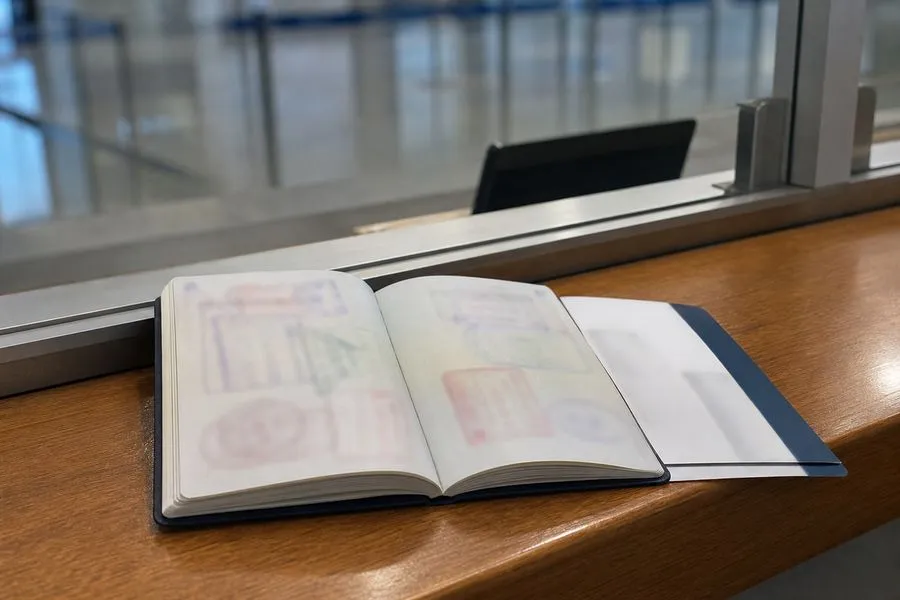
You overstay when you remain in Thailand beyond the period permitted by your visa or entry stamp. The date that matters is the permitted-until date recorded by immigration, not the validity period printed elsewhere on a visa document and not the date you intended to leave.
The Royal Thai Embassy in Washington, DC states that avoiding overstay is the traveler's responsibility. Immigration does not have to warn you before your permitted stay lapses.
Check the stamp in your passport rather than relying on a flight itinerary, hotel booking, calendar reminder, or memory. If the stamp is unclear, do not guess. That is the point to ask immigration or an immigration attorney to confirm the date.
A cancelled flight does not mean no overstay occurred. It may affect how an officer uses discretion, but the missed departure and the permitted-stay date remain separate facts.
The Fine: 500 THB a Day, Capped at 20,000 THB
The standard overstay fine is reported consistently as 500 THB for each day, up to a maximum of 20,000 THB. The cap is reached at 40 days:
- 1 day: 500 THB
- 5 days: 2,500 THB
- 20 days: 10,000 THB
- 40 days or longer: 20,000 THB
Once you reach the cap, another month or year does not increase the standard fine. It can still move you into a much harsher entry-ban tier.
This research found the same figures across the reviewed sources and found no conflicting number. However, it did not capture an official immigration.go.th statute page stating the exact amount.
The figure set comes from corroborated secondary material, including Thailand Visa Overstay Penalties 2026, and requires confirmation against current Immigration Bureau text before being treated as an exact statutory citation.
That sourcing gap is worth stating plainly. A widely repeated number can still be current and useful without pretending it came from a primary statute page when it did not.
The Entry Ban: Why the Real Cost Isn't the Fine
The voluntary-surrender schedule changes at 90 days, one year, three years, and five years. Under the schedule corroborated in the 2026 research window, a voluntary overstay of less than 90 days carries no entry ban. At 90 days, the exposure changes sharply.
Overstay Penalty Tiers: Voluntary Self-Report vs. Arrested or Caught
| Track | Overstay length | Maximum entry ban |
|---|---|---|
| Voluntary/self-report | Under 90 days | No ban |
| Voluntary/self-report | 90 days to 1 year | Up to 1 year |
| Voluntary/self-report | 1 to 3 years | Up to 3 years |
| Voluntary/self-report | 3 to 5 years | Up to 5 years |
| Voluntary/self-report | Over 5 years | Up to 10 years |
| Arrested/caught | Up to 1 year | Up to 5 years |
| Arrested/caught | Over 1 year | Up to 10 years |
These are maximum ban periods, not a promise that every case will receive an identical result. They are also separate from the 20,000 THB fine cap. Paying that capped amount does not erase an entry ban that applies under the table.
The ban period runs from the date you depart Thailand, according to the reviewed penalty schedule in Thailand Visa Overstay Penalties 2026.
It does not start on the first day of the overstay. If a person receives a three-year ban after departing on August 12, the relevant clock begins with that departure, not with the earlier date on which immigration status expired.
That detail matters in long cases. Someone who has already overstayed for several years has not served any portion of a future entry ban simply by remaining in Thailand.
The table is the useful part of this page, not the scary headline. Locate the correct track first, then the length. If either fact is uncertain, do not choose the more favorable row because it feels plausible.
Caught vs. Self-Reported: The Same Overstay, Two Very Different Outcomes
Being caught can change the consequence substantially. Under the arrested track, an overstay of up to one year can lead to a ban of up to five years. An overstay of more than one year can lead to a ban of up to 10 years.
The voluntary track does not reach a possible five-year ban until the overstay reaches three years.
Arrestees are typically detained, with Bangkok's Immigration Detention Center on Suan Phlu Road commonly cited, while deportation is arranged at their own expense. An embassy can be notified but cannot override Thai immigration law or cancel the process.
A person who voluntarily reports an overstay of 90 days or less is not entered on the immigration blacklist on that basis, according to Juslaws' overstay and blacklist guidance.
Repeated violations can have a different result.
The same source cites Immigration Act Section 12 in connection with an "undesirable alien" passport stamp that can complicate travel and remain relevant to re-entry until rescinded; the statutory basis should be checked directly before relying on that legal citation.
Does Getting Caught Actually Change Anything?
Myth: "If I pay the fine when I leave, that is the end of it, however long I overstayed."
Fact: The fine stops increasing at 20,000 THB, but the possible ban does not flatten in the same way. A voluntary overstay under 90 days avoids the blacklist, while being arrested during an overstay of under one year can mean a ban of up to five years. The method by which the case reaches immigration is not a minor procedural detail.
Exceptions and Officer Discretion: When You Might Not Be Fined at All
The entry-ban regime does not apply to several defined situations listed in the reviewed Juslaws guidance: an overstay under 40 days that is paid at the airport before departure, a traveler under age 18, or a person who has not overstayed at all.
This is about the ban regime. It does not turn every short overstay into an automatic fine waiver.
For a very short and clearly accidental lapse, an immigration officer may waive the standard fine when the traveler explains what happened on exit.
The Royal Thai Embassy in Washington, DC gives delayed or cancelled travel as the kind of circumstance in which discretion may be used.
I once reached an international departure after a delayed domestic flight pushed me a few hours beyond my permitted stay. I was nervous at the counter; the officer waved it through without a fine. That showed me discretion exists.
It did not give me, or anyone else, a right to demand the same result.
Bring evidence of the delay or cancellation if you have it. Explain briefly and let the officer decide.
The March 2026 Waiver Was a One-Time Exception, Not a New Rule
On March 4, 2026, the Immigration Bureau waived overstay fines for a specific group of stranded travelers.
The measure covered people whose permitted stay expired on or after February 28, 2026, who could not depart because of Middle East-conflict-related flight cancellations and who were at the airport intending to leave, according to the Thailand Public Relations Department.
That was a dated response to a specific disruption. It was not announced as a permanent policy or a general cancellation-based waiver. If you are overstaying now, do not assume the March 2026 measure remains available.
What to Do If You've Already Overstayed
Do not let anxiety turn a short problem into a longer one. First establish the facts, especially the exact number of days and whether immigration has already stopped or flagged you.
- Confirm the permitted-stay date. Check the entry stamp and count the overstay through the planned date of departure. If the stamp is unclear, get it interpreted rather than estimating.
- Choose between prompt self-reporting and legal advice first. A short, straightforward case may be resolved with immigration or on departure. A long, disputed, or complicated case deserves legal advice before surrender.
- Gather the evidence. Keep your passport, entry stamp, relevant immigration documents, and any flight cancellation or delay records together.
- Prepare for the fine. If departure is imminent, be ready to pay up to the 20,000 THB cap in cash. Do not assume that payment answers the separate ban question.
- Escalate before surrendering when the risk is high. Get advice first if the overstay is multi-year, you have a prior overstay or ban, your passport has been flagged, or you genuinely cannot determine which row applies.
Do not wait to be caught because you hope the fine will remain the only consequence. The fine may remain capped while the arrested-track exposure becomes much worse.
Past practice is not a current escape route.
A March 2016 transitional arrangement has been described as allowing some pre-2016 overstayers to surrender under older treatment, but the research record for that order is incomplete and it is not a current option.
Checked and Verified
Checked against the listed sources on August 11, 2026. Because immigration rules have a short practical shelf life, the exact fine and ban figures still require publication-adjacent confirmation against current Immigration Bureau text.
FAQ
What exactly counts as overstaying in Thailand?
Overstaying means remaining in Thailand beyond the period permitted by your visa or entry stamp. You are responsible for tracking that date; immigration does not have to notify you before it passes.
What's the fine for my exact overstay length?
The standard rate is 500 THB per day, capped at 20,000 THB after 40 days. The fine does not increase beyond that cap, but entry-ban exposure can continue to increase.
Will I be banned from returning to Thailand, and for how long?
It depends on the overstay length and whether you self-report or are caught. Use the tier table rather than relying on a single penalty figure, because the possible outcome ranges from no ban to a ban of up to 10 years.
Does it actually matter if I turn myself in instead of waiting to get caught?
Yes, it can materially change the result. Being caught during an overstay of up to one year can lead to a ban of up to five years, while the voluntary schedule is less severe; either way, a ban runs from the departure date.
My flight was cancelled and I overstayed by a few hours - am I in real trouble?
An officer may waive the fine for a very short, clearly unintentional overstay if you explain the cancellation on exit. That is discretion, not a guaranteed waiver, although a short overstay resolved at the airport does not trigger the entry-ban regime described above.
I heard Thailand waived overstay fines recently - does that still apply to me?
No standing waiver has been documented. The March 4, 2026 measure was a one-time response for qualifying travelers stranded by Middle East-conflict-related flight cancellations during a defined window.
Do I need a lawyer if I've overstayed?
Not every short overstay requires a lawyer. Consult one before surrendering if the case is long or multi-year, you have a previous ban or blacklist history, or you cannot confidently identify the applicable tier.
Related Procedures in This Hub
Readers in this situation also ask about border runs as a workaround. If you've already been stopped, see what to expect from Thai police.
Keep Reading: The Full Overstay Consequences Guide
Work out which row applies before deciding whether to self-report or speak to a lawyer. For a personalized estimate, use the full overstay consequence calculator and walkthrough.
Sources
- Royal Thai Embassy, Washington, DC, "Advice on Thailand Visa Overstay Regulations": definition, traveler responsibility, and officer discretion.
- Thailand Visa Overstay Penalties 2026: corroborated fine, voluntary tiers, arrested tiers, and departure-date rule.
- Juslaws, "Overstay Thailand Blacklist": blacklist exception, ban exceptions, and Section 12 citation.
- Thailand Public Relations Department, March 4, 2026 notice: temporary waiver eligibility and crisis window.
- Samut Prakan Immigration, "Warning of Overstay in Thailand": historical 2016 transitional-order reference only.
This information is not legal advice. Immigration decisions depend on the facts of the case and current Thai rules; confirm the applicable fine, ban tier, and surrender procedure with the Thai Immigration Bureau or a qualified immigration attorney before relying on this page, particularly for a long overstay, prior immigration history, arrest, disputed stamp, or uncertain tier.


Reviewed by Nattapong Sirichai, licensed Thai attorney, member of the Lawyers Council of Thailand, practising immigration and administrative law, Bangkok. Last reviewed: 2026-08-12. The review covers the legal statements on this page, not travel opinion.