Lopburi: Getting There, When to Go, Worth It?
On this page
- Lopburi at a Glance
- What Lopburi Is Known For
- Lopburi vs. a Typical Central-Belt Stop
- Who Lopburi Actually Suits
- Getting to Lopburi
- How to Behave Around Lopburi's Monkeys
- How to Behave Around Lopburi's Monkeys
- Price Tier and What to Budget
- Honest Verdict: Is Lopburi Worth the Stop?
- FAQ
- What is Lopburi actually known for?
- Is Lopburi worth a dedicated stop, or is it just a novelty detour?
- Are Lopburi's monkeys actually dangerous, and how should I behave around them?
- How do I actually get from Bangkok to Lopburi?
- How many days should I plan for Lopburi?
- Sources
Lopburi has one unusually clear reason to visit: long-tailed macaques living around a Khmer-era temple.
That pairing is real, distinctive, and more interesting than the shorthand "monkey city" suggests. It is also narrow.
Go for a contained encounter with the animals and Phra Prang Sam Yot, not because you expect several days of broad city sightseeing.
Lopburi at a Glance
This page is part of the Practical Thailand destination collection, which helps you compare places by their actual appeal rather than forcing every stop into the same itinerary template. You can go back to all Thailand destinations when you want a wider view.
Lopburi is in Central Thailand. I treat it as a genuine destination with local substance, but one built around a particularly concentrated attraction rather than a long checklist. No verified Bangkok distance, journey time, fare, or general day-trip classification is available in the research used for this page.
What Lopburi Is Known For
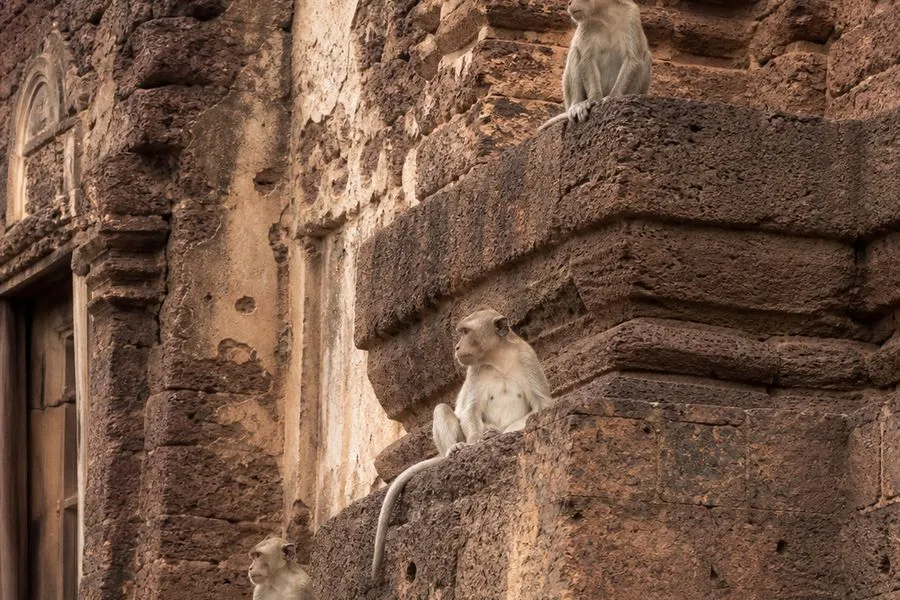
Lopburi's defining sight is its resident population of long-tailed macaques, concentrated around Phra Prang Sam Yot. The weathered Khmer-era temple and the free-roaming animals occupy the same visual field, which is why photographs of Lopburi look unlike photographs of most heritage stops in Central Thailand.
The monkeys are not incidental wildlife that visitors might glimpse if they get lucky. They are central to the destination's identity. That makes the experience more immediate, but it also means the animals' behavior affects how you carry your belongings, move around the grounds, and take photographs.
The other widely repeated attraction is the annual Monkey Buffet Festival. Despite the way it sometimes gets presented, this is not an ancient ritual. It is a staged tradition dating from the late 20th century.
Calling it ancient gives the event a history the research does not support.
That correction does not make the festival meaningless. It simply puts it in the right category: a modern recurring event associated with Lopburi's macaque population, not a surviving ceremony from the Khmer era. The temple is old.
The festival is not.
Within the destination hub, no other stop shares this exact animal-and-heritage angle. Lopburi therefore clears the threshold for a dedicated page and, for the right traveler, a dedicated stop. The case rests on one genuine hook rather than on a padded inventory of generic attractions.
Lopburi vs. a Typical Central-Belt Stop
| Aspect | Lopburi | Typical Central-Thailand heritage/ruins stop |
|---|---|---|
| Core hook | A distinctive live-animal encounter at a historic temple | Temple and ruins architecture as the primary draw |
| Uniqueness within the hub | No other destination in the hub shares this angle | Heritage and ruins destinations share a common sightseeing template |
| Recurring event | Annual Monkey Buffet Festival, a staged tradition from the late 20th century | No comparable annual event at a typical ruins stop |
| Safety consideration | Active awareness of wild-animal behavior, including bite and rabies precautions | Standard site conduct |
| Honest read | Thin on quantity, but supported by one genuine, non-generic hook | A more familiar heritage-sightseeing template |
Who Lopburi Actually Suits
Lopburi suits travelers who want a distinctive, contained encounter combining animals and historic architecture. You also need to be comfortable following basic wildlife precautions around habituated macaques. Habituated does not mean domesticated.
It is a weak fit if "monkey city" has led you to expect a full city's worth of sightseeing beyond the temple-and-macaque pairing. I would not stretch the premise. The appeal is specific: observe the animals around Phra Prang Sam Yot, understand what the modern festival is, and take the encounter seriously rather than using a macaque as a photo prop.
Getting to Lopburi
Lopburi sits in Central Thailand, but I cannot responsibly give you a Bangkok route, transit mode, journey time, or fare from the research available for this article. It also does not support labeling Lopburi as part of a general Bangkok day-trip belt.
Confirm current routing directly before booking.
Use the full guide to getting around Thailand to compare the available transport categories, then check the current operator information for the date you intend to travel.
A confident but unsupported time estimate is not useful trip planning.
How to Behave Around Lopburi's Monkeys
The bite and rabies concern around a habituated wild macaque population is a real safety consideration, not boilerplate advice inserted to fill a travel page. There is no incident count or bite-rate statistic in the research used here, so I will not manufacture one. The practical response is straightforward: create distance, remove obvious incentives, and do not initiate contact.
A macaque approaching people is still a wild animal. Familiarity with visitors can make an animal bolder without making its behavior predictable. Food, loose bags, sunglasses, jewelry, and phones can all complicate an encounter if they remain visible or easy to grab.
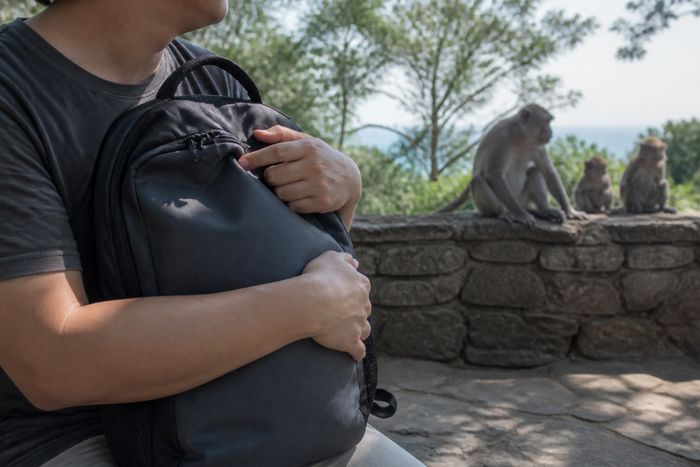
Before you approach the temple grounds, stop and organize your belongings. Do it before the monkeys are close (this is not the moment to sort an open tote bag).
How to Behave Around Lopburi's Monkeys
- Keep food and plastic bags zipped away and out of sight. Do not carry an exposed snack or rummage through a bag near the animals.
- Do not offer food by hand or make prolonged direct eye contact. Neither is necessary for observing or photographing a macaque.
- Secure loose or shiny items before approaching the temple grounds. Put away sunglasses, jewelry, and dangling phone straps.
- Maintain physical distance. Never corner an animal, block its route, or position yourself so it feels trapped.
- Do not touch or attempt to pet a macaque. Apply this rule even when the animal approaches you first.
- Supervise children closely around the temple grounds. Keep them near you and prevent attempts to feed, chase, or touch an animal.
- Act immediately after a bite or scratch. Wash the wound at once and seek medical and rabies post-exposure advice without delay. Do not wait to see whether symptoms appear.
Good behavior here is mostly unglamorous. Zip the bag, keep your hands to yourself, give the animal space, and leave if an interaction starts to feel pressured. A close-up photograph is not worth turning a manageable encounter into a medical problem.
Price Tier and What to Budget
No specific local price data was found for Lopburi in the research used for this article. I cannot classify it as cheap, expensive, or budget-friendly relative to Thailand as a whole.
Treat cost as an open planning question. Check current transport, accommodation, admission, and personal spending information for your travel date rather than building a budget around an unsupported destination label.
Honest Verdict: Is Lopburi Worth the Stop?
Yes, for a narrow reason. Lopburi is thin in terms of the quantity of material supported here, but the macaques around Phra Prang Sam Yot provide one clear, real, non-generic hook. That is enough to make the stop legitimate.
I would go only with the right expectations. This is not a broad city break disguised as a monkey encounter; it is a focused animal-and-heritage stop that works because the combination is unusual. Padding the itinerary with unsupported promises would make the destination sound weaker, not stronger.
My verdict does not extend to price, exact visit duration, or transit convenience. The research establishes none of those points. Lopburi earns consideration on the strength of its core experience, while the practical route and cost still need checking before you commit.
FAQ
What is Lopburi actually known for?
Lopburi is known for its resident long-tailed macaques around the Khmer-era temple Phra Prang Sam Yot. It also hosts the annual Monkey Buffet Festival, a modern tradition dating from the late 20th century rather than an ancient ritual.
Is Lopburi worth a dedicated stop, or is it just a novelty detour?
Lopburi is worth a dedicated stop if the temple-and-macaque encounter specifically appeals to you. The destination is thin but has one genuine, non-generic hook, so keep expectations narrow instead of treating it as a full city break.
Are Lopburi's monkeys actually dangerous, and how should I behave around them?
The macaques present a genuine bite and rabies concern, although no reliable bite-rate figure is available here. Keep food hidden and bags zipped, maintain distance, never touch or hand-feed them, and seek medical and rabies advice immediately after any bite or scratch.
How do I actually get from Bangkok to Lopburi?
The research for this page does not confirm a current transit mode, duration, or fare between Bangkok and Lopburi. Check current routing yourself before booking and use the full guide to getting around Thailand to evaluate your options.
How many days should I plan for Lopburi?
No verified number of days is available, so I would not present a fixed stay length as fact. Plan around the narrow temple-and-monkey hook rather than assuming Lopburi works as a multi-day sightseeing base.
Building the rest of your Central Thailand itinerary?
Compare it with Ayutthaya, see also: Kanchanaburi, consider see also: Amphawa, or go back to all Thailand destinations.
Sources
The destination background comes from the Lopburi entity dossier used for this article; no external citation was captured in that research pass. No transit or price figure is asserted. Confirm current routing through the linked getting-around guide before travel.
Last reviewed: August 12, 2026.
This article provides general travel and wildlife-safety information, not medical advice. If a macaque bites or scratches you, wash the wound immediately and seek medical and rabies post-exposure advice without delay.
