Thailand Border Runs and Re-Entry Permits: What's Actually Allowed
On this page
- Quick answer: is a border run still safe?
- Border run vs. re-entry permit - two different things
- The Nov 2025 announcement
- What was announced vs. what was clarified
- The Jan 2026 clarification - and why it doesn't close the question
- Your extension is a separate, harder rule
- Getting a re-entry permit
- Before you rely on a border run
- After the second extension: treat it as an exit window, not a strategy
- Does immigration actually track repeat border runs?
- Common mistakes
- FAQ
- Is a Thailand border run still allowed right now?
- How many border runs can I do per year?
- Do I need a re-entry permit for a border run?
- Where do I get a re-entry permit and how much does it cost?
- Will immigration officers get suspicious if I do border runs repeatedly?
- Should I just get a real long-stay visa instead of doing border runs?
- Sources
Quick answer: is a border run still safe?
There is no honest, settled yes-or-no answer. A November 12, 2025 announcement described tighter treatment of repeat visa-exemption entries, including possible denial after more than two entries without a justifiable reason. A January 2026 clarification then said there was no formal twice-per-year restriction.
The sources reviewed for this page do not reconcile those statements, so I will not pretend one canceled the other.
One point is separate and much less ambiguous: if you hold an extension of stay and leave Thailand without first obtaining a re-entry permit, follow the safe general rule that the extension is voided when you depart.
Confirm your own status with your local immigration office before traveling.
Checked on August 12, 2026.
This content is general information, not legal advice. Verify the current status with the Royal Thai Immigration Bureau or the relevant Thai embassy or consulate before making travel decisions, especially before planning a trip around resetting a stay period.
Border run vs. re-entry permit - two different things
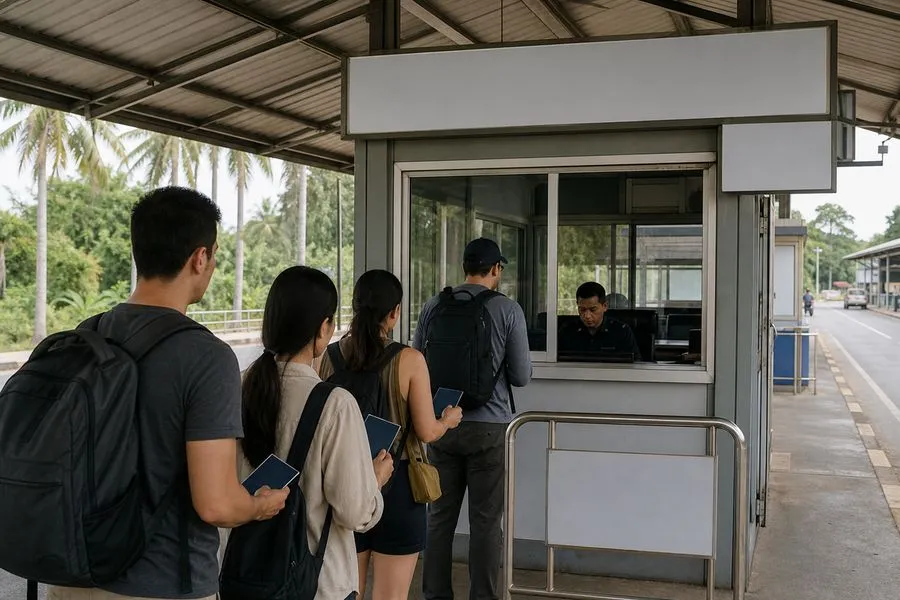
A border run is an informal practice. You leave Thailand and attempt to re-enter, usually to start a new visa-exemption stay period.
Leaving can also reset the 90-day reporting clock for someone subject to that reporting requirement, but the other clock a border run can reset - the periodic address-report cycle has its own rules.
"Border run" is not the name of an immigration document or guaranteed procedure. It describes what the traveler is trying to accomplish. Admission still depends on the status used for re-entry and the decision made at the checkpoint.
A re-entry permit is different. It is a formal single-entry or multiple-entry document used by someone who already holds a visa or extension and wants to preserve that status while leaving Thailand temporarily. It does not create a fresh visa-exemption stay, and it does not make repeated border runs acceptable.
I have done routine visa-exemption border runs during my Chiang Mai years. That experience did not turn them into a right, nor did it teach me the re-entry-permit rule. I learned that distinction later than I should have.
| Aspect | Border run (informal practice) | Re-entry permit (formal document) |
|---|---|---|
| What it is | An exit and attempted re-entry intended to reset a stay clock | A document intended to preserve existing status during travel |
| Who it is for | Commonly used by travelers relying on visa exemption | Travelers holding an existing visa or extension |
| What it resets or preserves | May begin a new visa-exemption stay if re-entry is granted; departure can also reset the 90-day reporting clock | Preserves the visa or extension associated with the permit |
| Formal legal status | Not a named immigration procedure or entitlement | Administered through the Immigration Bureau |
| Result at the border | Re-entry remains subject to immigration screening | The permit addresses preservation of status, not guaranteed admission |
| Where uncertainty sits | Repeat visa-exemption entry enforcement and officer scrutiny | Current fee and case-specific procedure should be confirmed locally |
For the underlying stay rules, see the stay period most border runs are actually resetting.
The Nov 2025 announcement
On November 12, 2025, the Immigration Bureau Commissioner reportedly announced four enforcement measures to take effect the next day. The account available in this research comes from GeoS Thailand, a commercial publication, rather than a primary Immigration Bureau notice captured for this page.
According to that report, travelers with more than two visa-exemption entries and no justifiable reason could be denied entry. It also described enhanced screening at crossings considered high risk, including Mae Sot.
The same report said visa-exemption extensions would be limited to twice per calendar year: a first extension of 30 days, followed by only 7 days on a second application. It said people who entered at a land border would not qualify for that extension, and that travelers making a same-day departure and re-entry would be denied an extension. Increased overstay enforcement was also part of the announcement.
Those were reported measures, not facts I can upgrade into a settled current rule. In particular, I would not plan a trip on the assumption that "two entries" is a confirmed annual cap.
What was announced vs. what was clarified
| 12 Nov 2025 - announced | Jan 2026 - clarified |
|---|---|
| Entry could reportedly be denied after more than two visa-exemption entries without a justifiable reason. | Thai authorities were reported as saying that no rule limits visa-free entry to twice per year. |
| Enhanced screening was described at high-risk crossings such as Mae Sot. | The clarification followed confusion over how the November measures had been communicated. |
| Visa-exemption extensions were reportedly limited to two per calendar year, first 30 days and then 7 days. Land-border entrants were described as ineligible. | No source reviewed for this page explains which parts of the November announcement remained operative or how officers should apply them. |
| Same-day departure and re-entry was reportedly not accepted as a route to another extension. Increased overstay enforcement was also announced. | The clarification contradicts the numeric entry restriction reported in November, but it does not promise that repeated entries will receive no scrutiny. |
Bottom line: No source in this research reconciles the November 2025 announcement with the January 2026 clarification.
The Jan 2026 clarification - and why it doesn't close the question
In January 2026, Thai authorities were reported as clarifying that there was no rule restricting visa-free entry to only twice per year. The statement appears in the research through the Wikipedia "Visa policy of Thailand" page, which is an aggregator rather than a primary legal source.
That directly conflicts with the November report. It may explain why one traveler hears "two entries maximum" while another hears that no annual cap exists, but it does not provide a dependable operating rule for the next checkpoint visit.
I have watched Thailand immigration stories harden into expat certainty after three retellings (usually before anyone finds the original notice). This is one of those cases.
The January statement makes it inappropriate to call the November figure a confirmed cap, while the November announcement makes it equally inappropriate to promise that frequent visa-exemption entries are routine and safe.
The missing piece is a single official statement explaining what officers currently enforce and how the two accounts fit together. This page cannot supply one because the reviewed sources do not contain it.
Your extension is a separate, harder rule
The disputed entry-cap story does not change what you should do with an existing extension of stay. Follow this as the safe general rule: if you leave Thailand without obtaining a re-entry permit first, your extension is voided on departure.
I nearly made that mistake myself. I was preparing to leave Thailand while on an extension and assumed I could return under the same status because the permission had time remaining. Someone else happened to mention the re-entry permit before I departed.
I caught it through luck, not because I had understood my own paperwork.
A border run does not preserve an extension. Nor can you fix the omission by applying after departure. Check the stamp and status you currently hold, obtain the permit before leaving if required, and confirm the result with the local Immigration Bureau office handling your case.
If a status mistake leads to a lapsed stay, read what actually happens once a stay has already lapsed and the full breakdown of what happens if a stay lapses - the anxious-moment article this page is a secondary link from.
I do not restate the fines or ban tiers here.
Getting a re-entry permit
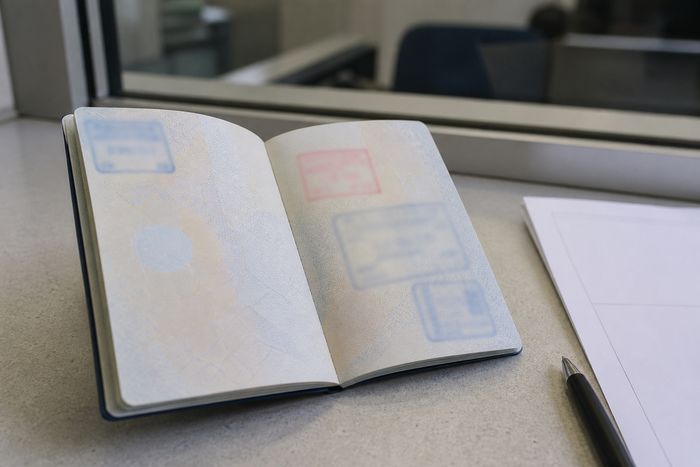
Apply through the Immigration Bureau or the local immigration office responsible for in-country visa administration. Single-entry and multiple-entry versions exist. Which one fits depends on the status you hold and how often you expect to travel while it remains valid.
The official Immigration Bureau channel matters. A private intermediary may sell help with the process, but using an agency does not replace the permit, and an intermediary is not the issuing authority. Paying someone also does not remove your responsibility to check that the document matches your status before departure.
I am deliberately not listing a fee. This research did not capture a current fee from a primary Immigration Bureau source, and repeating a familiar number from memory would turn an unchecked figure into advice. Ask your local office for the current amount, accepted payment method, required documents, processing location, and whether timing differs for your departure point.
Do that before your travel day. Bring the passport containing the relevant visa or extension and ask the officer to confirm that the permit preserves the status you intend to use when returning. The Immigration Bureau, Royal Thai Police, is the official regulator reference for this process.
Before you rely on a border run
- Identify your current status. Confirm whether you are leaving while admitted under visa exemption or while holding a visa or extension. The re-entry-permit issue applies to preserving existing status.
- Protect an extension before departure. If you hold an extension, obtain the appropriate re-entry permit before leaving Thailand, not after crossing the border.
- Do not build the trip around a fixed entry number. The November 2025 announcement and January 2026 clarification remain unreconciled. Budget time and money for extra questions or a disrupted plan.
- Check whether you have reached a second extension. If you received a 7-day second visa-exemption extension under the reported measures, treat it as an exit window and investigate a proper status.
- Confirm the fee locally. Ask your Immigration Bureau office for the current re-entry-permit fee rather than relying on an uncited online figure.
- Carry evidence relevant to your trip. Be prepared to explain your travel and immigration history honestly if an officer asks. A checklist cannot guarantee admission.
After the second extension: treat it as an exit window, not a strategy
Commercial guidance from Chiang Mai Visa Run describes a second annual visa-exemption extension as only 7 days under the reported November 2025 measures. Its advice is to use that short stamp as time to leave and move into an appropriate visa category, not as the setup for another routine border run.
That is advice, not a confirmed rule, and it depends on whether the reported extension measures apply to the reader's case. Still, it is a sensible planning boundary. A 7-day permission does not give much room for a failed trip, additional questioning, office closures, or a document problem.
If you have reached that point, compare the formal alternative to repeating border runs indefinitely with the long-stay options linked from the hub. This article does not cover the eligibility, documents, or costs for those categories.
The practical question changes after repeated short stays. Instead of asking whether one more border run might work, ask which status matches what you are actually doing in Thailand.
Does immigration actually track repeat border runs?
Repeated visa-exempt entries have reportedly attracted more scrutiny over time. The reports are anecdotal, and the research for this page found no published rule establishing a numeric threshold at which an officer must refuse entry.
Treat scrutiny as a real but unquantified risk. An officer can see an immigration history and ask why someone repeatedly leaves and returns on short-stay terms. The January 2026 clarification about the absence of a twice-per-year rule should not be read as a promise that entry patterns are ignored.
My past successful crossings do not predict yours. They do not even predict my next one.
Common mistakes
- Treating a border run and re-entry permit as interchangeable. One seeks a new admission; the other preserves existing status during travel.
- Assuming an extension survives departure automatically. Follow the safe rule that it does not survive without a re-entry permit obtained before leaving.
- Calling the November 2025 figure settled policy. The later January clarification directly disputes a formal twice-per-year cap.
- Reading the January clarification as immunity from scrutiny. No confirmed numeric cap does not mean officers must disregard repeated entries.
- Making a same-day exit and return expecting an extension. The November report specifically described that pattern as ineligible for an extension.
- Waiting until the border to inspect the paperwork. Check your current stamp, permit requirement, and contingency plan at the local office first.
FAQ
Is a Thailand border run still allowed right now?
Yes, a border run still exists as an informal practice, and the sources reviewed here do not establish a formal rule prohibiting every such trip. A November 2025 announcement described stricter limits, while a January 2026 clarification said no twice-per-year rule existed. The conflict remained unresolved when this page was checked on August 12, 2026.
How many border runs can I do per year?
There is no confirmed current numeric cap in the sources this page relies on. The figure of two entries per year comes from the November 2025 announcement, but the January 2026 clarification said that was not an actual visa-free entry restriction. Do not treat either statement as a guarantee that your next entry will be approved or refused.
Do I need a re-entry permit for a border run?
It depends on the status you are trying to use.
A routine attempt to re-enter under visa exemption does not use a re-entry permit, but someone leaving while holding an extension or visa should obtain the appropriate permit first to avoid voiding that status.
Confirm the requirement for your stamp with your local immigration office before departure.
Where do I get a re-entry permit and how much does it cost?
Apply through an Immigration Bureau office or the local immigration office administering your status. This research did not confirm the current fee through a primary source, so ask the issuing office for the amount, documents, payment method, and processing arrangements before traveling. Do not substitute an agency's quote for confirmation from the official office.
Will immigration officers get suspicious if I do border runs repeatedly?
They may apply more scrutiny to a history of frequent repeat visa-exemption entries. Reports of informal restrictions are anecdotal, however, and this research found no documented threshold that predicts what will happen on a particular trip. Plan for questions without inventing a guaranteed trip limit.
Should I just get a real long-stay visa instead of doing border runs?
A proper long-stay category is the more suitable direction if repeated short-stay entries no longer match how you live in Thailand. The commercial guidance reviewed here recommends treating a reported second 7-day extension as an exit window rather than another step in a continuing border-run cycle. Use the hub to compare categories instead of relying on this page for their eligibility and cost details.
If you need a status that matches a longer stay, use the visa selector and compare this with the rest of Thailand's entry and visa procedures before arranging another border trip.
Sources
- GeoS Thailand, "Thailand New Visa Rules November 2025," November 12, 2025. Commercial report used for the four announced enforcement measures.
- Wikipedia, "Visa policy of Thailand." Aggregator reference used for the reported January 2026 clarification that no twice-per-year visa-free entry rule exists.
- Chiang Mai Visa Run, "Thailand Visa Extensions 2026." Commercial guidance used for the advice to treat a second 7-day extension as an exit window.
- Immigration Bureau, Royal Thai Police. Official regulator reference for in-country visa administration and re-entry permits; not used here to support a specific fee.
Facts and source status last checked on August 12, 2026.
This content is general information, not legal advice. Border-entry decisions and immigration procedures can change or depend on individual circumstances. Verify the current status with the Royal Thai Immigration Bureau or the relevant Thai embassy or consulate before making travel decisions, especially before relying on this page for a trip planned around resetting a stay period.


Reviewed by Nattapong Sirichai, licensed Thai attorney, member of the Lawyers Council of Thailand, practising immigration and administrative law, Bangkok. Last reviewed: 2026-08-12. The review covers the legal statements on this page, not travel opinion.